
Yes. Smoke alarms are legally required in every residential building in NSW where people sleep. You must have at least one working smoke alarm installed on every level of your home, and all alarms must comply with Australian Standard AS 3786.
The law sets the minimum. But knowing you need smoke alarms and knowing exactly what to install, where to place them, and who is responsible are different things. Kitson Electricians Newcastle installs, tests, and maintains compliant smoke alarm systems across Newcastle, Lake Macquarie, and the Hunter region. This guide covers the legal requirements, what they mean in practice, and what you need to do for your specific situation.
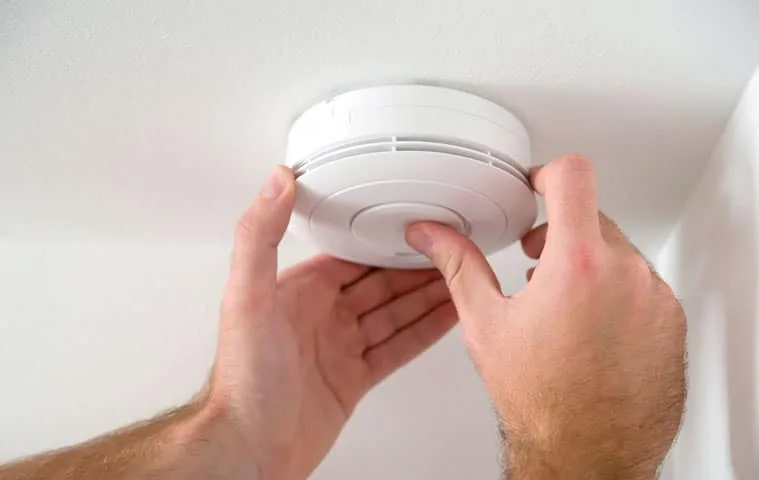
What the Law Actually Requires
NSW smoke alarm legislation is governed by the Environmental Planning and Assessment (Development Certification and Fire Safety) Regulation 2021. The requirements are straightforward, but the details matter.
Every residential building where people sleep must have working smoke alarms installed. This includes houses, apartments, duplexes, granny flats, relocatable homes, caravans, and campervans. There are no exemptions based on property age or type. If people sleep there, smoke alarms are required by law.
All smoke alarms must comply with Australian Standard AS 3786. Fire and Rescue NSW recommends photoelectric alarms, which respond faster to slow-burning smouldering fires, the most common and most dangerous type in residential settings. While interconnected alarms are not yet mandatory for all existing NSW homes, they are strongly recommended and required for new builds and substantial renovations.
How Many Smoke Alarms Do You Need?
The minimum requirement is one working smoke alarm on every level of your home, including levels without bedrooms. But the placement rules mean most homes need more than one per level:
| Home Layout | Minimum Alarms Required | Recommended for Best Protection |
| Single-storey, 2-3 bedrooms, single hallway | 1 (in hallway near bedrooms) | 1 per bedroom + hallway + living area = 4-5 total |
| Single-storey, bedrooms at opposite ends | 2 (one near each bedroom group) | 1 per bedroom + hallway + living area = 5-6 total |
| Two-storey, bedrooms upstairs | 2 (one per level) | 1 per bedroom + each hallway + each living area = 6-8 total |
| Two-storey, bedrooms on both levels | 2 (one per level, near bedrooms) | 1 per bedroom + hallways + living areas = 7-10 total |
| Apartment or unit, single level | 1 (in hallway near bedrooms) | 1 per bedroom + hallway + living area = 3-4 total |
Fire and Rescue NSW recommends going beyond the legal minimum by installing alarms in every bedroom, every hallway associated with bedrooms, and on every level, including garages.
Interconnected alarms provide the highest level of protection because when one sounds, they all sound. This gives everyone in the house maximum warning time, regardless of where the fire starts.
Who Is Responsible? Homeowners, Landlords, and Tenants
Responsibilities differ depending on whether you own, rent, or manage the property:
Homeowners
You are responsible for installing, testing, and maintaining smoke alarms in your own home. Alarms must be on every level, comply with AS 3786, and be less than 10 years old from the date of manufacture. Fire and Rescue NSW recommends testing monthly and replacing batteries annually.
Landlords and Property Managers
NSW landlords have specific legal obligations under the Residential Tenancies Regulation 2019. According to the NSW Government, landlords must ensure smoke alarms are installed and in working order before a tenancy begins. They must check alarms annually, repair or replace faulty alarms within two business days, and replace alarms within 10 years of manufacture. Hardwired alarm repairs or replacements must be carried out by a licensed electrician.
Tenants
Tenants must not remove, disable, or tamper with smoke alarms. If a tenant discovers an alarm is not working, they must notify the landlord or property manager. In some circumstances, tenants can replace a removable battery and notify the landlord. But tenants cannot engage an electrician for hardwired alarm work without the landlord’s authorisation.
What Type of Smoke Alarm Do You Need?
Not all smoke alarms are equal. Here is what you need to know about types, power sources, and interconnection:
- Photoelectric vs ionisation: Photoelectric alarms use a light beam to detect smoke particles. They respond faster to smouldering fires, which produce dense smoke before flames appear. Ionisation alarms respond faster to fast-flaming fires but are slower on smouldering fires. Fire and Rescue NSW recommends photoelectric alarms for residential use.
- Hardwired (240V) vs battery powered: Hardwired alarms connect to your home’s mains electricity supply and have a backup battery. They are more reliable because they don’t rely solely on a battery that can go flat. Battery-powered alarms with a sealed 10-year non-removable lithium battery are acceptable under NSW law for existing homes. New builds and substantial renovations require hardwired alarms.
- Interconnected vs standalone: Interconnected alarms are wired or wirelessly linked so that when one alarm detects smoke, all alarms in the house sound simultaneously. This is critical in larger homes where a fire in one area might not be heard in another. Interconnection is required for new builds in NSW and strongly recommended for all homes. A licensed electrician can install hardwired interconnected systems or advise on wireless interconnection options.
- Compliance marking: Every alarm must display the AS 3786 compliance mark. Check for this before purchasing. Alarms without this marking do not meet NSW requirements.
More: What To Do If My Safety Switch Won’t Turn Back On?.
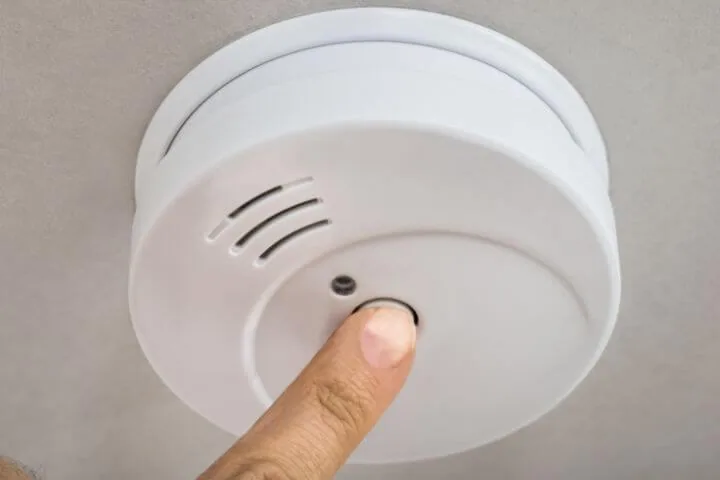
Where to Install Smoke Alarms in Your Home
Placement directly affects how quickly you’re alerted. The rules and best practices for positioning are:
- Hallways near bedrooms: The primary required location. If your bedrooms open off a hallway, install an alarm in that hallway. If bedrooms are in separate parts of the house, each bedroom group needs a nearby alarm.
- On every level, including levels without bedrooms: Even if your ground floor has no bedrooms, it still needs at least one smoke alarm. Fire can start anywhere.
- Inside every bedroom (recommended): Fire and Rescue NSW recommends alarms inside bedrooms for maximum protection. A closed bedroom door can delay smoke reaching a hallway alarm by critical minutes.
- Living areas and lounges (recommended): These rooms often contain electronics, heaters, and other fire sources. An alarm here provides earlier detection.
- Away from kitchens and bathrooms: Install alarms at least 3 metres from cooking appliances and bathroom doors to reduce false alarms from steam and cooking smoke.
- On the ceiling, centrally positioned: Smoke rises. Ceiling-mounted alarms detect smoke faster than wall-mounted ones. Position them centrally in the room or hallway, at least 300mm from any wall or light fitting.
Smoke Alarm Compliance for Newcastle Homes
Newcastle’s housing stock creates specific compliance considerations:
- Post-war homes in Mayfield, Hamilton, and Wallsend: Many properties from the 1940s to 1960s have never had their smoke alarms professionally assessed. Some still have expired alarms or no alarms at all. These homes benefit most from a hardwired, interconnected system installed by a qualified Newcastle electrician.
- Rental properties across the region: Newcastle has a large rental market. Landlords managing investment properties in Mayfield, Merewether, Lambton, and Charlestown must meet every landlord obligation or face penalties. An annual smoke alarm inspection ensures ongoing compliance.
- Strata properties in Newcastle CBD and surrounds: Apartments and units in strata complexes have additional requirements. The owners’ corporation is typically responsible for common area alarms, while individual lot owners are responsible for alarms inside their units.
- Homes being sold: While NSW doesn’t currently require a smoke alarm compliance certificate at sale, buyers should insist on an inspection. Non-compliant alarms discovered after purchase become the new owner’s responsibility.
- Homes with recent renovations: Properties in Fletcher, New Lambton, and Charlestown that have undergone substantial renovations may be required to have hardwired, interconnected alarms installed as part of the building approval conditions. Check your development approval documentation.
What a Licensed Electrician Does During Smoke Alarm Installation
For hardwired systems, a licensed electrician handles the full process:
Assessment and Placement Planning
I assess your home layout, identify the required and recommended alarm locations, and determine whether your existing wiring can support a hardwired interconnected system. For older Newcastle homes, this includes checking ceiling cavity access and available circuit capacity.
Installation and Wiring
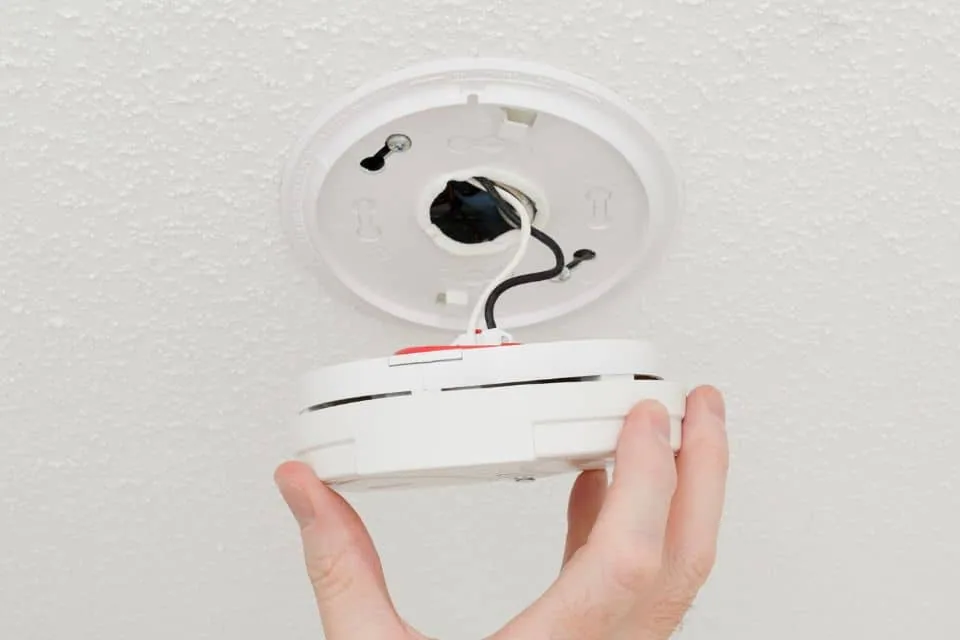
Each alarm is mounted to the ceiling and connected to the mains power supply via a dedicated or shared lighting circuit. Interconnection wiring links all alarms so they trigger simultaneously. The backup battery is tested, and the alarm is commissioned.
Testing and Certification
Every alarm is tested for correct operation, interconnection response (all alarms must sound when any single alarm is triggered), and backup battery function. A Certificate of Compliance is issued for all wiring work, confirming the installation meets NSW standards.
After a recent smoke alarm replacement at a Newcastle home, Kitson Electricians received this feedback:
“Wonderful experience with Anthony from Kitsons. I needed a replacement smoke alarm, and he was there and had it installed within a couple of hours of me contacting him. It’s great to have a reliable, prompt and friendly electrician. I highly recommend this company.” — Kathy Brander.
Fast, reliable smoke alarm service is exactly what compliance demands, especially for landlords who must repair or replace within two business days.
Areas We Service
Kitson Electricians Newcastle provides residential smoke alarm installation and compliance services across the entire Newcastle and Hunter region. We service Adamstown, Charlestown, Elermore Vale, Fletcher, Hamilton, Lambton, Lake Macquarie, Maitland, Mayfield, Merewether, New Lambton, Stockton, Wallsend, and all surrounding suburbs.
Get Your Smoke Alarms Compliant Today
If you’re unsure whether your smoke alarms meet NSW requirements, call Kitson Electricians Newcastle on 0438 262 792 for a professional assessment. Licensed electricians, same-day service, upfront fixed pricing, and a lifetime labour warranty on all work. $50 off your first service, free smoke alarm test or replacement with any service, and a free safety inspection valued at $150.
Frequently Asked Questions About Smoke Alarm Requirements in NSW
Are smoke alarms legally required in NSW?
Yes. Under the Environmental Planning and Assessment Regulation 2021, every residential building in NSW where people sleep must have at least one working smoke alarm on every level. All alarms must comply with Australian Standard AS 3786.
How many smoke alarms do I need in my house?
At a minimum, one on every level of your home. Fire and Rescue NSW recommends additional alarms in every bedroom, hallways near bedrooms, and living areas. A typical three-bedroom single-storey home benefits from four to five alarms for full coverage.
Are interconnected smoke alarms required in NSW?
Interconnected alarms are mandatory for new builds and substantial renovations in NSW. They are not yet mandatory for all existing homes, but are strongly recommended by Fire and Rescue NSW. When one interconnected alarm detects smoke, all alarms in the house sound simultaneously.
Do landlords have to install smoke alarms in NSW?
Yes. Landlords must ensure working smoke alarms are installed before a tenancy begins. They must check alarms annually, repair or replace faulty alarms within two business days, and replace all alarms within 10 years of their manufacture date.
Do I need a licensed electrician to install smoke alarms?
For hardwired smoke alarms connected to mains power, yes. A licensed electrician must perform the installation and issue a Certificate of Compliance. Battery-only alarms with a 10-year sealed battery can be installed by the homeowner, but professional installation ensures correct placement and compliance.
How often should smoke alarms be replaced in NSW?
Every 10 years from the date of manufacture, not the date of installation. Check the manufacture date on the base of each alarm. Fire and Rescue NSW also recommends testing alarms monthly and replacing batteries annually for alarms with removable batteries.