
A safety switch that won’t turn back on means an active electrical fault is still present on the circuit. Newcastle homes with older switchboards, deteriorating wiring, or faulty appliances are the most common cases I see.
This is a problem Kitson Electricians Newcastle deals with daily across the Newcastle, Lake Macquarie, and Maitland regions. This guide covers why your safety switch tripped, how to reset it safely, what causes it to keep tripping, and when you need a licensed electrician.
Why Your Safety Switch Tripped in the First Place
A safety switch, also known as an RCD (residual current device), monitors the flow of electrical current through a circuit. If it detects even a tiny imbalance, as small as 30 milliamps, it cuts the power in around 0.03 seconds. That speed is what stops electric shocks from becoming fatal.
According to the NSW Government, about 40% of the 4,500 house fires in NSW each year are caused by electrical faults and appliances. Safety switches are one of the most effective defences against these incidents. When your safety switch trips, it’s doing exactly what it’s designed to do. The real concern is when it won’t reset, because that means the fault hasn’t cleared.
Common Reasons a Safety Switch Won’t Turn Back On
If your safety switch tripped and won’t turn back on, the underlying fault is still active. These are the most frequent causes I come across in Newcastle homes:
Faulty appliance with internal damage
A fridge, washing machine, or heater with a damaged element or frayed internal wiring can leak current to earth. This is the single most common cause. Even appliances that appear to work fine can have hidden insulation breakdown that triggers the RCD every time power flows through them.
Damaged or deteriorating wiring
Homes built before the 1980s in suburbs like Mayfield, Hamilton, and Adamstown often still have original rubber-sheathed wiring. According to the NSW Government, this type of insulation deteriorates and crumbles over time, leaving conductors exposed and creating persistent earth leakage that prevents the safety switch from resetting.
Moisture or water ingress
Water in a light fitting, outdoor power point, or wall cavity creates a direct path for current leakage. After heavy rain, I regularly get calls from homeowners in low-lying Newcastle suburbs like Stockton, Carrington, and Tighes Hill, where moisture has found its way into wiring or junction boxes.
Overloaded circuits
Too many high-draw appliances on a single circuit, particularly in older homes with limited power points, can cause overheating and trigger the switch. Stacking heaters, dryers, and kettles on one circuit is a common winter issue.
Faulty safety switch
The RCD itself can fail. Safety switches have a lifespan of roughly 20 to 30 years, depending on the brand. If the test button no longer clicks or the switch feels warm to the touch, the unit may need replacing.
Wiring damaged by pests
Rodents chewing through cable insulation inside roof spaces and wall cavities is surprisingly common across Newcastle’s older suburbs. The exposed conductors create ongoing earth faults that stop the switch from holding.
How to Reset a Safety Switch Safely
Before calling an electrician, there are a few safe steps you can try yourself. If your safety switch won’t turn back on after following these steps, the fault needs professional diagnosis:
Step 1: Turn Off and Unplug Everything
Go to every room and unplug every appliance from the wall. Turning off at the power point is not enough. You need to physically remove the plug. Don’t forget appliances hidden behind furniture like fridges, washing machines, dishwashers, and any outdoor equipment.
Step 2: Identify the Tripped Switch
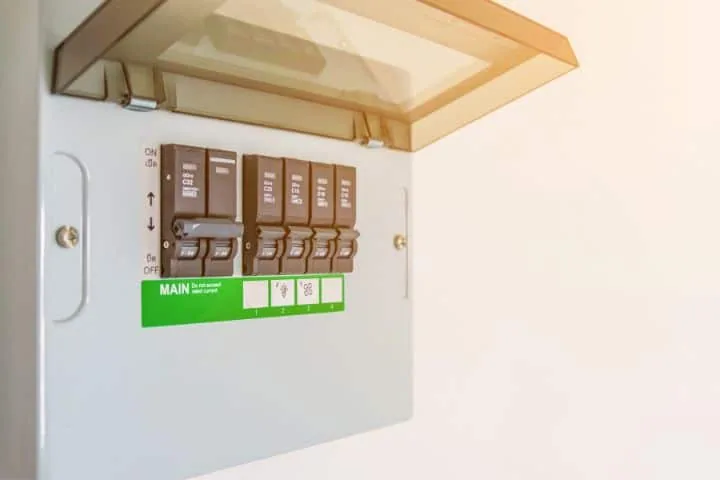
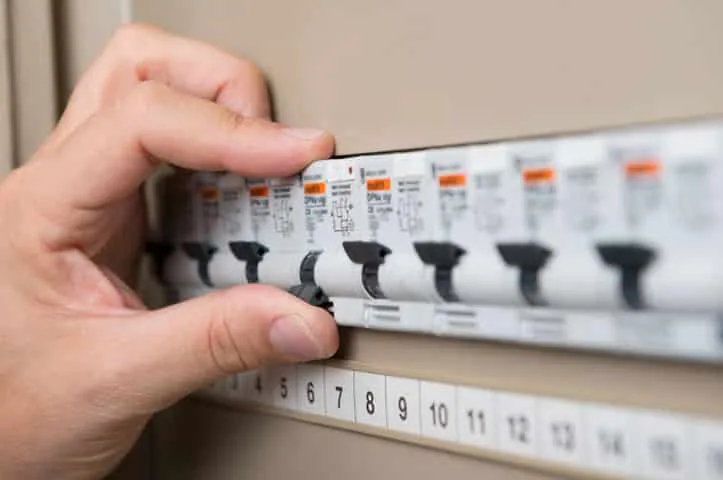
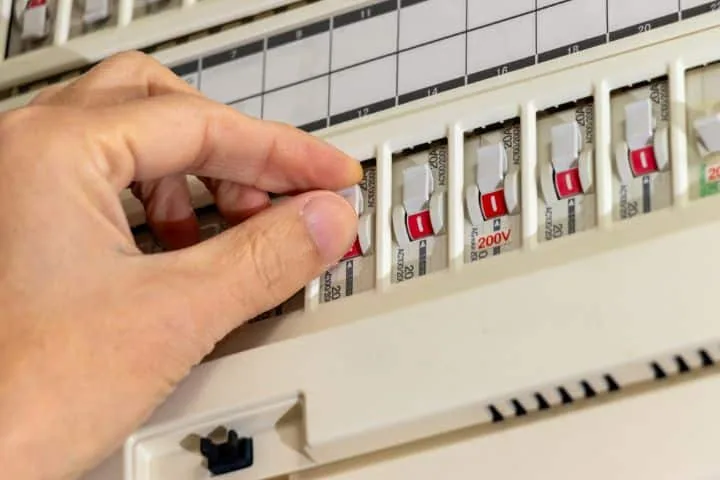
Open your switchboard and locate the tripped switch. It will be in the off position or sitting in the middle. Safety switches are usually labelled with a “T” or “Test” button, which distinguishes them from standard circuit breakers.
Step 3: Reset the Switch
Push the safety switch firmly to the off position first, then flick it back to on. If it holds, the fault was likely caused by one of the appliances you unplugged. If it trips again immediately with everything unplugged, the fault is in the wiring itself or in the RCD unit.
Step 4: Reconnect Appliances One at a Time
Plug each appliance back in individually and turn it on. Wait 30 seconds before moving to the next. When one causes the switch to trip, you’ve found the faulty appliance. Remove it from the circuit and do not use it until it has been inspected or replaced.
Step 5: Stop if the Switch Keeps Tripping
If the safety switch keeps turning off regardless of what you do, or if you notice a burning smell, scorch marks, or buzzing near the switchboard, stop immediately. These are signs of a serious electrical fault that requires a qualified electrical professional to diagnose safely.
Safety Switch vs Circuit Breaker: What’s the Difference?
I find that many homeowners confuse these two devices. They sit side by side in your switchboard, but they protect against completely different things:
| Feature | Safety Switch (RCD) | Circuit Breaker (MCB) |
| Protects | People from electric shock | Wiring from overload and short circuit |
| How it works | Detects current leakage to earth | Detects excess current flow |
| Trip speed | 0.03 seconds (30 milliseconds) | Slower, varies by rating |
| Test button | Yes, marked “T” or “Test” | No test button |
| Required by law | Yes, on all circuits in new NSW homes since 2019 | Yes, standard on all circuits |
Under AS/NZS 3000:2018, every final sub-circuit in a new residential installation must have RCD protection. Older Newcastle homes may only have a single RCD covering the power circuit, with no protection on lighting or fixed appliances. If your switchboard only has one safety switch, or none at all, a switchboard upgrade brings your home up to current standards.
Why Safety Switch Problems Are More Common in Newcastle
Newcastle’s housing stock and coastal environment create specific conditions that contribute to safety switch issues. Based on the ABS 2021 Census, the City of Newcastle contains over 74,500 dwellings, with 66.1% being separate houses. A large proportion of these were built between the 1950s and 1980s, well before modern RCD protection became standard.
Here’s what that means in practice:
- Pre-1980s wiring in suburbs like Mayfield, Wallsend, and New Lambton: These homes often still have rubber-sheathed or early PVC wiring with degraded insulation. When this insulation breaks down, it creates persistent current leakage that trips safety switches and prevents them from resetting.
- Coastal humidity in Merewether, Stockton, and Swansea: Salt air and moisture accelerate corrosion on switchboard contacts, RCD terminals, and wiring connections. Corroded connections increase resistance and can cause nuisance tripping that worsens over time.
- Storm exposure across Lake Macquarie and Maitland: Heavy rain drives moisture into outdoor wiring, junction boxes, and roof-space connections. After east coast lows, I see a spike in safety switch callouts across suburbs from Charlestown to Warners Bay.
- Older switchboards without adequate RCD coverage: Many homes in Adamstown, Lambton, and Hamilton still have original ceramic fuse boards or early circuit breaker panels with a single safety switch, or no RCD protection at all. These setups leave entire circuits unprotected and make fault diagnosis harder.
Ausgrid, the electricity distributor for the Newcastle, Lake Macquarie, Maitland, and Port Stephens areas, recommends that RCDs be tested every six months and circuit breakers checked every two years. If your switchboard hasn’t been inspected recently, a professional electrical safety inspection can identify risks before they become emergencies.
When a Tripped Safety Switch Is an Emergency
Most safety switch trips are minor inconveniences caused by a dodgy appliance or a temporary moisture issue. But some situations are genuinely dangerous and need urgent attention:
Burning Smell Near the Switchboard
This usually indicates overheating wiring, a loose connection, or a melting component inside the board. Turn off the main switch if you can do so safely and call a licensed electrician immediately.
The Switch Trips Repeatedly with Nothing Plugged In
If the RCD won’t hold even with every appliance disconnected, the fault is embedded in the fixed wiring. This could be a damaged cable in a wall, ceiling, or floor cavity. It’s not something you can fix yourself and requires professional fault detection equipment to locate.
Scorch Marks, Buzzing, or Heat from the Switchboard
These are signs of arcing or a failing connection inside the board. Do not attempt to reset the switch. Arcing faults generate extreme heat and present a real fire risk. Call an emergency electrician straight away.
Water Near the Switchboard or Active Leak
If there’s visible water near or on the switchboard, do not touch it. Water and electricity is a lethal combination. Contact your electrician and, if necessary, call Ausgrid on 13 13 88 to disconnect the supply from the street.
How a Licensed Electrician Diagnoses the Fault
When the safety switch won’t turn back on, and basic troubleshooting hasn’t worked, here’s how I approach the diagnosis:
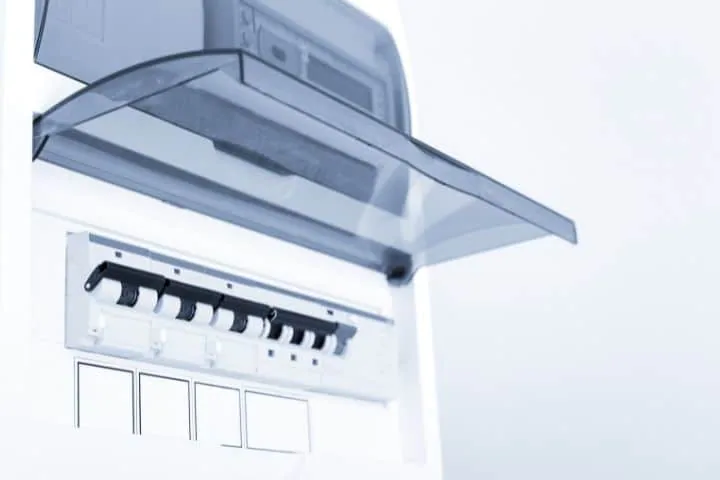
- Switchboard inspection: I start by visually inspecting the board for scorching, corrosion, loose terminals, or outdated components. A switchboard that’s 30 or 40 years old often reveals issues just on sight.
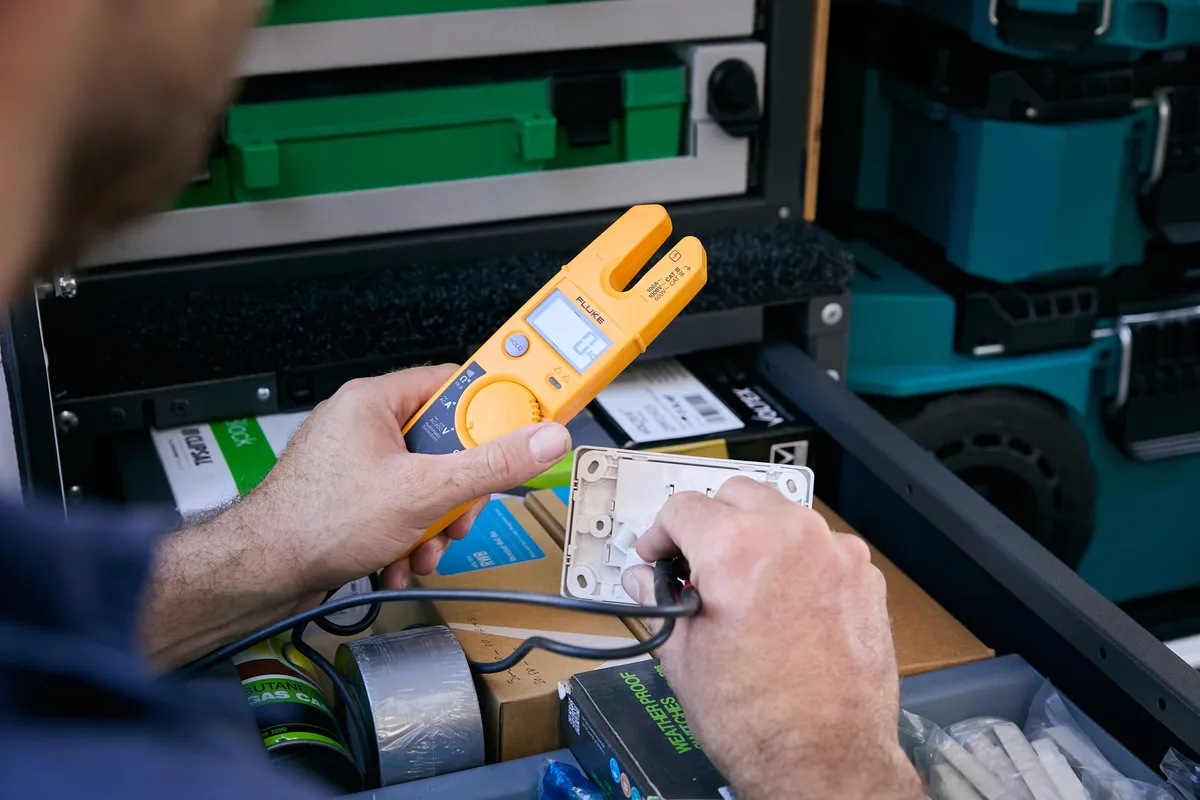
- Insulation resistance testing: Using a megger (insulation resistance tester), I test each circuit individually to measure the integrity of the wiring insulation. Low readings pinpoint which circuit has the earth leakage fault.
- RCD function testing: I test the safety switch itself using calibrated equipment to verify its trip time and sensitivity. If the RCD trips too slowly or not at all during testing, it needs replacing.
- Circuit-by-circuit isolation: By switching off individual circuits and resetting the RCD, I can narrow the fault to a specific zone of the house, whether that’s the kitchen circuit, lighting, or outdoor power.
- Appliance testing: If needed, I test individual appliances with a portable appliance tester (PAT) to confirm which item has the internal fault causing the earth leakage.
In NSW, all electrical wiring work must be carried out by a licensed electrician. After any repair or alteration, the electrician is legally required to issue a Certificate of Compliance for Electrical Work (CCEW) confirming the work meets current standards.
After a recent switchboard fault diagnosis and repair in Merewether, Kitson Electricians received this feedback: “Anthony and the team are fantastic, from quote to the end of the job, they were professional, easy to deal with and transparent about what was required with clear communication. I highly recommend the team if you want a job well done, excellent customer service and competitive pricing. I’ll only be calling Kitson for any electrical work going forward.” Sabina Corona. That kind of clarity and communication is what I aim for on every callout.
How to Prevent Your Safety Switch from Tripping
Prevention is always cheaper and easier than an emergency callout. These steps reduce the chance of your safety switch tripping unexpectedly:
Test your safety switch every six months
Press the “T” or “Test” button on the RCD. The switch should trip immediately. Reset it by flicking it back to on. If it doesn’t trip when tested, the switch has failed and needs replacing. The NSW Government recommends testing at least twice a year.
Replace ageing appliances
Older appliances with worn insulation are the leading cause of nuisance tripping. If a fridge, washing machine, or heater is over 10 years old and causing trips, replacement is often more cost-effective than repair.
Avoid overloading power points
Don’t stack double adaptors or run high-draw appliances through power boards. If you’re constantly running out of outlets, consider having additional power points installed by a licensed electrician.
Keep outdoor electrical fittings weatherproofed
Outdoor power points and light fittings need proper covers and seals, especially in coastal Newcastle suburbs where salt air and rain are constant factors.
Book a switchboard inspection for older homes
If your home was built before 2000 and hasn’t had an electrical inspection, the wiring and switchboard may not meet current standards. A residential electrician can assess what’s needed and recommend upgrades.
Watch for early warning signs
Flickering lights, warm power points, or circuits that trip occasionally are all precursors to a full safety switch failure. More on this topic: Why Do My Lights Flicker? Causes & How to Fix It.
If your home predates the 1980s, especially in suburbs like Mayfield, Wallsend, or Adamstown, a full home rewiring assessment can identify deteriorating cables before they cause a safety switch that won’t reset.
Areas We Service
Kitson Electricians Newcastle services homes and businesses across the entire Newcastle, Lake Macquarie, and Hunter region. We respond to safety switch callouts in Adamstown, Wallsend, Mayfield, Merewether, Hamilton, New Lambton, Charlestown, Lambton, Cardiff, Warners Bay, Lake Macquarie, Maitland, Stockton, Swansea, Fletcher, Elermore Vale, Belmont, Kotara Fair, Waratah, Maryland, Shortland, Edgeworth, and surrounding suburbs.
Need a Licensed Electrician in Newcastle?
If your safety switch won’t turn back on and you’ve tried the reset steps above, don’t keep flicking it. Call Kitson Electricians Newcastle on 0438 262 792. Licensed electricians (Licence #388732C), same-day service, fixed-price quotes, and a lifetime labour warranty on all workmanship. $50 off your first service.
Frequently Asked Questions
Why does my safety switch keep tripping?
The most common cause is a faulty appliance leaking current to earth. Damaged wiring, moisture in fittings, and overloaded circuits are also frequent triggers in older Newcastle homes.
Can I reset a safety switch myself?
Yes. Unplug all appliances, flick the switch firmly to off then back to on. If it holds, reconnect appliances one by one to find the fault. If it keeps tripping, call a licensed electrician.
Is a tripped safety switch dangerous?
A single trip is usually not dangerous, it means the switch did its job. But repeated tripping or a switch that won’t reset indicates an active fault that could cause electric shock or fire if left unresolved.
How often should I test my safety switch in NSW?
The NSW Government recommends testing every six months. Press the test button on the RCD. It should trip instantly. If it doesn’t, the switch has failed and needs replacing by a qualified electrician.
What is the difference between a safety switch and a circuit breaker?
A safety switch (RCD) protects people from electric shock by detecting current leakage. A circuit breaker protects wiring from overload and short circuits. Both sit in your switchboard, but they serve different purposes.
Do rental properties in NSW need safety switches?
Yes. NSW law requires at least one working safety switch in rental properties. Landlords must ensure RCDs are installed and functional. Properties built before 2000 should be checked by a licensed electrician to confirm compliance.