
An electric shock from a light switch is caused by either static electricity buildup or current leaking through a faulty switch, damaged wiring, or a missing earth connection. The type of shock you feel tells you whether it’s harmless or dangerous.
A brief static tingle when you touch a switch is common and usually harmless. A sharp jolt or a shock you feel every time you use the switch is a different matter entirely. Kitson Electricians Newcastle diagnoses and repairs light switch faults across Newcastle, Lake Macquarie, and the Hunter region. This guide explains what causes electric shock from a light switch, how to tell static from electrical, and when you need a licensed electrician.
Static Shock vs Electrical Shock: The Critical Difference
The first thing to determine is whether you’re experiencing a harmless static discharge or a genuine electrical shock from your light switch. The distinction matters because one is a nuisance and the other is a safety emergency.
A static shock happens when electrical charge builds up on your body, typically from walking across carpet or synthetic flooring, and discharges when you touch a conductive surface like a metal switch plate. It’s a brief snap. It doesn’t hurt beyond a small tingle. It happens randomly, not every time you use the switch.
An electrical shock from a faulty light switch feels different. It’s a sustained tingle, a sharp jolt through your hand, or a vibrating sensation that lasts as long as you’re touching the switch. It happens consistently, often every time you use that particular switch.
According to SafeWork NSW, more than 1,000 electrical incidents and nearly 600 injuries have been recorded in NSW since 2020. Even small shocks from household switches can indicate serious wiring faults that need immediate attention.
Use this table to identify what you’re experiencing:
| What You Feel | Most Likely Type | Urgency |
| A brief snap when touching a metal plate, happens randomly, only in dry conditions | Static discharge. Charge buildup from carpet or synthetic clothing. | Low. Not an electrical fault. |
| Tingle or buzz every time you use a specific switch | Electrical current leakage through the switch body or faceplate. | High. Stop using the switch and call an electrician. |
| Sharp jolt when touching the switch with damp or wet hands | Current is leaking to the switch body, with moisture reducing your skin’s resistance. | Very high. This confirms an electrical fault. Do not use the switch. |
| Shock from the switch, plus flickering lights or a warm faceplate | Active wiring fault with arcing or loose connections behind the switch. | Very high. Turn off the circuit at the switchboard immediately. |
If your shock matches any of the bottom three rows, stop using that switch and call a licensed electrician. An electrical shock from a light switch means current is flowing where it shouldn’t be.
More: Why Do My Lights Flicker? Causes & How to Fix It.
Common Causes of Electric Shock From a Light Switch
Most light switch shocks in Newcastle homes trace back to one of these causes:
Missing or Disconnected Earth Wire
This is the most common cause in older homes. The earth wire provides a safe path for current to flow to ground if a fault develops. Without it, leaked current has nowhere to go except through you when you touch the switch. Homes built before the 1980s across Mayfield, Hamilton, and Wallsend were often wired without earth connections to light switches. Under AS/NZS 3000:2018, all switches must have a functioning earth connection.
Worn or Damaged Switch Mechanism
Light switches are mechanical devices that wear out. After decades of daily use, internal contacts degrade, crack, or loosen. When the insulation inside the switch breaks down, live current can reach the switch body or the metal screws on the faceplate. A switch that buzzes, feels warm, or sparks when operated is well past its safe service life and needs immediate replacement.
Loose Wiring Behind the Switch
Wiring connections behind the switch can loosen over the years of thermal cycling. A loose active wire can contact the metal mounting bracket or the earth conductor intermittently. This creates a shock that comes and goes, often worse under certain load conditions. Only a licensed electrician should remove the switch plate to inspect and tighten these connections.
Moisture Ingress
Bathrooms, laundries, and outdoor areas expose switches to moisture. Water dramatically reduces your skin’s electrical resistance, meaning a fault that produces only a mild tingle with dry hands can deliver a painful and dangerous shock with wet hands. If you only get shocked when your hands are damp, the switch has a current leak that moisture is amplifying. Coastal Newcastle suburbs like Merewether and Stockton see higher moisture-related switch faults due to salt air and humidity.
Faulty or Absent RCD Protection
A properly functioning RCD (safety switch) should detect current leaking through your body and cut the power within 30 milliseconds. If you’re receiving shocks from a light switch and the RCD isn’t tripping, either the lighting circuit doesn’t have RCD protection or the RCD itself has failed. Many older Newcastle homes still have lighting circuits without RCD coverage, which is a significant safety gap.
Backstab Wiring Connections
Switches installed during the 1970s and 1980s often use backstab connections where wires are pushed into spring clips rather than secured under screws. These connections loosen over time and can create intermittent contact between the active wire and the switch body. I find backstab failures frequently in older Newcastle homes across suburbs like Adamstown, Elermore Vale, and Waratah.
Why This Problem Is Common in Older Newcastle Homes
Newcastle’s housing stock creates conditions that make light switch shocks more likely:
Pre-1980s Homes Without Earth Wires to Switches
Homes across Mayfield, Hamilton, Lambton, and Wallsend built before the 1980s commonly have no earth wire run to light switches. The wiring complied with the standards of the era but doesn’t meet current safety requirements. This means there’s no fault protection at the switch. Any current leakage goes through you instead of safely to ground.
Coastal Corrosion on Switch Contacts
Properties in Merewether, Stockton, and Newcastle East experience accelerated corrosion on internal switch contacts and wiring terminals. Corroded connections increase resistance and create fault paths that allow current to reach the switch body. Switches in these locations deteriorate faster than inland equivalents.
Original Bakelite and Early Plastic Switches Still in Use
Many older Newcastle homes still have original Bakelite or early plastic switches from the 1950s and 1960s. These switches have been operated tens of thousands of times. Internal insulation has degraded. Contact surfaces are worn. The risk of current leaking to accessible parts increases with every year of continued use.
Renovations Without Rewiring
Suburbs like Charlestown, Fletcher, and New Lambton have seen significant renovation activity. Cosmetic upgrades often include new switch plates fitted to old wiring without checking earthing, connection integrity, or switch condition. The new plate looks modern but the wiring behind it is unchanged.
What to Do if Your Light Switch Shocks You
Follow these steps in order:
Stop Using the Switch
Don’t keep testing it to see if it happens again. If you received a genuine electrical shock, the fault is active. Every additional use risks a more severe shock, particularly if conditions change (wet hands, bare feet on tiles).
Turn Off the Circuit
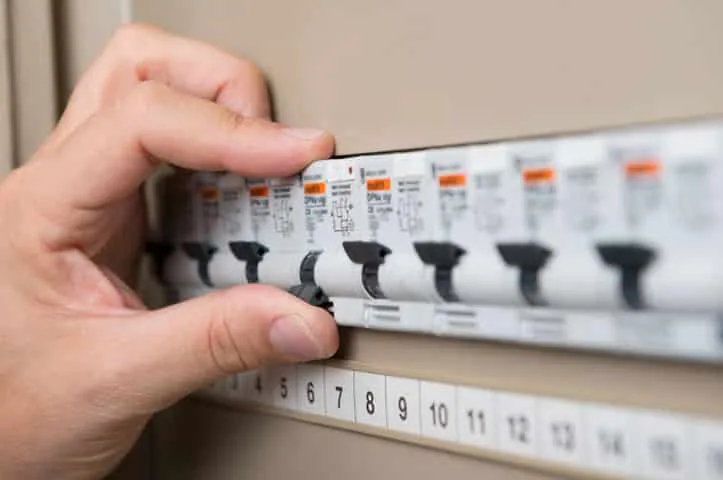
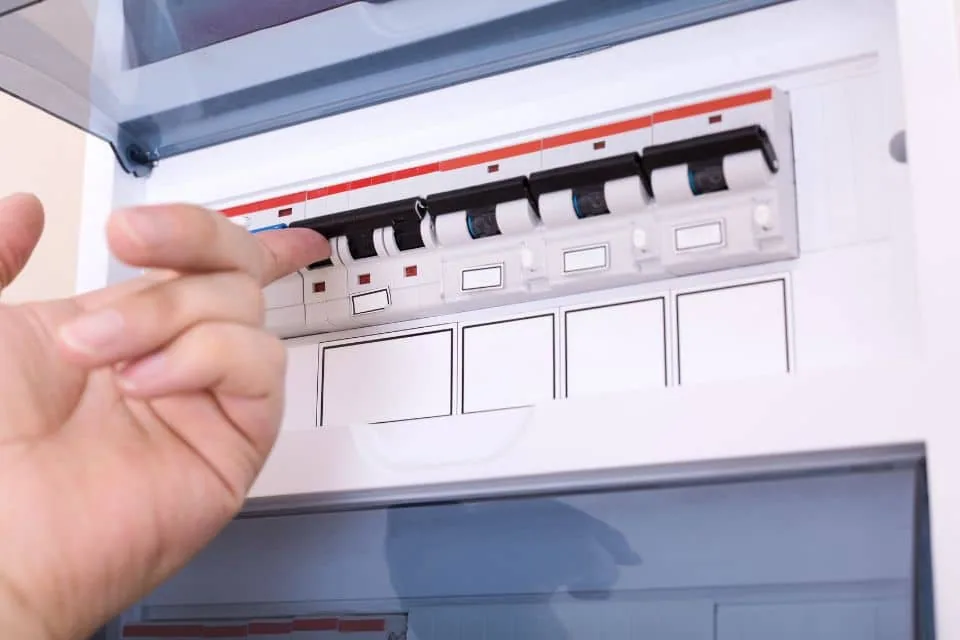
Go to your switchboard and turn off the circuit breaker for the affected light. If you’re unsure which breaker controls that circuit, turn off the main switch until an electrician can attend.
Check Other Switches in the House
If multiple switches give you a shock, the fault may be at the switchboard or in a shared wiring run rather than at individual switches. This is a more serious scenario that requires urgent professional fault detection.
Call a Licensed Electrician
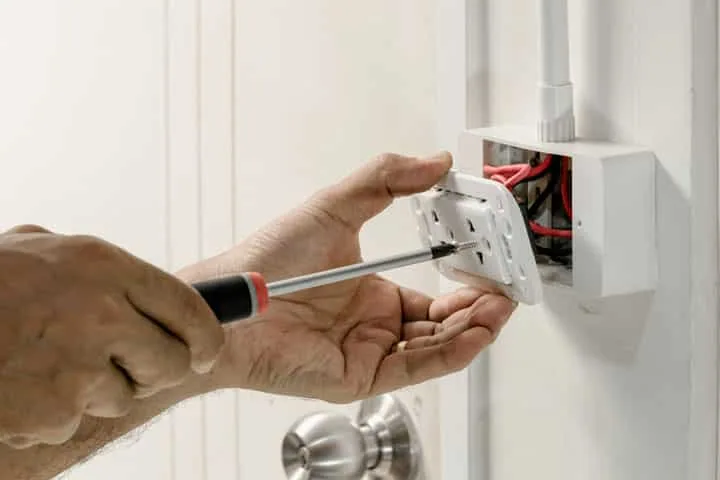
Under NSW law, all electrical wiring work, including switch replacement and wiring repairs, must be carried out by a licensed electrician. Do not remove the switch plate or attempt to inspect the wiring yourself.
More: Power Points Not Working? Common Causes and Fixes.
How a Licensed Electrician Diagnoses the Cause
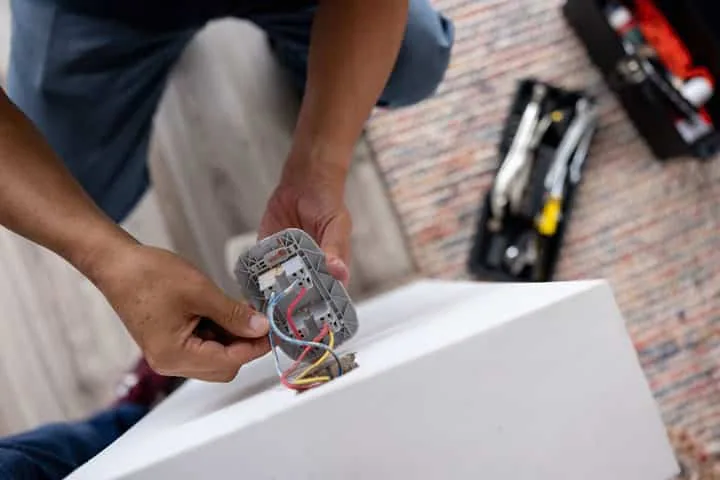
When I attend a light switch shock callout, here is the process I follow:
Earth Continuity Testing
I test whether the switch has a functioning earth connection by measuring continuity between the earth terminal and the main earth bar at the switchboard. If there’s no earth wire or the connection is broken, that’s your cause.
Insulation Resistance Testing
Using a megohmmeter, I test the insulation resistance of the wiring behind the switch. Low readings confirm that current is leaking through degraded insulation. This identifies whether the switch, the cable, or both need replacing.
RCD Functionality Testing
I test the RCD protecting the lighting circuit to confirm it trips at the correct threshold (30 milliamps within 30 milliseconds). A failing RCD that doesn’t trip explains why you’re receiving shocks without the safety switch intervening.
Switch and Connection Inspection
I remove the switch plate and inspect the internal mechanism, wiring connections, and mounting bracket for damage, corrosion, arcing marks, and loose terminals. This visual inspection often reveals the exact fault point immediately.
After a recent light switch inspection and repair at a Newcastle home, the team received this feedback:
“Anthony at Kitson Electricians was fabulous. His response to my request for a quote was almost immediate, and when I accepted the quote that night, he was at my place the next morning. I highly recommend them.” — Amanda Tobin
Fast response matters when you’re dealing with a switch that shocks. A licensed Newcastle electrician can diagnose and fix the fault the same day in most cases.
How to Prevent Electric Shocks From Light Switches
Most light switch shocks are preventable with a few practical steps:
Upgrade Old Switches
If your switches are original fittings from before the 1980s, have them replaced with modern switches that include proper earth connections. This is the single most effective prevention measure for older Newcastle homes.
Ensure RCD Protection on All Circuits
Every circuit in your home, including lighting, should have RCD protection. If your switchboard doesn’t have RCDs covering the lighting circuits, book a switchboard upgrade to add them.
Use IP-Rated Switches in Wet Areas
Bathrooms, laundries, and outdoor areas need switches with an appropriate IP rating to resist moisture ingress. Standard indoor switches are not designed for high-humidity environments.
Schedule Regular Electrical Safety Inspections
An electrical safety inspection every five years checks switch condition, earthing integrity, RCD functionality, and wiring health. It catches developing faults before they deliver a shock.
Areas We Service
Kitson Electricians Newcastle provides residential electrical services, including light switch repairs and safety inspections, across the entire Newcastle and Hunter region. We service Adamstown, Charlestown, Elermore Vale, Fletcher, Hamilton, Lambton, Lake Macquarie, Maitland, Mayfield, Merewether, New Lambton, Stockton, Wallsend, Waratah, and all surrounding suburbs.
Get Your Light Switch Inspected Today
If your light switch is giving you an electric shock, don’t keep using it. Call Kitson Electricians Newcastle on 0438 262 792. Licensed electricians, same-day service, upfront fixed pricing, and a lifetime labour warranty on all work. $50 off your first service and a free safety inspection valued at $150.
Frequently Asked Questions About Electric Shock From Light Switches
Is it normal to get a small shock from a light switch?
A brief static snap in dry conditions is normal and harmless. But a tingle, buzz, or jolt that happens every time you use a specific switch is not normal. That indicates current leakage and needs professional inspection.
Can an electric shock from a light switch kill you?
In extreme cases, yes. Australian homes run on 240 volts. A fault that delivers current through your body, especially with wet hands or bare feet on tiles, can cause cardiac arrest. This is why RCD protection and proper earthing are critical.
Why do I only get shocked from my light switch with wet hands?
Water reduces your skin’s electrical resistance from around 100,000 ohms to as low as 1,000 ohms. A small current leak that’s imperceptible with dry hands becomes a painful shock with wet hands. The fault exists either way. Moisture just makes it noticeable.
Should I stop using a light switch that shocks me?
Yes. Turn off the circuit at the switchboard and call a licensed electrician. Continuing to use a faulty switch risks a more severe shock, especially if conditions change or the fault worsens.
Does an RCD protect me from light switch shocks?
A functioning RCD detects current leaking through your body and cuts the power within 30 milliseconds. However, many older Newcastle homes don’t have RCD protection on lighting circuits. If your RCD isn’t tripping when you get shocked, either the circuit lacks an RCD or the RCD has failed.
Can I replace a faulty light switch myself in NSW?
No. Under NSW law, all electrical wiring work must be carried out by a licensed electrician. Removing a switch plate and accessing wiring is classified as electrical work. A licensed electrician must also issue a Certificate of Compliance after the work is completed.
Terms like RCD and earth leakage are explained in our electrical glossary.