
Older homes in Mayfield often need electrical rewiring if they were built before the 1980s and still have original rubber-insulated cabling, ceramic fuse boxes, or no RCD safety switch protection. These systems were not designed for modern electrical loads and carry a genuine fire and shock risk.
Many Mayfield homeowners inherit ageing wiring when they buy or renovate older properties in the suburb. Kitson Electricians Newcastle carries out home rewiring assessments and full rewires across Mayfield and the wider Newcastle region. This guide covers the warning signs, what a rewire involves, local housing context, and what to expect from the process.
How Old Is Too Old? Mayfield’s Housing History and Wiring Standards
Mayfield is one of Newcastle’s older working-class suburbs, with residential development concentrated from the 1920s through the 1960s, with further infill construction into the 1980s. That means a large proportion of homes were wired under electrical standards that are now decades out of date.
According to the NSW Government, homes built before the 1980s commonly have rubber-insulated wiring that deteriorates over time, leaving conductors exposed and increasing the risk of fire.
The NSW Government also confirms that electrical faults and appliances cause around 40% of house fires in NSW each year, up to 1,800 fires annually that could have been prevented by having wiring checked and safety switches installed.
Homes built before 2000 are strongly recommended to have a licensed electrician assess whether safety switches are present and functioning. In Mayfield, where pre-1980 homes are common, that assessment often reveals wiring that has well exceeded its serviceable life.
Warning Signs That Your Mayfield Home May Need Rewiring
Here is what I look for when assessing older Mayfield properties for potential rewiring:
- Rubber or cloth-insulated cables visible in the roof cavity. These cable types were installed before PVC insulation became standard in Australian residential construction. Rubber insulation cracks and crumbles with age and heat, exposing live conductors. If you can see brown or black rubber-jacketed cables in your ceiling, the wiring needs professional assessment.
- Ceramic fuse box or no RCD safety switches. A ceramic fuse board is a clear sign the property has never had a switchboard upgrade. These boards have no RCD protection, meaning a fault in the wiring or an appliance can deliver a fatal shock without interrupting the circuit. Under current NSW standards, RCD protection is required on all power and lighting circuits.
- Frequent circuit breaker trips or blown fuses. If your circuits trip regularly without an obvious cause, the wiring may be undersized or deteriorating. Older Mayfield homes were wired to support far fewer appliances than a modern household runs. The system is simply being asked to do more than it was designed for.
- Flickering or dimming lights across multiple rooms. Widespread flickering that is not limited to one fitting often points to loose connections or degraded wiring in the walls or ceiling cavity rather than a simple globe or fitting issue.
- Discolouration or scorch marks around switches and outlets. Brown or black marks around a switch plate or power point indicate arcing inside the wall. This is a fire risk and needs immediate inspection by a licensed electrician.
- No earthing on light switches. Homes in Mayfield built before the 1970s were commonly wired without an earth conductor running to light switches. Without earthing, any fault at the switch has no safe path to ground and delivers current through whoever touches it.
More: Why Do My Lights Flicker? Causes & How to Fix It
What Wiring Types Are Common in Older Mayfield Homes?
The wiring type in your home depends almost entirely on when it was built. Here is what I commonly find across each era in Mayfield.
Pre-1960s: Vulcanised Indian Rubber (VIR) Wiring
Homes built before the 1960s in Mayfield commonly have VIR cabling, also known as rubber-and-cloth wiring. The rubber insulation deteriorates over time due to heat, oxygen exposure, and electrical load.
When it breaks down, conductors become exposed inside the wall cavity. VIR wiring also typically lacks an earth conductor, making it non-compliant with current wiring rules and impossible to upgrade without a full replacement. According to SafeWork NSW, deteriorating insulation is one of the primary electrical hazards in older residential properties.
1960s to 1980s: Early PVC and Single-Insulated Wiring
Properties built or rewired during this era often have early PVC-insulated wiring. While more durable than rubber, much of this cabling was single-insulated or wired to standards that predate the current AS/NZS 3000:2018 Wiring Rules.
Many of these homes also have wiring that runs in close proximity to power and lighting cables without separation, creating capacitive coupling issues and potential overloading.
Post-1980s Renovations With Original Wiring Retained
A common scenario I find in Mayfield is a home that received a partial renovation between the 1980s and 2000s, such as a new kitchen or updated bathroom, but retained the original wiring in the rest of the property.
The renovated circuits meet current standards but are connected to a main run that does not. This mixed system requires careful assessment because the original wiring still poses a risk, even with new circuits added.
Modern TPS Wiring (Full Rewire Standard)
A full rewire installs thermoplastic-sheathed (TPS) cable throughout the property in accordance with current AS/NZS 3000:2018 standards. Every circuit is earthed, labelled, and RCD-protected at a modern switchboard. This is the benchmark to which all rewired properties in Mayfield are brought.
Is Rewiring Legally Required in NSW?
A full rewire is not automatically required by law simply because a home is old. NSW law does require, however, that any electrical wiring work must be done by or under the supervision of a licensed electrician, as confirmed by NSW Fair Trading’s electrical compliance requirements.
Electricians are required to issue a Certificate of Compliance for Electrical Work (CCEW) on completion. This is lodged with the Building Commission of NSW to confirm that the work was tested and meets the Gas and Electricity (Consumer Safety) Regulation 2018 and the relevant Australian Standards.
Where rewiring becomes effectively mandatory is when you undertake a renovation that triggers compliance requirements for connected circuits, when an electrical safety inspection identifies unsafe wiring, or when an insurer or a property sale requires evidence of a compliant system.
A licensed electrician can carry out an electrical safety inspection to determine which circuits are unsafe and whether a partial or full rewire is appropriate.
More: Power Points Not Working? Common Causes and Fixes
Why Mayfield Homes Specifically Face This Issue
Here is what I commonly find by era and location when assessing Mayfield properties:
- 1920s-1940s workers’ cottages in Mayfield and Islington. These properties were wired for a handful of lighting circuits and one or two power points. The original VIR cabling in these homes has typically been in place for 70 to 90 years. Most have no earth wire at switches or outlets, no RCD protection, and ceramic fuse boards that predate every modern safety standard.
- Post-war fibro homes in Mayfield East and Mayfield West. Homes built in the late 1940s through the 1960s for returning workers used early single-insulated wiring that was adequate for the era’s appliance loads. These properties are now running washing machines, dishwashers, air conditioners, and induction cooktops from circuits that were never rated for those loads.
- Brick veneer homes in Wallsend and Hamilton were built in the 1960s-1970s. This era saw a transition from rubber to early PVC wiring, but the installed switchboards were often under-rated for current demands and lacked the RCD protection now required. These homes frequently need a switchboard upgrade alongside a partial or full rewire.
- Partially renovated properties across Adamstown and Lambton. Renovation activity has been consistent across these suburbs since the 1990s. In many cases, only the kitchen or bathroom circuits were upgraded, leaving the rest of the home on original wiring. The mixed system creates compliance gaps that only show up during a full inspection.
- Investment properties in Shortland and Waratah. Rental properties in these suburbs are subject to landlord obligations under NSW law to maintain electrical safety. Older investment properties that have never been fully inspected frequently have wiring that would not pass a current compliance assessment.
What Does a Home Rewire Actually Involve?
Most homeowners have no idea what happens after the electrician arrives. Here is the step-by-step process I follow on every rewiring job in Mayfield.
Initial Electrical Safety Inspection
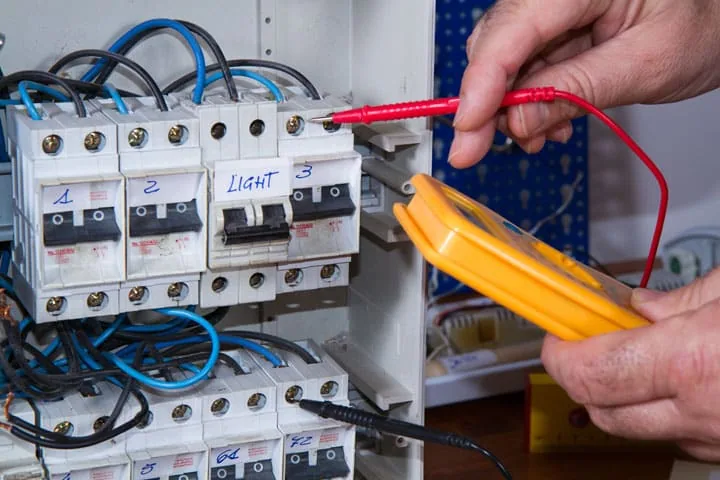
Before any rewiring work begins, I conduct a thorough electrical safety inspection of the property. This includes testing all circuits, checking the condition of the switchboard and cabling, and identifying any unsafe connections. You get a clear written report and a fixed-price quote before any work starts.
Cable Replacement Throughout the Property
All unsafe or non-compliant cabling is removed and replaced with new TPS copper wiring, run in accordance with the current AS/NZS 3000:2018 Wiring Rules.
This includes lighting circuits, power point circuits, and any dedicated circuits for appliances such as ovens, air conditioners, or hot water systems. In most cases, cable runs are accessed through the roof cavity and wall cavities, minimising the need to open up finished surfaces.
Switchboard Upgrade
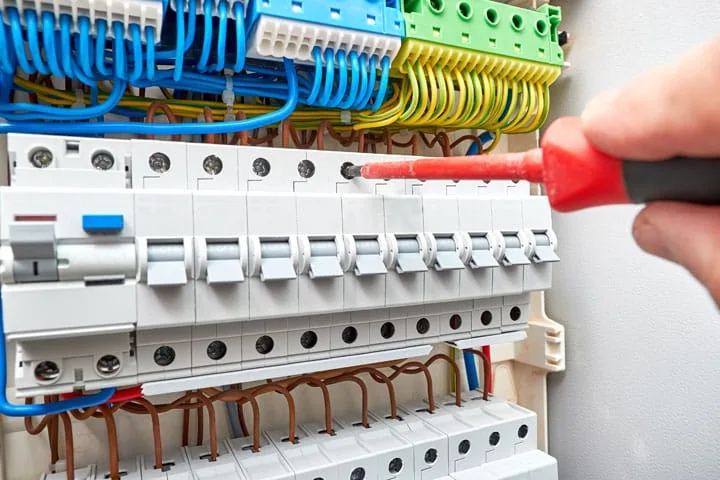
A full rewire in a Mayfield home almost always includes a switchboard upgrade. The new switchboard is fitted with individual circuit breakers and RCD safety switches on all circuits, providing the fault protection that older boards could not deliver. The board is clearly labelled so that every circuit is identifiable.
Testing, Certification, and Sign-Off
Every circuit is tested before power is restored. Upon completion, a Certificate of Compliance for Electrical Work is issued and lodged with the Building Commission of NSW. You receive a copy as your record of compliance. Before leaving, I walk you through what was done, what each circuit does, and how to test your safety switches, which should be pressed every six months.
How Much Does Rewiring an Older Mayfield Home Cost?
The cost of rewiring depends on the property’s size, the accessibility of the wiring, and whether a switchboard upgrade is included. These are indicative ranges for Newcastle homes based on current market conditions:
| Job Type | Typical Range | What Is Included |
| Electrical safety inspection | $150 – $300 | Full assessment, written report, fixed-price quote |
| Partial rewire (1-2 circuits) | $800 – $2,000 | Targeted circuit replacement, testing, CCEW |
| Partial rewire (half house) | $3,000 – $6,000 | Multiple circuits, switchboard upgrade, testing, CCEW |
| Full rewire (3-bedroom home) | $7,000 – $15,000 | All circuits, switchboard, RCDs, testing, CCEW |
| Full rewire (larger home) | $15,000 – $25,000+ | Complex layouts, double storey, heritage access |
Occupied homes cost more than vacant homes because access to circuits must be managed around your household. Properties where cable runs go through brick or concrete walls take longer than those with accessible roof cavities and suspended floors.
Every quote from Kitson Electricians Newcastle is fixed-price based on a site inspection. No hidden extras once the job is underway.
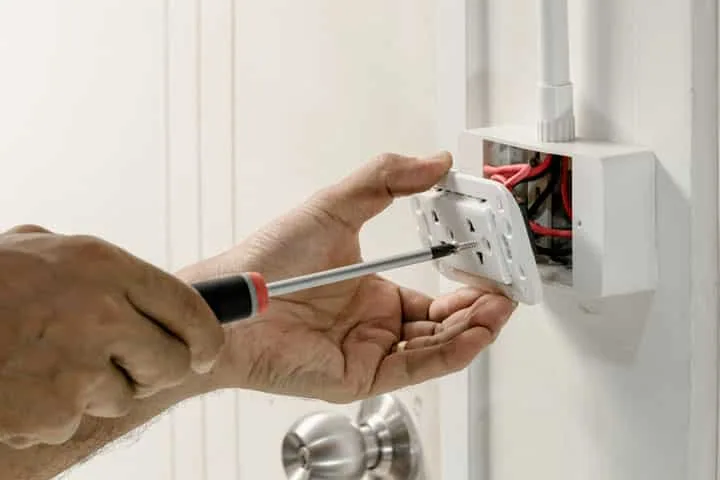
Maintaining Your Electrical System After Rewiring
Once a rewire is complete, a few straightforward habits will keep your system safe and extend its life. Here is what I recommend to every Mayfield homeowner after a rewiring job.
Test Your Safety Switches Every Six Months
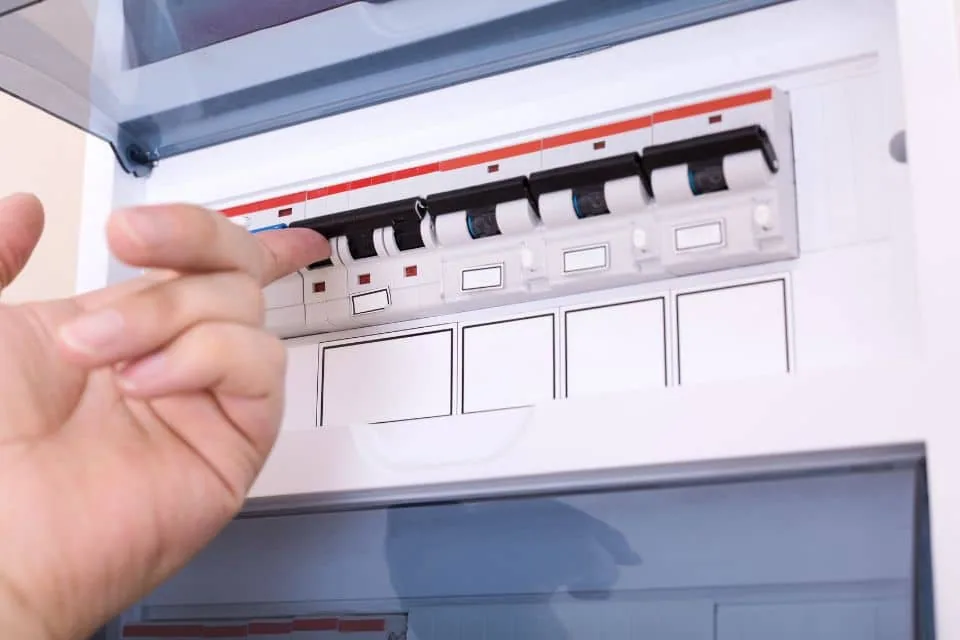
Press the test button on each RCD at your switchboard twice a year. The switch should trip and cut power to that circuit immediately. If it doesn’t trip, or if it trips but won’t reset, call a licensed electrician. The NSW Government recommends this six-monthly test as the minimum standard for maintaining RCD protection.
Avoid Overloading Circuits With Powerboards
A rewired home has correctly rated circuits, but stacking multiple high-draw appliances on a single power board can still overload an individual circuit. Appliances like air conditioners, ovens, and EV chargers should always be on their own dedicated circuit, not shared with other loads.
Book a Safety Inspection Every Five Years
Kitson Electricians Newcastle recommends scheduling an electrical safety inspection every five years for any home, and more frequently for properties over 30 years old.
An inspection catches deteriorating connections, corroded terminals, and compliance gaps before they become hazards. It also provides current documentation of your electrical system’s condition, which matters for insurance and property sales.
Act on Warning Signs Immediately
If flickering lights, tripping circuits, discoloured outlets, or burning smells appear after a rewire, do not ignore them. These symptoms can indicate a connection issue or a problem with an appliance rather than the wiring itself, but a licensed electrician needs to confirm the cause. Delaying investigation after a warning sign is the most common way small faults become expensive or dangerous problems.
After completing a recent job at a Newcastle home, Kitson Electricians received this review:
“I highly recommend Kitson Electricians. Once I contacted them, I received a very prompt response with a very reasonable quote. Communication was top notch. The Electrician arrived on time and very swiftly completed the job in an efficient and friendly manner. I have dealt with many Companies over the years, and not many are as impressive as this one. I will be recommending them to all my friends and will definitely be choosing them in the future for all my electrical needs. Thank you.” — Sue Robinson
That kind of prompt, transparent service is exactly what you should expect when booking a rewiring assessment on an older property.
More: Do I Need a Switchboard Upgrade? Signs to Look For
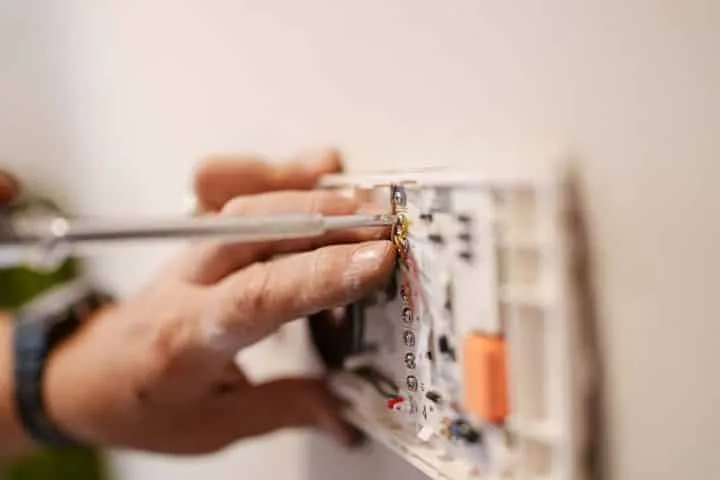
Areas We Service
Kitson Electricians Newcastle carries out home rewiring assessments and full rewires across Newcastle, Mayfield, and the wider Hunter region. We service Adamstown, Charlestown, Elermore Vale, Fletcher, Hamilton, Lambton, Mayfield, Merewether, New Lambton, Shortland, Wallsend, Waratah, and all surrounding suburbs. Whether your home has original VIR cabling from the 1940s in Mayfield or a partially updated system from the 1990s in Hamilton, our licensed electricians will assess the full system and recommend only what is genuinely needed.
Get Your Mayfield Home Wiring Assessed Today
If your Mayfield property was built before 1980 and has never had a rewire or full electrical inspection, it is worth knowing what is inside your walls before a fault makes that decision for you. Call Kitson Electricians Newcastle on 0438 262 792 or book online.
- Same-day and next-day bookings available for urgent assessment and fault finding
- Fixed upfront pricing. No surprises once the job starts
- Lifetime Labour Warranty on all rewiring and installation work
- Fully licensed and insured to NSW standards (AS/NZS 3000:2018)
- $50 off your first service and a free safety inspection valued at $150
- Clean Home Promise. Boot covers, drop sheets, full tidy-up on every job
Don’t wait for a fault to tell you what the wiring in your Mayfield home has been hiding.
Frequently Asked Questions About Electrical Rewiring in Mayfield
How do I know if my Mayfield home needs rewiring?
The clearest signs are a ceramic fuse box, rubber or cloth-insulated cables in the roof, frequent circuit trips, flickering lights across multiple rooms, or scorch marks near outlets and switches. If your home was built before 1980 and has never been fully inspected, a licensed electrician should assess the wiring before assuming it is safe.
Is it legal to rewire your own home in NSW?
No. Under NSW law, all electrical wiring work must be carried out by or under the direct supervision of a licensed electrician. Working without a licence carries penalties of up to $22,000 for individuals. Unlicensed work cannot receive a Certificate of Compliance, which can affect insurance claims and property sales.
How long does a full house rewire take in Newcastle?
Most three-bedroom homes take between three and six days to fully rewire, depending on access, wall construction, and whether a switchboard upgrade is included. Occupied homes typically take longer than vacant properties. Double-storey homes or heritage properties with limited access can take up to two weeks.
Will rewiring damage the walls in my Mayfield home?
A professional electrician uses the roof cavity and sub-floor wherever possible to minimise wall opening. Some wall penetrations may be unavoidable depending on cable routing, but any surface damage is made good before the job is completed. Your electrician will discuss access requirements before starting.
How much does it cost to rewire a three-bedroom home in Newcastle?
A full rewire of a three-bedroom home in the Newcastle region typically costs between $7,000 and $15,000, depending on access, wall construction, and whether a switchboard upgrade is included. A site inspection is the only reliable way to determine the exact scope and cost. Kitson Electricians Newcastle provides fixed-price quotes after a full assessment with no estimates that change mid-job.