
Power points that stop working are usually caused by a tripped safety switch, a tripped circuit breaker, a faulty appliance, or a wiring fault at the outlet. Whether one power point is dead or the entire house has lost power to outlets, the cause sits either in your switchboard or at the fitting itself.
The most common scenario is power points not working while the lights stay on. This confuses homeowners, but it has a simple explanation. Kitson Electricians Newcastle diagnoses and repairs power point faults across Newcastle, Lake Macquarie, and the Hunter region. This guide covers why power points fail, how to troubleshoot safely, and when you need a licensed electrician.
Why Your Lights Work But Your Power Points Don’t
Your lights and power points run on separate circuits inside your switchboard. When a safety switch or circuit breaker trips on the power circuit, it cuts the supply to your outlets while leaving the lighting circuit untouched. Your lights stay on. Your power points go dead.
This is the single most common reason for power points not working across Newcastle homes. The safety switch on your power circuit has detected a fault and done its job. According to the NSW Government, electrical faults and electrical appliances cause 40% of house fires in NSW homes each year. Your safety switch tripping is preventing exactly that kind of outcome.
The question is what caused it to trip. A faulty appliance, an overloaded circuit, moisture in an outlet, or degraded wiring can all trigger the safety switch. Finding which one is the key to fixing the problem properly.
How to Narrow Down the Cause
The pattern of failure tells you where the fault sits. Use this diagnostic table to identify your situation:
| What’s Happening | Most Likely Cause | What to Do |
| All power points are dead, lights are on | The safety switch tripped on the power circuit | Check the switchboard. Reset the safety switch. If it trips again, a fault exists on the circuit. |
| All power points and lights are dead | The main switch or main circuit breaker tripped | Check if the main switch is in the off position. Reset it. If it trips again, call an electrician. |
| One room has no working power points | The circuit breaker tripped for that specific room’s circuit, or there was a wiring fault in that section | Identify the breaker, reset it, and test. If it trips immediately, the fault is in the wiring or an appliance in that room. |
| One single power point is dead, the rest work fine | Faulty outlet, loose connection behind the plate, or the outlet’s internal switch has failed | Try another appliance in the same outlet. If nothing works, the outlet itself or its connection is faulty. |
| Power points work intermittently | Loose wiring connection, worn internal contacts, or a backstab connection that has worked loose | Stop using the outlet. Intermittent faults indicate a connection problem that can arc and create a fire risk. |
| The outdoor power outlet is dead after the rain | Moisture has triggered the safety switch or entered the outlet enclosure | Reset the safety switch once the area has dried. If it trips again, the outlet needs inspection and possibly an IP-rated upgrade. |
More: Why Does My Circuit Breaker Keep Tripping and What To Do?. If your circuit breaker is tripping repeatedly alongside dead power points, that blog covers the full diagnostic process.
Common Causes of Power Points Not Working
Most power point failures trace back to one of these causes. Here is what I see most often across Newcastle homes:
Tripped Safety Switch
The safety switch (RCD) on your power circuit detects current leaking to earth and cuts the supply. A faulty appliance is the most common trigger. The toaster, kettle, or phone charger you plugged in just before the power points went dead is usually the cause. Unplug everything on the circuit, reset the safety switch, and plug items back in one at a time. The appliance that trips the switch is your culprit. According to the NSW Government, Type AC RCDs are now banned in Australia and must be replaced with Type A or Type B RCDs to properly detect modern electrical faults.
Tripped Circuit Breaker
A circuit breaker trips when the circuit is overloaded or a short circuit occurs. Unlike a safety switch, the breaker protects the wiring from overheating rather than protecting you from shock.
If you’ve plugged in a high-draw appliance like a heater, clothes dryer, or air conditioner, the combined load on that circuit may have exceeded its capacity. Redistribute appliances across different circuits to avoid repeat trips.
Faulty or Damaged Power Point
The outlet itself can fail. Internal contacts wear out after decades of daily use. The spring mechanism that grips the plug loosens. The switch deteriorates.
A power point that is cracked, discoloured, warm to the touch, or makes a buzzing sound needs immediate replacement. The NSW Government advises homeowners to replace broken switches and power points and cover them while waiting for an electrician.
Loose Wiring Behind the Power Point
The cable connections behind a power point can loosen over the years of thermal cycling. Every time the circuit heats up under load and cools down again, connections expand and contract slightly. Over time, this creates a gap.
A loose connection means power flows intermittently or not at all. This is one of the more dangerous faults because the loose connection can arc, generating intense localised heat.
Backstab Connections
Many power points installed during the 1970s and 1980s use backstab connections, where the wire is pushed into a spring-loaded hole rather than secured under a screw terminal. These connections loosen over time and are a known failure point.
I find backstab failures frequently in older Newcastle homes across suburbs like Mayfield, Hamilton, and Wallsend. A qualified electrician replaces these with screw-terminal connections during a power point upgrade.
Moisture Ingress
Water and electricity don’t mix. Bathrooms, laundries, outdoor areas, and garages are all vulnerable to moisture entering power point enclosures. Even condensation from temperature changes can trigger the safety switch.
Outdoor power points in coastal suburbs like Merewether and Stockton are particularly exposed to both rain and salt moisture. These locations require IP-rated weatherproof outlets to resist ingress.
Why Power Point Faults Are Common in Older Newcastle Homes
Newcastle’s housing stock and environment create conditions that accelerate power point failures:
Post-War Homes With Original Fittings
Homes built across Mayfield, Hamilton, Lambton, and Wallsend during the 1940s to 1960s often still have original power points. These fittings have been in continuous use for 60-plus years. Internal contacts are worn, plastic housings are brittle, and the wiring connections behind them predate modern standards.
The City of Newcastle recorded 168,873 residents living in 74,579 dwellings at the 2021 Census, with a significant share of that housing built before current wiring rules existed.
Coastal Corrosion on Connections
Properties in Merewether, Stockton, and Newcastle East experience accelerated corrosion on electrical connections. Salt air attacks the metal contacts inside power points, creating resistance that reduces power delivery and eventually causes complete failure. Outdoor outlets in these areas deteriorate significantly faster than inland equivalents.
Overloaded Circuits in Renovated Homes
Suburbs like Charlestown, Fletcher, and New Lambton have seen significant renovation activity. Modern kitchens and home offices demand far more power than the original circuits were designed to deliver.
Running a dishwasher, microwave, kettle, and coffee machine on a circuit rated for a few small appliances creates chronic overloading. The circuit breaker trips. The power points go dead.
Rodent Damage in Ceiling Cavities
Suburbs with dense tree canopies, like Fletcher, Elermore Vale, and Maryland, see frequent possum and rodent activity in ceiling spaces.
Animals chew through cable insulation, creating short circuits that trip the safety switch and cut power to outlets. These faults are concealed and require professional fault detection equipment to locate.
What You Can Safely Check Before Calling an Electrician
You can do some basic troubleshooting before booking a callout. These checks are safe for anyone:
Check the Switchboard
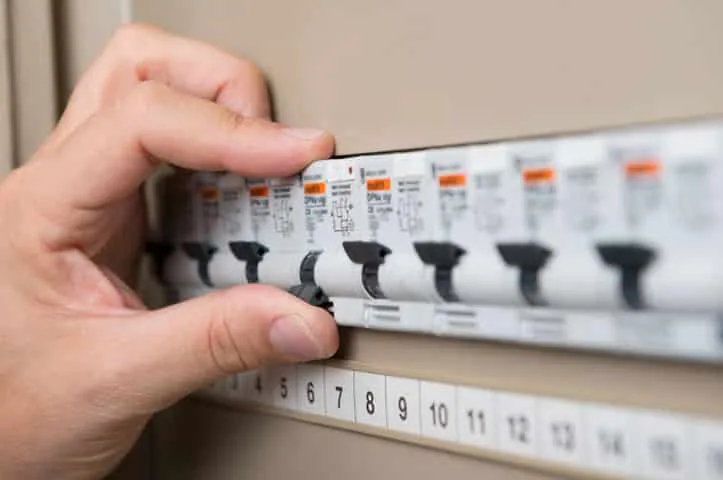
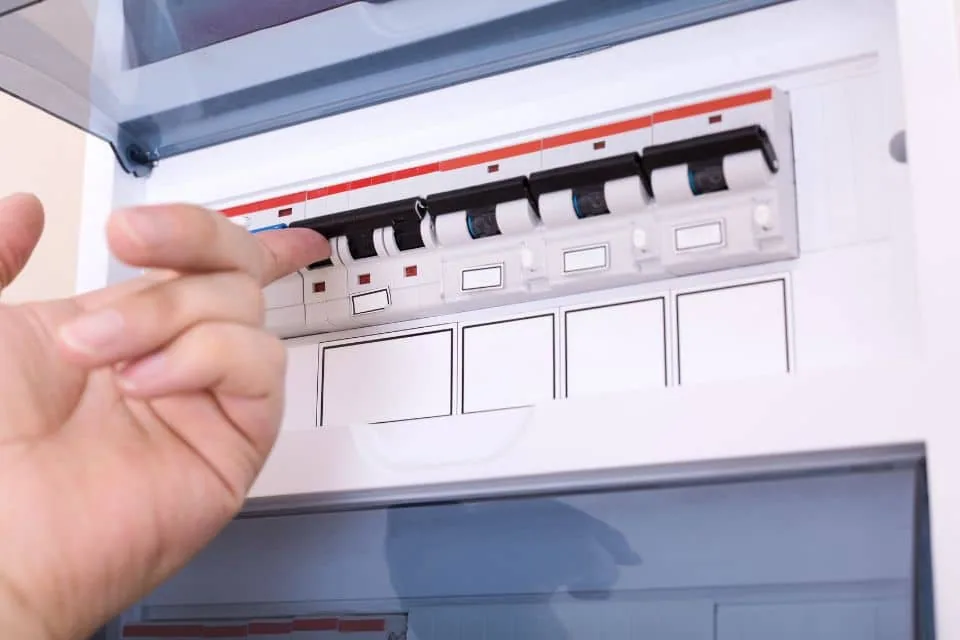
Open your switchboard and look for a tripped safety switch or circuit breaker. A tripped device will sit in the middle or off position. Push it firmly to off first, then flip it back to on. If it holds, plug your appliances back in one at a time to identify the trigger.
Test the Appliance in Another Outlet
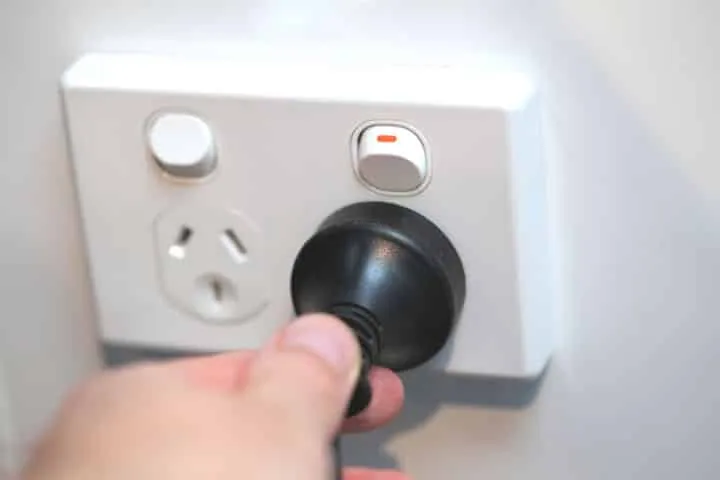
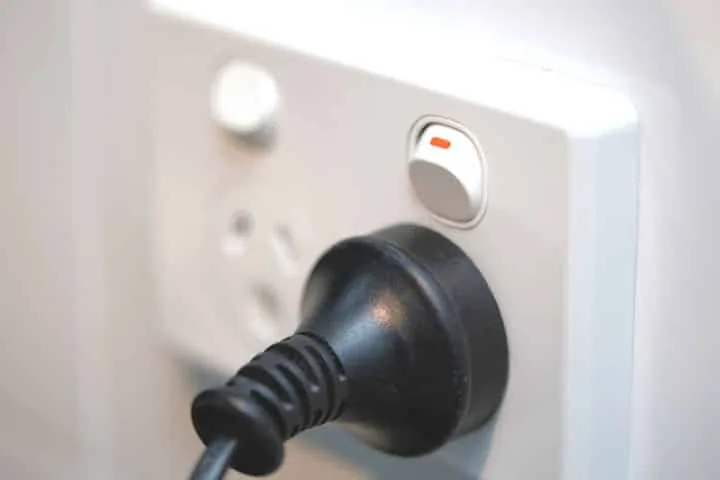
Plug the appliance that was in use when the power point stopped working into a different outlet. If it works elsewhere, the original power point is faulty. If it doesn’t work anywhere, the appliance itself is the problem.
Check if It’s One Outlet or One Room
If a single outlet is dead but the rest of the room works, the fault is localised to that fitting or its wiring. If the entire room is dead, the circuit breaker for that room has likely tripped.
Look for Visible Damage
Inspect the power point for cracks, scorch marks, discolouration, or melting. Feel the plate without touching the outlet holes. If it’s warm, stop using it immediately. Visible damage means the outlet needs replacing. Under NSW law, all electrical wiring work, including power point replacement, must be carried out by a licensed electrician.
More: Why Do My Lights Flicker? Causes & How to Fix It. If your lights are also misbehaving alongside dead power points, there may be a shared wiring or switchboard issue.
How a Licensed Electrician Diagnoses Power Point Faults
When basic checks don’t resolve the issue, a qualified electrician uses specialist tools to find the fault:
Outlet and Connection Inspection
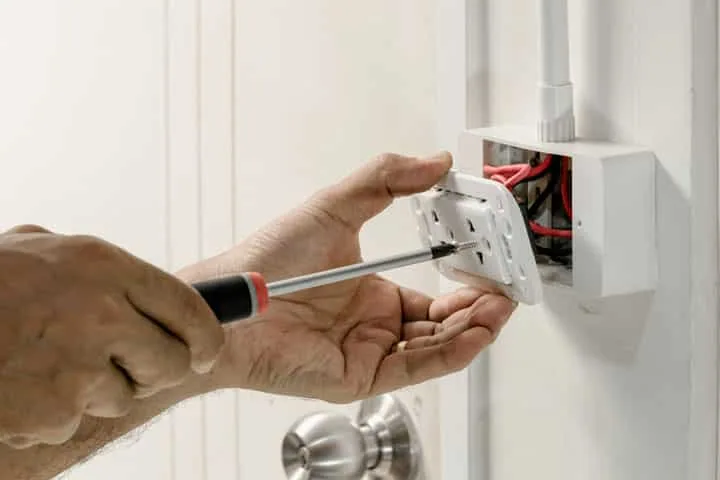
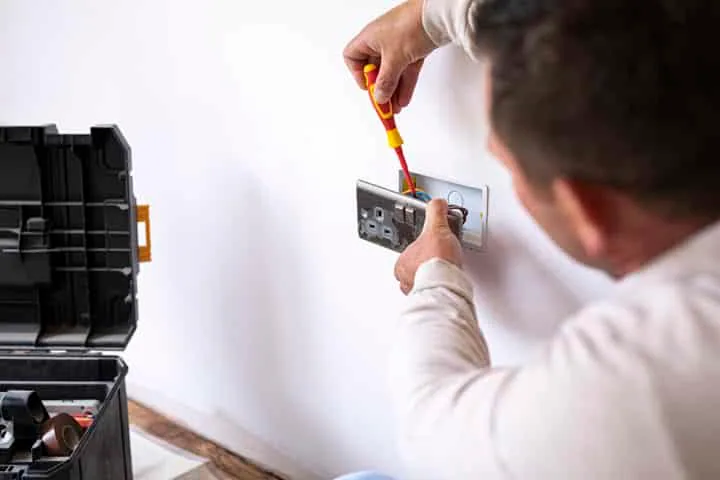
I remove the power point cover plate and inspect the wiring connections behind it. Loose screws, backstab failures, corroded terminals, and damaged cable insulation are all visible once the plate is off. This is the first step and identifies the cause in the majority of single-outlet faults.
Circuit Testing at the Switchboard
I test the affected circuit at the switchboard for continuity, insulation resistance, and earth fault current. This identifies whether the fault is at the outlet, in the cable run between the switchboard and the outlet, or at a junction point along the way.
RCD and Circuit Breaker Functionality Testing
I test the safety switch and circuit breaker to confirm they’re operating within specifications. An RCD that trips too easily may itself be faulty or at the end of its life.
According to SafeWork NSW, RCDs must be tested regularly to make sure they are working effectively. A safety switch that fails to trip when tested is providing zero protection and needs immediate replacement.
Load Assessment
If overloading is the suspected cause, I assess the total load on the affected circuit and compare it to the circuit’s rated capacity.
Homes with original wiring often need additional circuits added to handle modern appliance loads safely. As a licensed Newcastle electrician, I can design a circuit layout that distributes loads properly and prevents future trips.
After a recent power point diagnosis and electrical safety inspection at a Newcastle home, Kitson Electricians received this feedback:
“Excellent service from Kitson Electric. The electrician arrived on time, communicated clearly throughout the process, and delivered top-quality work. Everything was completed safely and efficiently, and the pricing was honest and transparent. It’s not easy to find tradespeople this reliable these days — highly recommended!” — Tang Tom
Clear communication and transparent pricing are exactly what you should expect from any electrician you invite into your home.
Areas We Service
Kitson Electricians Newcastle provides residential electrical services, including power point repairs and upgrades across the entire Newcastle and Hunter region. We service Adamstown, Charlestown, Edgeworth, Elermore Vale, Fletcher, Hamilton, Lambton, Lake Macquarie, Maitland, Maryland, Mayfield, Merewether, New Lambton, Stockton, Wallsend, and all surrounding suburbs.
Get Your Power Points Working Again
If your power points have stopped working and resetting the switchboard hasn’t fixed it, call Kitson Electricians Newcastle on 0438 262 792. Licensed electricians, same-day service, upfront fixed pricing, and a lifetime labour warranty on all work. $50 off your first service and a free safety inspection valued at $150.
Frequently Asked Questions About Power Points Not Working
Why are my power points not working, but my lights are on?
Your lights and power points run on separate circuits. The safety switch or circuit breaker on your power circuit has tripped, cutting the supply to outlets while leaving the lighting circuit untouched. Reset the safety switch and test appliances one at a time to find the trigger.
Can I fix a power point myself in NSW?
You can unplug appliances and reset your safety switch. But any work on the power point itself, including replacing the outlet, tightening connections, or accessing wiring, must be done by a licensed electrician. It is illegal to perform electrical wiring work without a licence in NSW.
Is it dangerous if a power point stops working?
A single dead outlet is usually not immediately dangerous, but it signals a fault that should be investigated. A power point that is warm, discoloured, buzzing, or sparking is dangerous and should not be used. Turn off the circuit at the switchboard and call an electrician.
Why do my power points keep tripping the safety switch?
A faulty appliance is the most common cause. Unplug everything and reset the switch. Plug items back in one at a time. The appliance that causes the trip needs repair or replacement. If the switch trips with nothing plugged in, the wiring itself is faulty and needs professional diagnosis.
Why is only one power point not working?
The outlet’s internal mechanism may have failed, the wiring connection behind the plate may be loose, or the outlet’s switch may be broken. Try a different appliance in the same outlet. If nothing works, the fitting itself needs inspection and likely replacement.
How much does it cost to replace a power point in Newcastle?
A standard power point replacement typically costs between $100 and $200, including the fitting and labour, depending on accessibility and the type of outlet required. Your electrician must issue a Certificate of Compliance after the work is completed.