
You likely need a switchboard upgrade if your home still has ceramic fuses, lacks safety switches (RCDs), is over 25 years old, or can’t handle the load of modern appliances. Any one of these signs means your switchboard no longer meets current Australian safety standards.
Your switchboard is the control centre of your home’s entire electrical system. If it’s outdated, everything downstream is compromised. Kitson Electricians Newcastle provides switchboard inspections and upgrades across Newcastle, Lake Macquarie, and the Hunter region. This guide covers the warning signs, what the upgrade involves, and when it becomes urgent.
What Your Switchboard Actually Does
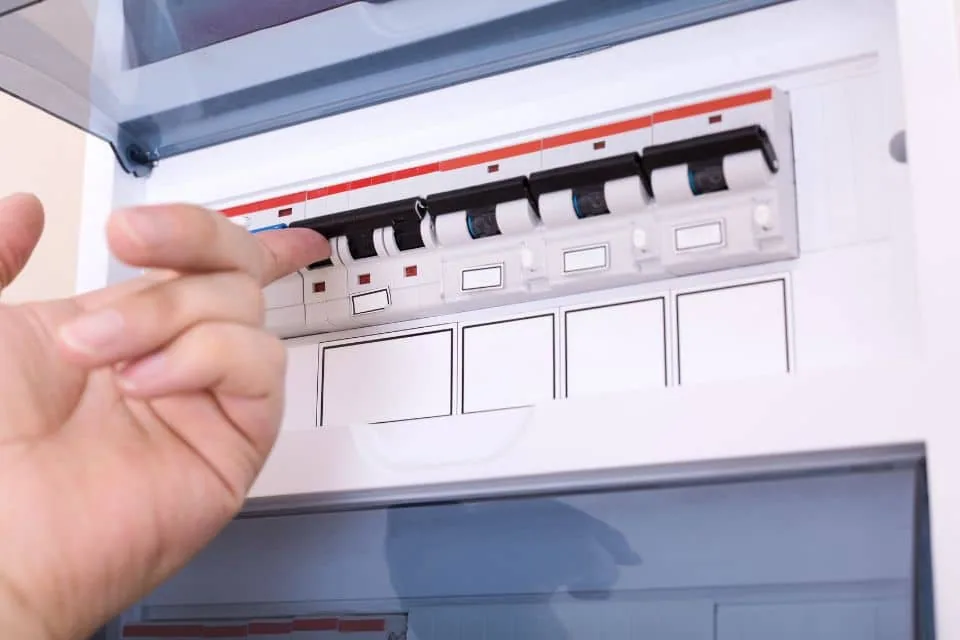
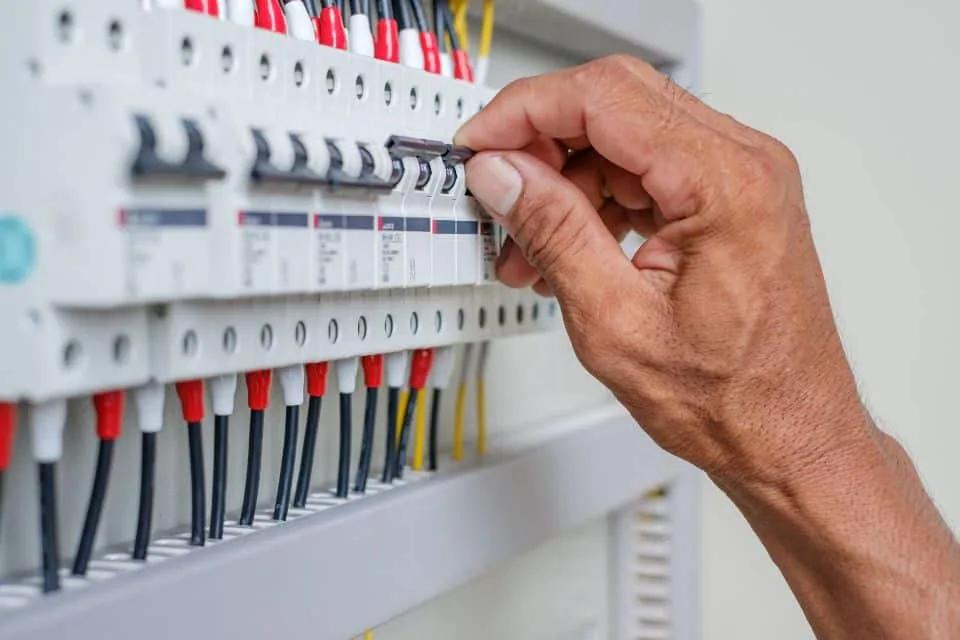
Your switchboard distributes electricity from the mains supply to every circuit in your home. It contains circuit breakers that protect wiring from overload, RCDs (safety switches) that protect people from electric shock, and a main switch that lets you isolate all power in an emergency.
A modern switchboard detects faults and cuts power within 30 milliseconds. An old switchboard with ceramic fuses reacts slowly and provides no protection against electrocution at all. According to NSW Energy, a switchboard upgrade is sometimes needed to replace an outdated fuse box, increase capacity, or install safety devices to meet new standards. It also enables modern upgrades like solar systems, heat pump hot water, and EV chargers.
In my experience across Newcastle homes, the switchboard is the most overlooked component until something goes wrong. By that point, the cost of emergency repair is usually higher than a planned upgrade would have been.
The Self-Assessment Checklist: Do You Need an Upgrade?
Walk to your switchboard and check these items. If you answer yes to any of them, your switchboard needs a professional assessment. If you answer yes to three or more, an upgrade is overdue:
| What to Check | What You’re Looking For | What It Means |
| Are there ceramic or porcelain fuses? | Round ceramic plugs with wire elements instead of modern switch-type breakers | Your switchboard is obsolete. Ceramic fuses are no longer compliant and provide inadequate protection. |
| Is there a safety switch (RCD)? | Look for a device with a button marked “T” or “Test.” If there’s no test button on any device, you have no RCD. | No RCD means no electrocution protection. Under AS/NZS 3000, RCDs are mandatory on all circuits in new installations and upgrades. |
| Is there a main switch? | A single switch that turns off all power to the house. Some old boards don’t have one. | No main switch means you can’t isolate all power quickly in an emergency. |
| Is the board made of wood, Bakelite, or backed with asbestos? | Check the material of the board itself. Modern boards use metal enclosures. | Flammable backing materials are a fire risk and no longer compliant. |
| Are there scorch marks, discolouration, or a burning smell? | Visible darkening, melted plastic, or any heat-related damage on the board or around breakers | Active overheating. This is urgent. Stop reading and call an electrician now. |
| Was the house built before 2000, and has it never had a switchboard upgrade? | Check with previous owners, your building report, or a licensed electrician | Switchboards over 25 years old almost certainly lack modern safety features. |
More: Electrical Burning Smell in Your House? What It Means and What to Do.
Warning Signs That Mean You Need an Upgrade
Beyond the checklist, these everyday symptoms point to a switchboard that can’t keep up:
- Circuit breakers or fuses tripping regularly: If you’re resetting breakers or replacing blown fuses more than once a month, your switchboard can’t handle your home’s electrical load. Modern households draw far more power than boards installed 20 or 30 years ago were designed for.
- Lights dimming when you turn on appliances: When your air conditioner, oven, or clothes dryer kicks in, and the lights dip, the switchboard is struggling to distribute the sudden demand. This indicates undersized circuits or an overloaded board.
- You’re adding solar, an EV charger, or air conditioning: These systems require dedicated circuits with specific protection. Older switchboards don’t have the capacity or the required RCD types (Type A or Type B) to support them safely. According to SafeWork NSW, working on energised electrical equipment poses risks of electric shock and arc flash. Upgrades must be done by a licensed professional.
- You’re renovating or extending your home: Any renovation that adds circuits, power points, or high-draw appliances triggers a requirement to bring the switchboard up to current AS/NZS 3000 standards. The upgrade is not optional once new electrical work is being done.
- Your home has no surge protection: Modern switchboards can include surge protection to guard sensitive electronics (computers, TVs, smart home devices) against voltage spikes from lightning or grid fluctuations. Old boards offer no such protection.
- Insurance concerns: Some insurers require switchboard compliance for electrical fault claims. An outdated switchboard with ceramic fuses could affect your coverage if an electrical fault causes damage.
More: Why Does My Circuit Breaker Keep Tripping and What To Do?.
Why Newcastle Homes Are Particularly Likely to Need an Upgrade
Newcastle’s housing stock means a high proportion of homes are running on switchboards that predate modern safety standards:
- Post-war homes in Mayfield, Hamilton, and Wallsend: Many properties built during the 1940s to 1960s still have original or near-original switchboards. Some still run ceramic fuses mounted to asbestos-backed boards. These are the most urgent candidates for a full switchboard upgrade.
- Coastal corrosion in Merewether and Stockton: Salt air accelerates corrosion on switchboard terminals, bus bars, and breaker contacts. Corroded connections create resistance, generate heat, and reduce the reliability of safety devices. Coastal switchboards degrade faster than inland ones and need more frequent assessment.
- 1980s and 1990s homes with partial RCD coverage: Many homes built in Charlestown, Fletcher, and New Lambton during this era have one RCD covering the power circuits, but nothing protecting the lighting, hot water, or air conditioning circuits. Under current standards, all circuits need RCD protection. These boards need an upgrade, not just the addition of another breaker.
- Renovation-era load increases: The 2021 Census recorded 168,873 residents living in 74,579 dwellings in the City of Newcastle. A significant share of these homes have been renovated with modern kitchens, air conditioning, and home offices, but the switchboard behind them hasn’t been upgraded to match the increased demand.
- Solar and EV adoption: Newcastle homeowners installing rooftop solar or EV chargers often discover their existing switchboard can’t accommodate the new circuits. The upgrade becomes a prerequisite before the solar installer or EV charger electrician can proceed.
What a Switchboard Upgrade Actually Involves
Here is what happens during a standard residential switchboard upgrade:
Assessment and Quoting
A licensed electrician inspects your existing switchboard, identifies what needs replacing, assesses the total circuit load, and provides a fixed-price quote. This inspection also checks whether the mains supply and metering need upgrading alongside the board.
Isolation and Removal
The power is isolated at the mains. The old switchboard components (ceramic fuses, old breakers, and backing board) are removed. All existing cables are identified, labelled, and tested for insulation integrity.
Installation of New Components
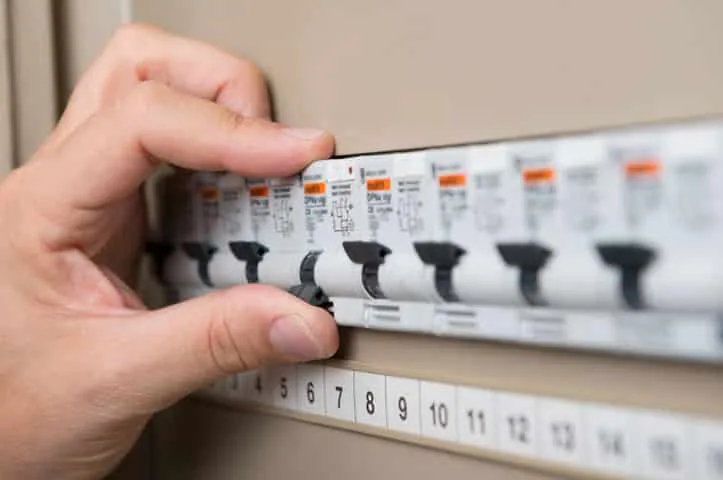
A new metal enclosure is fitted. Modern circuit breakers, RCDs (or RCBOs), a main switch, and optionally surge protection are installed. Each circuit is connected, tested, and labelled. The work must comply with AS/NZS 3000:2018.
Testing and Certification
Every circuit is tested for insulation resistance, earth fault loop impedance, and correct RCD trip times. The electrician issues a Certificate of Compliance (CCEW), which confirms the installation meets all NSW safety and regulatory requirements.
Timeframe
A standard single-phase residential switchboard upgrade typically takes four to eight hours. Your home will be without power during this time. Complex installations involving additional circuits or rewiring may take longer.
What You Can Do Before Booking an Upgrade
A few simple checks help you understand the urgency:
- Open your switchboard and photograph it: A photo gives your electrician an immediate visual assessment before they visit. They can often estimate the scope of work from a clear photo.
- Count your circuits: Count the number of breakers or fuses. If your home has fewer than 8 to 10 circuits, it’s likely undersized for modern use. Modern homes typically need 12 to 20 circuits.
- Test your safety switches: Press the test button on each RCD. It should trip immediately. If it doesn’t, the RCD has failed and needs replacing. If there’s no test button on any device, you have no safety switches at all.
- Note any symptoms: Write down any recurring issues, such as tripping breakers, flickering lights, warm switches, or smoke alarm false alarms. These help your electrician prioritise the assessment.
- Check the manufacture date: Some switchboard components have date stamps. If any component is over 25 years old, it’s past its reliable service life.
After a recent switchboard upgrade at a Newcastle home, Kitson Electricians received this feedback:
“I would like to thank Anthony for his excellent work, professionalism, customer service & knowledge of the job I needed done. Just moving to the area, it was great finding Kitson Electric as they informed me of all pricing, did not try & take me off budget and kept me up to date throughout the entire job. I would highly recommend Anthony & his team at Kitson Electric. You guys were fantastic. Thanks to you, too, Harry.” — Laura Tribble
Transparent pricing and clear communication are exactly what you should expect from any electrician handling a switchboard upgrade.
Areas We Service
Kitson Electricians Newcastle provides residential switchboard upgrades and inspections across the entire Newcastle and Hunter region. We service Adamstown, Charlestown, Edgeworth, Elermore Vale, Fletcher, Hamilton, Lambton, Lake Macquarie, Maitland, Maryland, Mayfield, Merewether, New Lambton, Stockton, Wallsend, and all surrounding suburbs.
Book Your Switchboard Inspection Today
If you’re unsure whether your switchboard needs upgrading, call Kitson Electricians Newcastle on 0438 262 792 for a professional assessment. Licensed electricians, same-day service, upfront fixed pricing, and a lifetime labour warranty on all work. $50 off your first service and a free safety inspection valued at $150.
Frequently Asked Questions About Switchboard Upgrades
How do I know if my switchboard needs upgrading?
Check for ceramic fuses, missing safety switches (RCDs), a wooden or asbestos backing board, or any scorch marks. If your home was built before 2000 and the switchboard has never been replaced, it almost certainly needs an upgrade.
How much does a switchboard upgrade cost in Newcastle?
A standard single-phase residential switchboard upgrade typically costs between $1,200 and $3,000, depending on the number of circuits, the condition of existing wiring, and whether additional work like rewiring is needed. Your electrician should provide a fixed-price quote after inspection.
Can I upgrade my switchboard myself?
No. Switchboard work is classified as electrical wiring work under NSW law and must be carried out by a licensed electrician. A Certificate of Compliance must be issued after the work is completed. Working on a live switchboard without training risks fatal electric shock.
How long does a switchboard upgrade take?
A standard residential upgrade takes four to eight hours. Your home will be without power during this time. Complex jobs involving additional circuits or mains upgrades may extend into a second day.
Do I need a switchboard upgrade for solar panels?
In most cases, yes. Solar systems require dedicated circuits with specific RCD protection (often Type B for the inverter circuit). Older switchboards typically don’t have the capacity or the correct protection types to support solar safely.
Is an old switchboard dangerous?
Yes. A switchboard with ceramic fuses provides no electrocution protection, reacts slowly to overloads, and may have degraded connections that generate heat. Electrical faults contribute to approximately 40% of the 4,500 house fires in NSW each year.