
Lights that randomly turn off and on are usually caused by a loose wiring connection, a faulty light switch, a neutral fault in your switchboard, or an incompatible dimmer. The specific cause depends on whether the problem affects one light, one room, or the entire house.
This is not a quirk to ignore. Lights cycling on and off signal an active fault that can worsen over time and create a fire risk. Kitson Electricians Newcastle diagnoses and repairs lighting faults across Newcastle, Lake Macquarie, and the Hunter region. This guide explains the most common causes, how to narrow down the problem, and when to call a licensed electrician.
How to Narrow Down the Cause by What You’re Seeing
The behaviour of your lights tells you a lot about where the fault sits. Before doing anything else, observe the pattern. This diagnostic table matches common symptoms to their most likely causes:
| What You’re Seeing | Most Likely Cause | Urgency |
| One light turns off and on randomly | Loose globe, failing fitting, faulty switch, or thermal cutout activating in a recessed downlight | Low to moderate. Check the globe and switch first. |
| One room’s lights all flicker or cycle | Loose connection at a junction box, faulty circuit wiring, or overloaded circuit serving that room | Moderate. A wiring fault in one circuit needs professional diagnosis. |
| Lights dim when an appliance starts, then recover | Large appliance (air conditioner, oven, dryer) drawing heavy current on the same circuit or a shared neutral | Moderate. May indicate undersized wiring or a circuit that needs separating. |
| Lights in some rooms get brighter while others dim | Loose or failing neutral connection at the switchboard or mains supply point | Very high. This is the most dangerous scenario. Turn off the main switch and call an electrician immediately. |
| Whole house lights flicker or cycle simultaneously | Supply fault from the network provider, loose mains connection, or failing main neutral | Very high. Contact your network provider and a licensed electrician. |
| Smart lights turn on or off by themselves. | Firmware glitch, Wi-Fi interference, a scheduled routine you forgot about, or an incompatible smart switch on a circuit without a neutral wire | Low. Check your smart home app and reset the device before suspecting a wiring fault. |
This table is your starting point. If the issue affects multiple rooms or causes some lights to brighten while others dim, stop resetting and call a qualified electrician straight away. That pattern indicates a neutral fault, which is one of the most serious electrical faults a home can have.
Common Causes of Lights Turning Off and On
Most lighting faults in Newcastle homes come down to one of these causes. I see the same issues repeatedly, particularly in older properties:
Loose Connections at the Light Fitting or Switch
This is the single most common cause. A connection that has loosened over years of thermal expansion and contraction creates an intermittent contact. Power flows, then breaks, then flows again. The light turns off, pauses, then comes back on. You’ll often notice this gets worse when the light has been running for a while, and the fitting heats up.
Worn or Failing Light Switch
Light switches are mechanical devices with a limited lifespan. After tens of thousands of operations, the internal contacts wear down and stop making reliable contact. A failing switch might work fine for days, then start cutting out randomly. If you hear a faint click or buzz from the switch when the light cycles off, the switch itself is the culprit. Replacing a light switch is one of the simplest electrical repairs an electrician can do.
Incompatible Dimmer Switch
Older dimmer switches designed for incandescent or halogen globes often don’t work properly with LED replacements. The dimmer can’t regulate the low wattage of LEDs correctly, causing the light to flash, strobe, or cycle off and on. If your lights started misbehaving after you switched to LED globes, an incompatible dimmer is the likely cause.
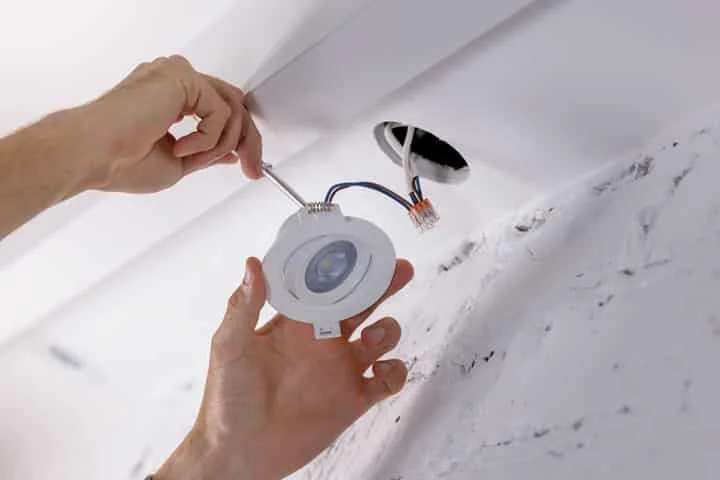
Thermal Cutout in Recessed Downlights
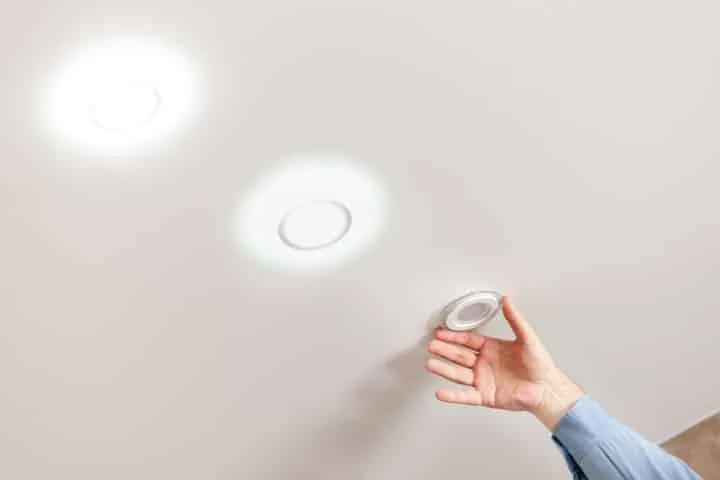
Recessed downlights, especially halogen types, have a built-in thermal cutout that switches the light off when it overheats. If insulation in the ceiling has been pushed against the fitting, the cutout triggers repeatedly. The light turns off for a few minutes, cools down, then switches back on. This is a serious fire risk in ceiling cavities.
Overloaded Circuit
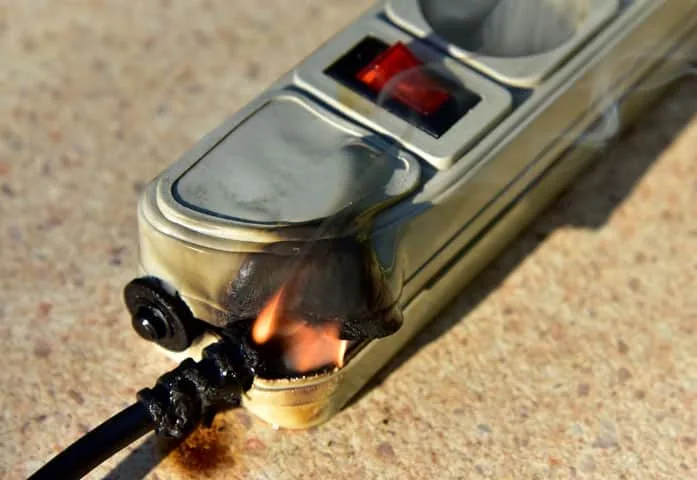
When too many lights and appliances share a single circuit, the combined load can cause voltage drops that make lights cycle. This is especially common in older homes where fewer circuits carry heavier combined loads. According to Fire and Rescue NSW, overloading power boards and circuits is a leading contributor to residential electrical fires.
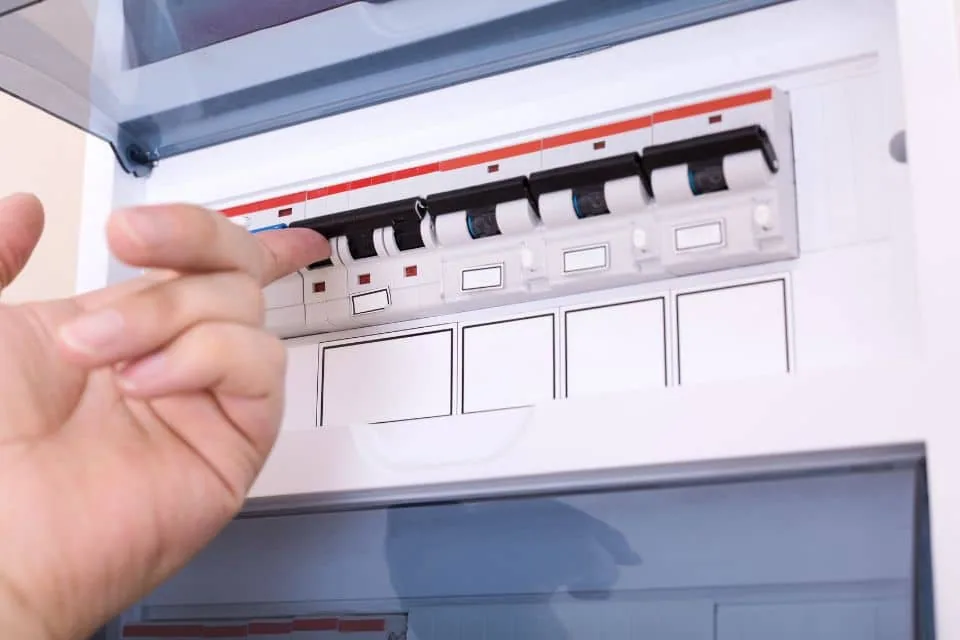
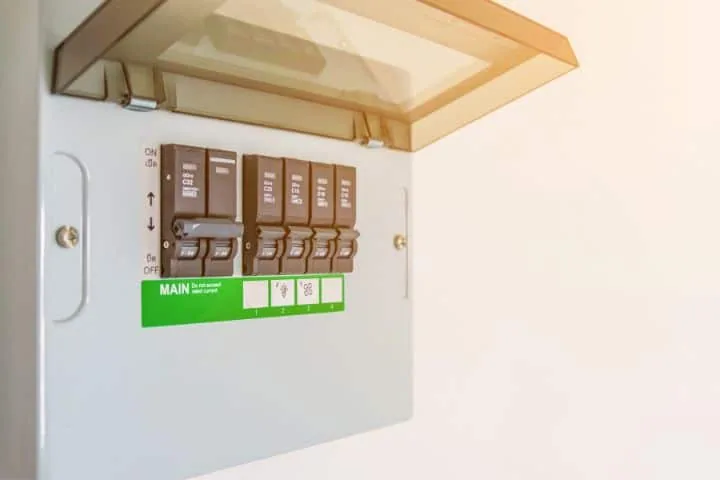
Loose Neutral at the Switchboard
A loose neutral connection inside your switchboard causes voltage to shift unevenly between circuits. You’ll see lights in one room dim while lights in another room get brighter. Appliances may behave strangely at the same time. This is extremely dangerous. The loose connection generates heat through arcing that can melt insulation and ignite surrounding materials. Under AS/NZS 3000:2018, only a licensed electrician can work on switchboard components.
Lights that strobe or dim momentarily but stay on are a different problem entirely. See our guide on why lights flicker and how to fix it.
Is It Dangerous if Your Lights Keep Turning Off and On?
It depends on the cause and scope. A single LED flickering because of a dimmer incompatibility is annoying but not dangerous. But lights cycling across multiple rooms, or the seesaw effect where some get brighter while others dim, is genuinely dangerous.
According to the NSW Government, people in NSW lose their lives every year from electrical accidents. Loose connections and faulty wiring are among the most common hazards. A loose connection that causes a light to cycle on and off is generating heat at the fault point every time the contact breaks and reforms. That heat builds over time.
Fire and Rescue NSW reports that electrical faults cause almost 40% of the approximately 4,500 residential house fires in the state each year. Many of these fires start inside wall cavities, ceiling spaces, or switchboards where concealed wiring faults generate heat for weeks or months before igniting.
Here is when to treat the issue as urgent:
Multiple Rooms Affected Simultaneously
If lights in more than one room flicker or cycle at the same time, the fault is likely at the switchboard, the mains supply point, or the neutral conductor. Do not keep resetting or ignore it. Turn off the main switch and call an electrician.
Lights Getting Brighter and Dimmer in a Seesaw Pattern
This is the classic sign of a loose or broken neutral. Voltage is shifting unevenly between circuits. Appliances on the overvoltage side can be permanently damaged. This fault can escalate to a fire very quickly.
Burning Smell or Warm Switches
If any light switch feels warm to the touch, or if you smell burning near a switch, outlet, or the switchboard, the fault is generating dangerous levels of heat. Stop using that circuit and call for emergency fault detection immediately.
Why This Problem Is Common in Older Newcastle Homes
Newcastle’s housing stock creates specific conditions that make intermittent lighting faults more likely than in newer developments:
- Post-war homes with original light switches
Homes built across Mayfield, Hamilton, Lambton, and Wallsend during the 1940s to 1960s often still have original Bakelite or early plastic light switches. These switches have been operated tens of thousands of times over 60-plus years.
The internal contacts are worn well beyond their reliable service life. The City of Newcastle recorded 168,873 residents living in 74,579 dwellings at the 2021 Census, and a significant proportion of that housing stock predates modern wiring standards.
- Coastal corrosion in Merewether and Stockton
Salt air accelerates corrosion on electrical connections, including those inside light fittings, junction boxes, and switchboard terminals. Corroded connections create the intermittent contact that causes lights to cycle on and off. As a licensed Newcastle electrician, I see this frequently in homes within a few kilometres of the coastline.
- Halogen downlight thermal cutouts in renovated suburbs
Suburbs like Charlestown, Fletcher, and New Lambton saw significant renovation activity during the 2000s and early 2010s when halogen downlights were standard. Many of these fittings are now overheating due to insulation contact in ceiling cavities. The thermal cutout switches the light off and on repeatedly, and the homeowner assumes it’s a wiring fault. Upgrading to LED-compatible recessed light fittings eliminates the problem entirely.
- Mixed old and new wiring after partial renovations
Homes that have been partially renovated often have original wiring connected to new fittings, or new wiring spliced into old junction boxes. These mixed connections degrade faster than a properly unified system, especially in suburbs like Adamstown, Waratah, and Elermore Vale, where renovation has been incremental over decades.
How a Licensed Electrician Diagnoses Lighting Faults
When basic troubleshooting doesn’t resolve the issue, a qualified sparky uses specialist equipment to find the fault:
Visual and Thermal Inspection
I start by inspecting the switchboard, light switches, and fittings for visible signs of heat damage, discolouration, or corrosion. A thermal imaging camera reveals hot spots at connections that aren’t visible to the naked eye. Loose connections glow bright on thermal imaging, even through switch plates and ceiling plaster.
Circuit Isolation and Testing
I isolate the affected circuit at the switchboard and test each connection point along the circuit path. This includes the switchboard terminal, junction boxes in the ceiling, the light switch, and the fitting itself. Intermittent faults often hide at junction points that haven’t been touched since the house was built.
Neutral Integrity Testing
If multiple rooms are affected, I test the neutral conductor at the switchboard for voltage and resistance. A properly connected neutral should read close to zero volts. Any measurable voltage on the neutral indicates a loose or failing connection that needs immediate repair. This is a critical test in older Newcastle homes where switchboard connections may have been undisturbed for decades.
Dimmer and Globe Compatibility Check
For lights that cycle with LED globes, I check the dimmer type and wattage rating against the installed LEDs. Many older dimmers need a minimum wattage that LEDs don’t reach, causing the dimmer to lose signal and cycle the light off and on. Replacing the dimmer with an LED-compatible model resolves the fault instantly.
After a recent lighting fault diagnosis at a Newcastle home, Kitson Electricians received this feedback:
“Anthony and the team are fantastic, from quote to the end of the job, they were professional, easy to deal with and transparent about what was required with clear communication. I highly recommend the team if you want a job well done, excellent customer service and competitive pricing. I’ll only be calling Kitson for any electrical work going forward.” — Sabina Corona.
Getting lighting faults diagnosed the first time properly means no more guessing and no more living with a fault that could be worsening behind your walls.
What You Can Check Before Calling an Electrician
There are a few safe checks you can do yourself before booking a callout:
- Tighten or replace the globe
A loose globe in the socket is the simplest cause. Switch the light off, let it cool, and reseat the globe firmly. If the globe is old, replace it. This costs nothing and resolves the issue in a surprising number of cases.
- Test with a different globe type
If you switched to LED recently and the light started cycling, try a different brand of LED or temporarily reinstall an incandescent globe. If the problem stops, the issue is a dimmer incompatibility, not a wiring fault.
- Check your smart home app
If you have smart switches or smart globes, open the app and check for scheduled routines, automations, or firmware updates that may have changed the behaviour. Reset the device to factory settings and test again.
- Listen to the switch
Flip the switch slowly and listen. A healthy switch makes a clean, crisp click. A failing switch may crackle, buzz, or feel loose. If you hear anything abnormal, stop using it and have it replaced by a licensed electrician.
- Note whether it correlates with appliance use
If the lights cycle when your air conditioner, oven, or clothes dryer kicks in, the issue is likely an overloaded circuit or shared neutral. This narrows the diagnosis significantly for your electrician. According to SafeWork NSW, all electrical wiring work must be carried out by a licensed professional.
Areas We Service
Kitson Electricians Newcastle provides emergency and scheduled residential electrical services across the entire Newcastle and Hunter region. We service Adamstown, Belmont, Cardiff, Charlestown, Elermore Vale, Fletcher, Hamilton, Lambton, Lake Macquarie, Mayfield, Merewether, New Lambton, Stockton, Wallsend, Waratah, and all surrounding suburbs.
Get Your Lighting Fault Diagnosed Today
If the lights in your house keep turning off and on and you can’t pinpoint the cause, call Kitson Electricians Newcastle on 0438 262 792. Licensed electricians, same-day service, upfront fixed pricing, and a lifetime labour warranty on all work. $50 off your first service and a free safety inspection valued at $150.
Frequently Asked Questions About High Electricity Bills in Newcastle
Why do my lights randomly turn off and on by themselves?
The most common causes are a loose connection at the light fitting or switch, a failing light switch with worn contacts, an incompatible dimmer with LED globes, or a thermal cutout activating in a recessed downlight. If multiple rooms are affected, it could indicate a dangerous neutral fault.
Is it dangerous if the lights in my house keep turning off and on?
It can be. A single light cycling from a loose globe is low risk. But lights in multiple rooms flickering or cycling simultaneously, especially with a seesaw pattern of bright and dim, signal a serious wiring fault. In NSW, electrical faults cause almost 40% of residential house fires.
Can a faulty light switch cause lights to turn off and on?
Yes. Light switches wear out over time. After decades of daily use, internal contacts degrade and create intermittent connections. A failing switch may work fine for days, then start cutting out randomly. Switches in older Newcastle homes built before the 1970s are particularly prone to this.
Why do my lights turn off when I turn on another appliance?
A large appliance like an air conditioner or electric oven draws significant current when it starts. If it shares a circuit with your lighting, the voltage drop can cause lights to dim or briefly turn off. This usually means the circuit is overloaded and needs to be split by a licensed electrician.
Can smart home devices cause lights to turn on by themselves?
Yes. Smart switches and smart globes can turn on due to firmware glitches, scheduled routines, Wi-Fi dropouts, or power interruptions that reset the device to its default state. Check your smart home app for automations and try a factory reset before suspecting a wiring fault.
Should I call an electrician if my lights keep turning off and on?
Yes, if the problem persists after you’ve checked the globe, tested with a different bulb, and ruled out smart home issues. If the fault affects multiple rooms, if you notice a seesaw pattern, or if switches feel warm, call a licensed electrician immediately. In NSW, all electrical wiring work must be done by a licensed professional.
Intermittent faults like these are exactly what our fault finding service is built to track down.