
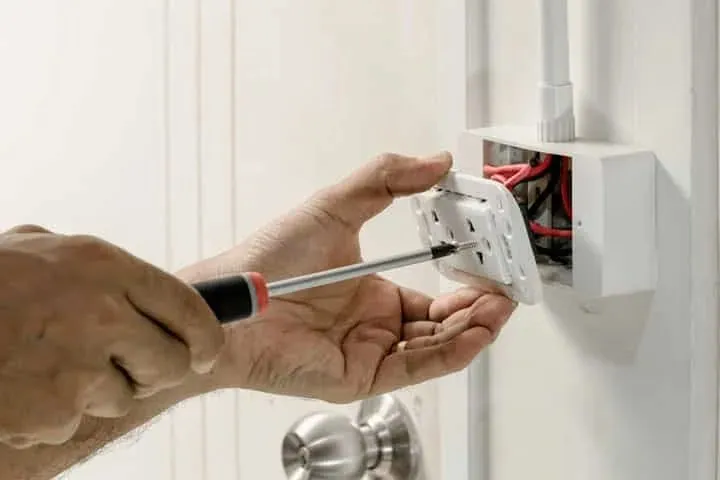
No, in NSW adding an outdoor power point to a Belmont home is electrical wiring work, which only a licensed electrician can legally do. A proper job also brings safety switch protection, a weatherproof rating that suits the wall, and a compliance certificate once the socket is tested.
Spring and summer are when outdoor power earns its keep, running pool pumps, garden timers and pergola lights. Kitson Electricians Newcastle fits weatherproof outlets across Lake Macquarie. This guide covers what NSW law treats as wiring work, safety switches, IP ratings, weatherproof power points and how outdoor power point installation is done.
Outdoor Power Point Installation and NSW Law
Unlicensed electrical wiring work in NSW can cost an individual a $22,000 fine, according to the NSW Government. A new outdoor socket counts as that work, so the job belongs to a licensed electrician:
Electrical Wiring Work Defined
The NSW Government's licensing page defines electrical wiring work as installing, repairing, altering, removing or adding to an electrical installation. Fitting a new outdoor socket is adding, while replacing an old one means removing and installing. For licensing purposes, both terms come from the Gas and Electricity (Consumer Safety) Act 2017.
The Fines for Unlicensed Work
Doing electrical wiring work without a licence or certificate breaches the Home Building Act 1989, according to the NSW licensing page. Individuals can be fined $22,000 and companies $110,000. A homeowner wiring their own outdoor socket risks that individual fine.
DIY Videos and NSW Rules
Online how-to videos show people wiring outside sockets step by step. In NSW, though, the same government page requires a licence for any electrical wiring work, regardless of cost or property type. A tidy result on screen says nothing about whether the circuit behind it is safe, protected or tested.
An added socket needs 30 mA safety switch protection, according to Hager's guide to the 2018 Wiring Rules. Outside the sheltered zone under an eave, the same guide sets an IP33 minimum. Licensed power point installation delivers both, plus a Certificate of Compliance for Electrical Work (CCEW), and the sections below explain each.
Plug-In Timers, Leads and Outdoor Power Point Wiring
Plugging a timer into an outdoor socket is fine, so why is swapping that socket yourself illegal? Under NSW licensing definitions, the electrical installation stops at the socket. Here's which side each job falls on:
- Plugging in a lead or plug-in timer: Yours. A plug-in outdoor power point timer sits beyond the socket, so it counts as an electrical article, not part of the installation.
- Adding a new outdoor socket: Licensed. Running a new outdoor plug socket from an existing circuit is adding to the installation, the clearest case of wiring work.
- Moving an existing power point outside: Licensed. Relocating a socket from an inside wall to the patio means altering and removing parts of the installation.
- Swapping a standard socket for a weatherproof one: Licensed. Putting an outdoor weatherproof power point in place of the old outlet involves removing and installing, even when the box stays put.
- Fitting a timer or smart outdoor outlet: Licensed. A fixed outlet is wired into the installation, including the Bluetooth Low Energy timer models in Clipsal's Iconic Outdoor range.
- Choosing the product: Yours. You pick the finish, outlet count and features, and your electrician confirms the product suits the spot and the circuit.
Anything with a plug stays in your hands, while anything wired into the wall needs a licence.
Safety Switch Protection for a New Outdoor Power Point
A socket on an old circuit without a safety switch leaves wet hands on wet ground unprotected. Hager's guide treats an added socket as a circuit alteration needing 30 mA RCD protection:
RCD Rules for Added Sockets
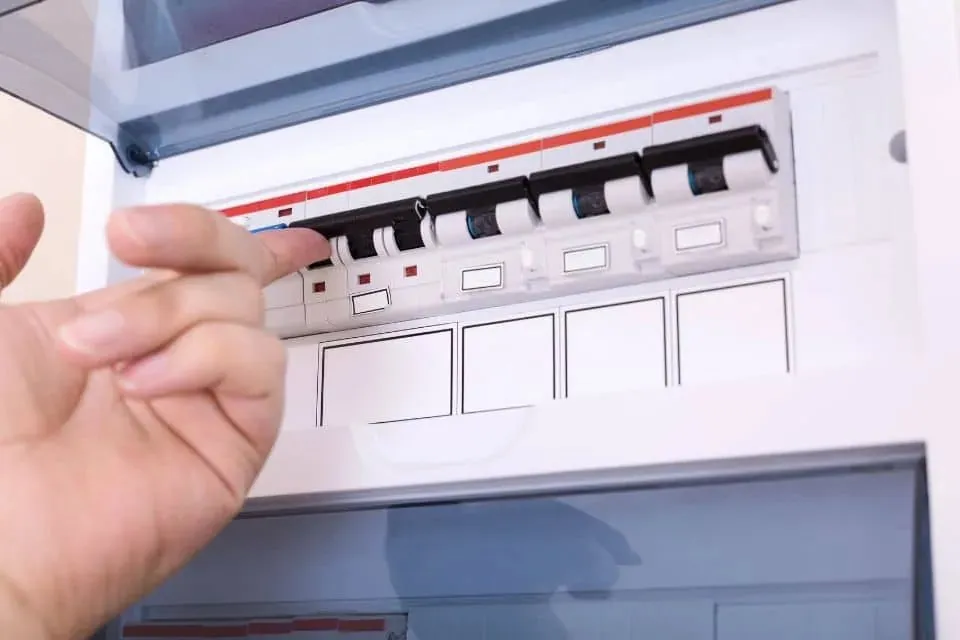
An RCD, or residual current device, is what most homeowners call a safety switch. Hager's guide notes the 2018 Wiring Rules became mandatory from 1 January 2019. Its FAQ answers the added-socket question directly: any alteration to an existing final sub-circuit needs 30 mA RCD protection.
Switchboard or Socket RCD
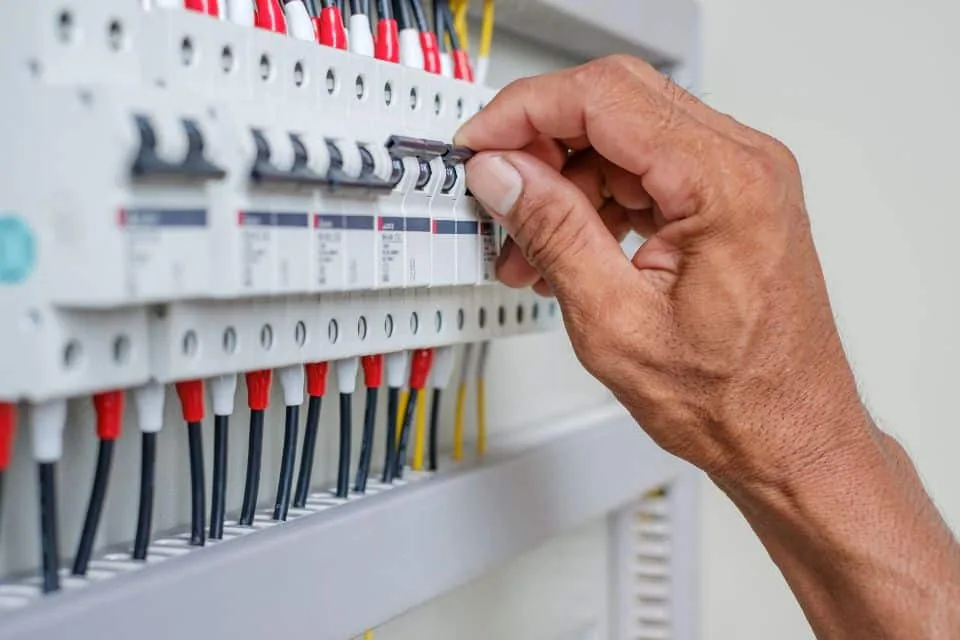
The same guide allows the RCD to sit inside the socket-outlet itself. Even so, it prefers an RCD at the switchboard, because that protects the complete circuit rather than one outlet. If your board has no safety switches at all, a switchboard upgrade brings that circuit-wide protection.
The Electrician's Circuit Check
Before quoting, I check which circuit the new socket will join and whether it already has RCD protection at the board. I also look at the load already on that circuit, because a socket feeding a pool pump needs spare capacity. That check decides whether the job is a straightforward addition or needs board work first.
When you book, ask for RCD protection on the whole circuit rather than a single protected outlet.
More: What To Do If My Safety Switch Won’t Turn Back On?
IP Ratings for Outdoor Power Points in Belmont
Hager's guide to the 2018 Wiring Rules sets IP33 as the minimum outside the sheltered zone under an eave. Inside that zone, no IP marking is needed. Here's what five common ratings mean:
| IP Rating | Dust and Solids | Water | Typical Spot |
| IP33 | Objects 2.5 mm and larger | Spray up to 60° from vertical | The minimum outside the eave zone |
| IP53 | Dust-protected | Spray up to 60° from vertical | A sheltered wall with some exposure |
| IP54 | Dust-protected | Splashing from any direction | An exposed wall, a common outdoor socket rating |
| IP56 | Dust-protected | Powerful jets | Hose-down areas |
| IP66 | Dust-tight | Powerful jets | The harshest exposure |
Shopping for a waterproof outdoor power point really means choosing an IP rating. The digit meanings come from Rittal's IP code table, where the first digit rates solids and dust and the second rates water.
Only the IP33 floor and the eave zone, bounded by a 30° plane from the eave's outer edge to the wall, come from Hager's guide. The Typical Spot column is practical guidance, so IP54 is a sensible choice for an exposed wall rather than a legal minimum.
Hager's guide also warns that drilling a drain hole in an enclosure destroys its IP rating, and it requires installers to follow the manufacturer's instructions. A poorly fitted box lets water in regardless of the rating printed on it.
Choosing a Weatherproof Power Point for Belmont Homes
Pick the spot first, then the rating, and the shortlist shrinks fast. For homes around Lake Macquarie, which the NSW estuary profile describes as Australia's largest coastal saltwater lake, these features are worth comparing:
- Shuttered sockets: Clipsal's Iconic Outdoor sockets reach IP54 through integrated shutters that seal the outlet openings against water. Those shutters double as a built-in outdoor power point cover.
- Sealed mounting: Pre-drilled holes in the Iconic Outdoor range sit outside the waterproof area, so nobody drills or caps the box. Seals are integrated into the frame.
- IP53 or IP54: Clipsal's Weathershield range lists an IP53 single socket and an IP54 twin, handy for an outdoor double power point. Listed features include colour fade, impact and corrosion resistance.
- 15 amp outlets: The Weathershield range includes a 15 A single socket rated IP54. If you're weighing up a 15 amp outdoor power point, Clipsal's FAQ confirms a 10 A plug fits a 15 A socket.
- Timers and on/off control: Bluetooth Iconic Outdoor outlets let you set timers from a phone, and Clipsal pitches them at pool pumps and fountains. Mention any smart home automation plans when the outlet is quoted.
- Lighting on the same job: A pergola socket is a good moment to plan garden and outdoor lighting too, quoted together.
I recommend IP54 or higher for any wall that takes rain, even though Hager's guide sets IP33 as the minimum outside the eave zone.
Outdoor Power Point Installation Steps and Your CCEW
Without paperwork, nobody can later prove who wired an outdoor socket or how it was tested. A licensed job ends with a tested socket and a CCEW in your inbox, in three stages:
Planning the Location
I start by working out whether the socket sits inside the eave zone or on an exposed wall, because that sets the minimum rating. Next comes the circuit, where I confirm RCD protection and spare capacity before any cable is run.
Installing and Sealing
Every installation must also follow the manufacturer's instructions, according to Hager's guide to the 2018 Wiring Rules. In practice that means using the product's own mounting holes and seals, never improvising with a drill. Done that way, the rating on the box is the rating you get on the wall.
Testing and the CCEW
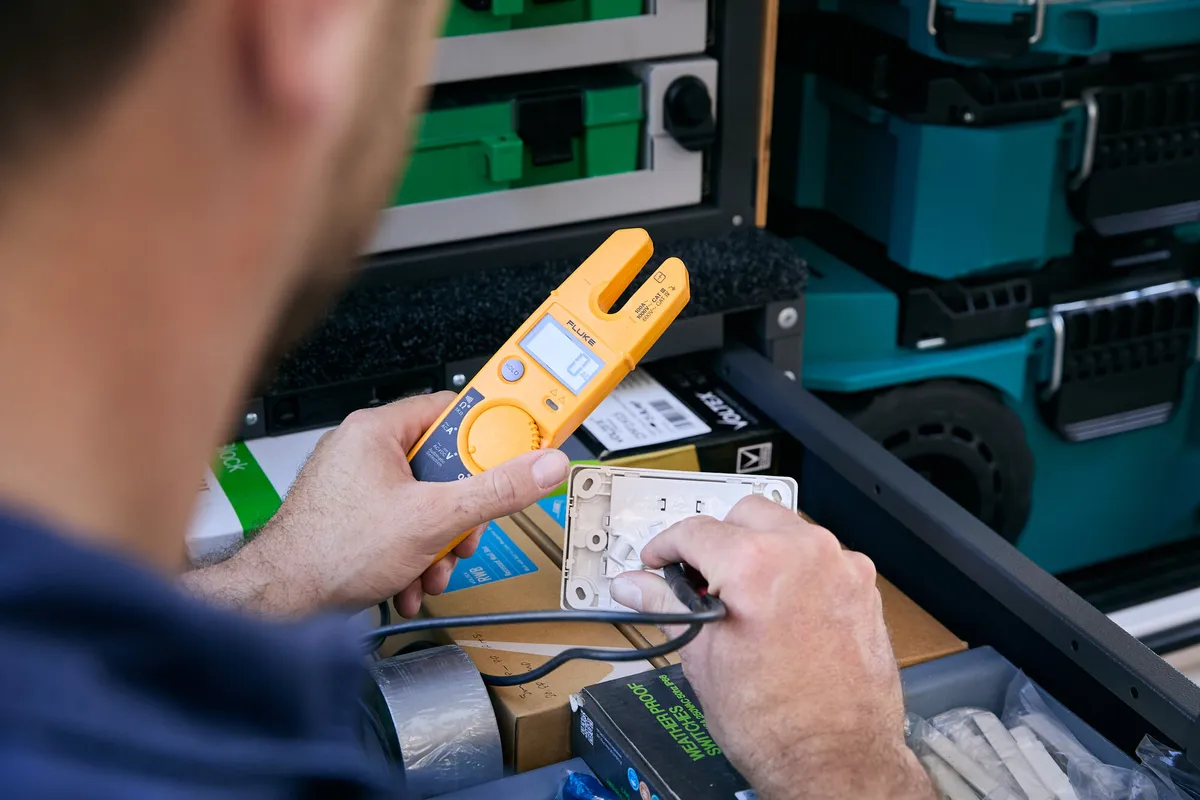
After testing, your electrician submits the CCEW through the eCert portal, and the eCert user guide confirms copies are emailed automatically to the customer. Keep that email with your property records. Older outdoor fittings can be checked during the same visit with an electrical safety inspection.
Skip the licensed route and there's no certificate at all, so the socket's wiring and testing go unrecorded.
More: Power Points Not Working? Common Causes and Fixes
Planning an Outdoor Power Point in Belmont
A new outdoor socket in Belmont is licensed work, and the NSW Government lists a $22,000 fine for individuals who skip the licence. Plugging in leads and timers stays yours, while adding, moving or swapping a socket needs an electrician.
Every added socket also needs 30 mA RCD protection, according to Hager's guide to the 2018 Wiring Rules. Once the work is tested, a CCEW lands in your inbox as the record of the job.
Finally, match the rating to the wall. Sheltered spots under an eave need no IP marking, and outside that zone Hager's guide sets an IP33 floor. For any wall that cops the weather, I'd still choose IP54 or better.
Areas We Service
Weatherproof socket installs are available around Lake Macquarie and nearby suburbs. You can book a Belmont electrician, a Swansea electrician or a Valentine electrician, and the same service reaches Caves Beach and Warners Bay. An Eleebana electrician or Charlestown electrician visit covers outdoor sockets and lighting too, with the same licensed process.
Book Outdoor Power Point Installation in Belmont
Planning outdoor power for a pool pump, pergola or garden? Kitson Electricians Newcastle installs weatherproof sockets with safety switch protection and a compliance certificate, at upfront fixed pricing. Call 0438 262 792 for a fixed quote.
Every job carries our Lifetime Workmanship Warranty, and we're fully licensed and insured. You'll get $50 off your first service call, plus a free electrical safety inspection valued at $150 with any paid service. Use it to have older outdoor fittings checked.
Read more about Anthony Kitson before you book.
Frequently Asked Questions About Outdoor Power Point Installation
Short answers to the questions that come up when planning a new outdoor socket for a Belmont home:
Can I install an outdoor power point myself in NSW?
No, adding an outdoor socket is electrical wiring work, which NSW reserves for licensed electricians. Doing it without a licence breaches the Home Building Act 1989 and can cost an individual $22,000.
Does an outdoor power point need a safety switch?
Yes, a new socket added to an existing circuit needs one. Hager's guide to the 2018 Wiring Rules calls for 30 mA RCD protection on any such alteration, preferably at the switchboard.
What IP rating does an outdoor power point need?
Outside the sheltered eave zone, Hager's guide to the 2018 Wiring Rules gives IP33 as the minimum. On an exposed Belmont wall, an IP54 socket is the more practical choice.
Is it legal to use a plug-in timer on an outdoor power point?
Yes, a plug-in timer sits beyond the socket, so NSW treats it as an electrical article rather than wiring work. A hardwired timer outlet is different, because fitting it is licensed wiring work.
Will a 10 amp plug fit a 15 amp outdoor power point?
Yes, Clipsal confirms a 15 A socket accepts a 10 A plug. So a 15 A socket on a Lake Macquarie patio still takes your everyday 10 A appliances and leads.
Will I get a certificate for a new outdoor power point in Belmont?
Yes, after testing, your electrician submits a CCEW through the NSW eCert portal. The portal emails copies to the customer, so give your electrician your email and file it with your Belmont property records.