
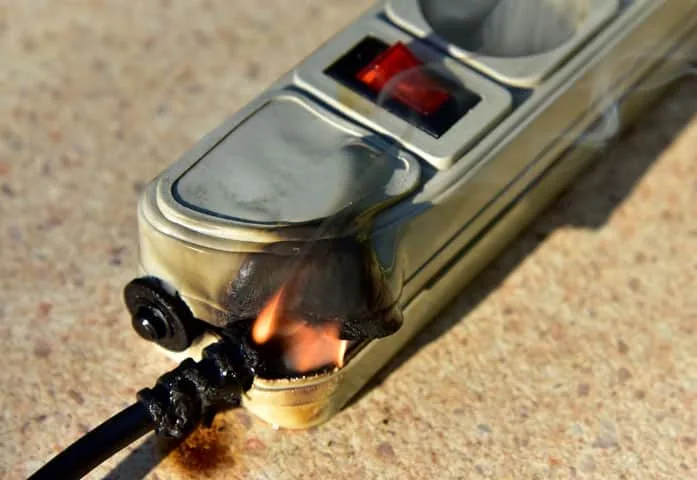
An electrical burning smell is a warning sign that wiring, an appliance, or a connection inside your property is overheating. Newcastle homes with older switchboards, degraded cable insulation, or overloaded circuits are at the highest risk.
Ignoring this smell can lead to a house fire within minutes, particularly in properties with ageing wiring hidden inside wall cavities. Kitson Electricians Newcastle provides emergency and scheduled electrical services across the Newcastle and Lake Macquarie regions. This guide covers what an electrical burning smell means, how to identify the source, and when you need a licensed electrician.
Why an Electrical Burning Smell Should Never Be Ignored
An electrical burning smell means something in your home’s electrical system is generating heat where it shouldn’t be. That heat is actively degrading components and creating fire conditions right now.
According to Fire and Rescue NSW, electrical appliances and faults cause almost 40% of home fires in the state. That figure makes electrical faults the single largest contributor to residential fires across NSW. On top of that, Fire and Rescue NSW reports that over 350 residential house fires are started by electrical faults in NSW each year. The problem is that many of these fires begin silently, behind walls, inside switchboards, or at connections you can’t see. A burning smell is often the first and only warning before things escalate.
In my experience working across Newcastle homes, the burning smell is frequently dismissed as “something from outside” or “just the heater warming up.” That delay is dangerous. If you smell something burning and can’t immediately identify a harmless source, treat it as an electrical fault until proven otherwise.
What Does an Electrical Burning Smell Actually Smell Like?
Electrical burning smells vary depending on what component is overheating. Here is a guide to the most common types and what each one typically indicates:
| Smell Description | What It Usually Means | Urgency Level |
| Burning plastic or rubber | Wire insulation or cable sheathing is melting from excessive heat. Common in overloaded circuits and switchboard faults. | High. Turn off power and call an electrician. |
| Fishy or ammonia-like odour | Overheating electrical components, particularly plastic-bodied switches, outlets, or circuit board resins, release a chemical odour before ignition. | High. This is often the earliest warning of a hidden fault. |
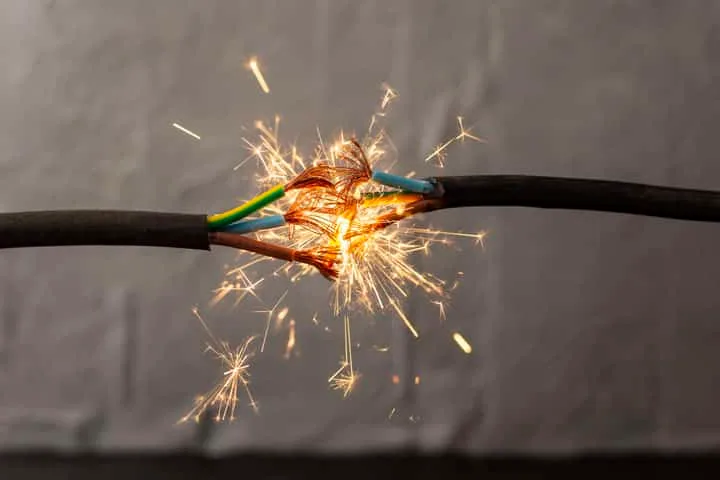
| Hot metallic or ozone smell | Electrical arcing is occurring, typically at loose connections, damaged contacts, or corroded terminals inside your switchboard. | Very high. Arcing can ignite surrounding materials in seconds. |
| Acrid chemical or PVC fumes | PVC cable insulation is breaking down under sustained heat. Often found behind walls or in ceiling cavities where wiring runs. | Very high. Active thermal breakdown is underway. |
The fishy smell catches most people off guard. It doesn’t seem electrical at all. But overheating plastic components commonly produce this odour well before visible smoke appears. If you notice a persistent fishy smell with no obvious kitchen or waste source, check your switchboard and power outlets immediately.
Common Causes of an Electrical Burning Smell
Most electrical burning smells trace back to a handful of common faults. In Newcastle, I see the same issues repeatedly, especially in homes built before the 1980s that haven’t had their wiring updated:
Overloaded power points and circuits
Plugging too many high-draw appliances into one outlet or power board forces more current through the wiring than it was designed to carry. The cables heat up, the insulation softens, and eventually you smell burning. This is especially common in winter when heaters, dryers, and electric blankets all run at once.
Deteriorated or damaged wiring
Older cable types like TPS with degraded insulation lose their protective sheathing over time. Rodent damage, building movement, and years of heat cycling break down the covering. Exposed conductors then arc or short against framing, producing a burning smell from inside the walls.
Loose connections at outlets or switchboards
A connection that isn’t tight creates resistance. That resistance generates localised heat, exactly the same principle as an electric element. Over months or years, the contact point gets hotter, scorches the surrounding plastic, and produces a noticeable burning smell. According to the NSW Government, every householder in NSW is legally obliged to keep their home’s electrical systems safe.
Faulty or ageing appliances
Older fridges, washing machines, and kitchen appliances can develop internal faults. Worn motor windings, cracked heating elements, or corroded internal wiring cause localised overheating. The smell often appears only when that specific appliance is running.
Overheated switchboard components
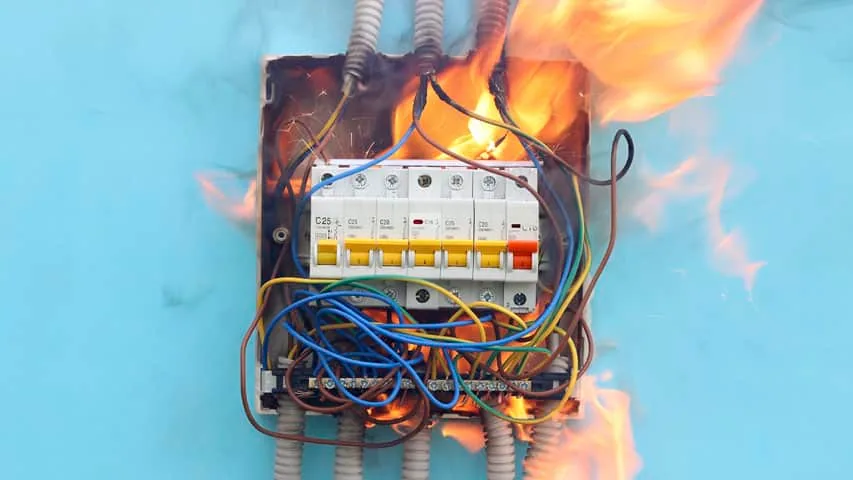
Circuit breakers, RCDs, and bus bars that are past their service life or carrying loads beyond their rated capacity generate significant heat. Switchboards in homes built during the 1950s to 1970s are most susceptible, particularly the old ceramic fuse types still found in suburbs like Mayfield, Wallsend, and Adamstown.
Power board overloading
Daisy-chaining power boards or plugging high-wattage devices into lightweight boards is a leading cause of residential electrical fires. The board’s internal wiring overheats long before the device itself shows any sign of fault.
More: Why Do My Lights Flicker? Causes & How to Fix It. Flickering lights combined with a burning smell are a particularly serious combination that warrants immediate investigation.
You Can Smell Burning, But Can’t Find the Source
One of the most frustrating situations is detecting an electrical burning smell but not being able to locate where it’s coming from. This happens more often than you’d expect, and it’s usually because the fault is concealed:
Faults Hidden Inside Wall Cavities
Wiring runs through wall cavities, ceiling spaces, and under floors. A deteriorating cable junction or overheated cable clip inside a wall will produce a burning smell that seems to come from nowhere. The smell may drift through gaps around power outlets, light switches, or skirting boards. Touch the wall near outlets and switches. If any section feels warm, that’s a strong indicator of a concealed wiring fault.
Intermittent Faults That Come and Go
Some faults only produce heat under specific load conditions. You might smell burning only in the evening when the oven, hot water system, and heating are all running simultaneously. During lighter-use periods, the fault cools down, and the smell disappears. This makes it extremely difficult to pinpoint without professional electrical fault detection equipment.
The Switchboard as a Hidden Source
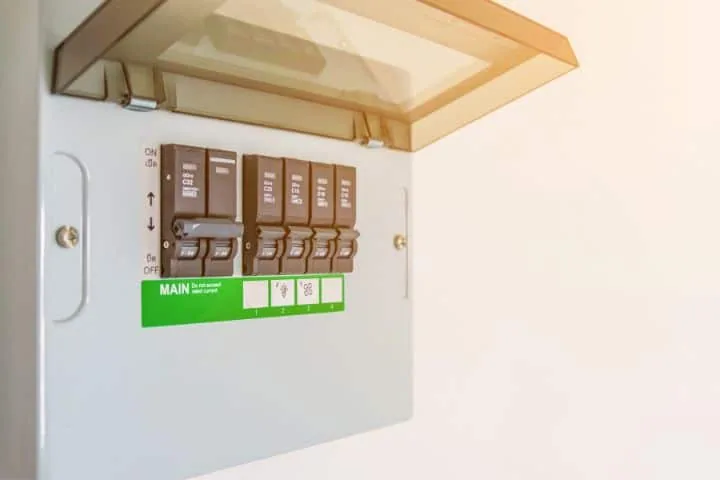
Your switchboard is often in a garage, laundry, or outside wall. You might not walk past it regularly enough to notice a burning smell developing there. Open your switchboard cover and smell the air directly. If there’s any warmth, discolouration, or odour, that’s your source. Never touch internal components. Under AS/NZS 3000:2018, only a licensed electrician can legally work on switchboard components in NSW.
Ceiling-Mounted Downlights
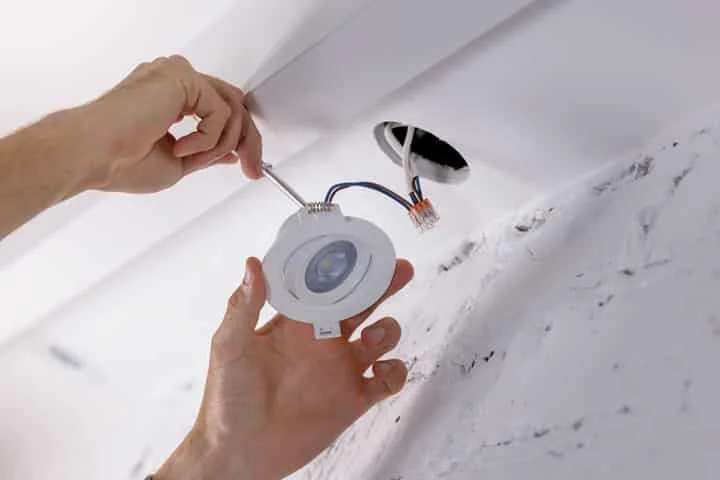
Recessed downlights, especially older halogen types, can overheat if insulation has been pushed against them during roof work or renovations. The burning smell drifts through the light fitting into the room below. This is a serious fire risk in ceiling cavities filled with insulation.
Why Electrical Burning Smells Are More Common in Older Newcastle Homes
Newcastle’s housing stock makes it particularly vulnerable to concealed electrical faults that produce burning smells. The city’s most significant residential development occurred in the post-war years, with revitalisation through the 1940s, 1950s, and 1960s driving much of the housing construction across inner suburbs:
Post-war homes in Mayfield, Hamilton, and Lambton
Many of these properties were built between the 1940s and 1960s with wiring types that are now well past their safe service life. Rubber and cotton-insulated cabling from this era becomes brittle and cracks, creating short circuit and arcing risks inside walls. As a licensed Newcastle electrician, I regularly find scorched junction boxes behind walls in these suburbs during electrical safety inspections.
Coastal exposure in Merewether and Stockton
Salt air accelerates corrosion on electrical connections, particularly at switchboard terminals and outdoor junction points. Corroded connections create resistance and heat, which is exactly how electrical burning smells develop. Homes within a few kilometres of the coast need more frequent switchboard servicing than inland properties.
Wallsend, Elermore Vale, and Maryland growth areas
These suburbs have a mix of older fibro cottages alongside newer builds. The older stock often has original switchboards with ceramic fuses, which lack RCD protection and can mask overloading faults that would trip a modern safety switch. According to the NSW Government, every householder is legally obliged to maintain electrical safety, including having safety switches installed.
Dense tree canopy suburbs like Fletcher and Charlestown
Tree root interference can damage underground service cables, and possum activity in roof cavities frequently chews through cable insulation. Both situations create concealed faults that produce burning smells well before visible damage appears.
High-density renovations across Newcastle CBD and surrounds
The 2021 Census recorded 168,873 residents in the City of Newcastle, living in 74,579 dwellings. Many older properties have been renovated with increased electrical loads but without corresponding switchboard upgrades or rewiring to handle the demand. This mismatch between old wiring capacity and modern appliance loads is a leading cause of overheating.
What to Do if You Smell Electrical Burning in Your House
An electrical burning smell requires a calm, systematic response. Don’t panic, but don’t ignore it either. Follow these steps in order:
Turn Off the Main Power
Go to your switchboard and switch off the main supply. This removes the current that’s causing the overheating. If your switchboard itself is the source of the smell, or if you see smoke, sparks, or discolouration, do not touch it. Leave the house and call 000 immediately.
Unplug Appliances in the Affected Area
If you can identify the room or area where the smell is strongest, unplug all appliances from the wall. Don’t just switch them off at the power point. Physically remove the plug. A faulty appliance can continue to draw current through a closed switch.
Check for Visible Signs
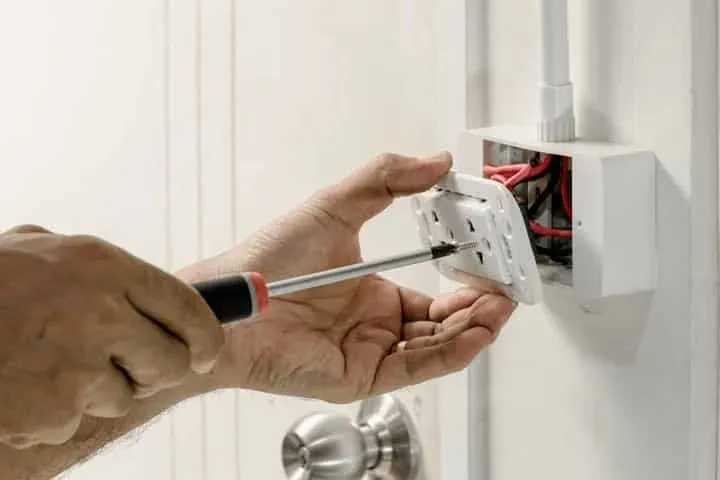
Look at power outlets and switches for scorch marks, discolouration, or melted plastic. Feel the wall near outlets for unusual warmth. Check your switchboard cover for heat or discolouration. Do not open or touch internal switchboard components.
Ventilate the Area
Open windows and doors to clear any accumulated fumes. Burning PVC insulation releases hydrogen chloride gas, which is harmful to breathe. If anyone in the household is experiencing headaches, nausea, or throat irritation, move outside to fresh air.
Call a Licensed Electrician
Do not attempt to diagnose or repair any electrical fault yourself. According to SafeWork NSW, electrical work must only be carried out by licensed professionals. An experienced local sparky will have thermal imaging cameras and insulation testing equipment to locate concealed faults that you simply can’t see or reach safely.
Is an Electrical Burning Smell Toxic or Harmful?
The fumes from overheating electrical components are genuinely harmful. This isn’t just an unpleasant smell. It’s a direct health concern, especially in enclosed spaces:
- PVC cable insulation releases hydrogen chloride: When PVC-sheathed wiring overheats, it breaks down and releases hydrogen chloride gas along with other toxic compounds. Even short exposure can irritate the eyes, nose, and throat. Prolonged exposure in a confined space can cause respiratory damage.
- Burning circuit board resins emit formaldehyde: Overheating switches, power boards, and electronic components release formaldehyde, carbon monoxide, and fine particulates. These are especially dangerous for children, elderly residents, and anyone with respiratory conditions like asthma.
- The “fishy” smell indicates chemical decomposition: That fishy or ammonia-like electrical smell comes from heated urea-formaldehyde resins used in electrical component housings. While less immediately alarming than visible smoke, it signals active chemical breakdown and should prompt the same urgency.
- Carbon monoxide risk in enclosed fires: If an electrical fault progresses to smouldering inside a wall cavity, carbon monoxide can build up in the room. This is odourless and extremely dangerous. Working smoke alarms on every level are essential. NSW legislation requires at least one working smoke alarm on each level of your home.
If you or anyone in your home experiences persistent headaches, dizziness, or nausea alongside an electrical burning smell, leave the property immediately and seek fresh air.
How a Licensed Electrician Finds and Fixes the Source
Finding a concealed electrical burning smell requires specialist equipment and training. Here is what I typically do when called to a Newcastle home reporting this issue:
Thermal Imaging Inspection
I use a thermal imaging camera to scan walls, ceilings, switchboards, and outlet points. Hot spots show up clearly on the camera, even through plasterboard. This pinpoints the exact location of overheating without cutting into walls unnecessarily. It’s the fastest way to find concealed faults.
Insulation Resistance Testing
Using a megohmmeter, I test the resistance of the cable insulation across each circuit. Low insulation resistance confirms that cable sheathing has degraded, which is the root cause of many concealed burning smells in older homes. This test identifies circuits that need full home rewiring versus those that just need a connection tightened.
Circuit-by-Circuit Load Testing
I isolate each circuit and test it under load to identify which specific circuit is generating excess heat. This narrows the fault to a particular section of your property. Combined with thermal imaging, it gives a complete picture of where the problem sits.
Switchboard Inspection and Repair
If the switchboard is the source, I inspect every connection, bus bar, circuit breaker, and RCD for signs of heat damage, corrosion, or arcing. Loose terminal screws are one of the most common causes of switchboard burning smells, and tightening them resolves the immediate risk. Switchboards with ceramic fuses or outdated components often need a full upgrade to comply with current standards under AS/NZS 3000:2018.
After a recent power tripping and fault detection job for a homeowner in Newcastle, Kitson Electricians received this feedback:
“Kitson Electricians Newcastle did an outstanding job! The team was professional, punctual, and extremely thorough. Their workmanship was neat and high quality, and they explained everything clearly from start to finish. It’s great to see tradespeople who take real pride in their work. I’d highly recommend Kitson Electricians to anyone looking for a reliable, skilled, and honest electrician in Newcastle. Thanks, Anthony.” — David Dries
Getting to the bottom of an electrical burning smell quickly is exactly the kind of job where thorough diagnostics and clear communication matter most.
Areas We Service
Kitson Electricians Newcastle provides emergency and scheduled residential electrical services across the entire Newcastle and Hunter region. We service Adamstown, Charlestown, Elermore Vale, Fletcher, Hamilton, Lambton, Lake Macquarie, Maitland, Maryland, Mayfield, Merewether, New Lambton, Stockton, Wallsend, Waratah, and all surrounding suburbs.
Book a Same-Day Electrical Inspection
If you can smell something burning and can’t identify the source, don’t wait. Call Kitson Electricians Newcastle on 0438 262 792 for fast, reliable help. Licensed electricians, same-day service, upfront fixed pricing, and a lifetime labour warranty on all work. $50 off your first service and a free safety inspection valued at $150.
Frequently Asked Questions
Can an electrical burning smell be dangerous?
Yes. An electrical burning smell means active overheating is occurring inside your home’s wiring, switchboard, or an appliance. It can escalate to a house fire within minutes. Turn off the power and call a licensed electrician immediately.
Why do I smell electrical burning but can’t find the source?
The fault is likely concealed inside a wall cavity, ceiling space, or switchboard. Wiring faults behind plasterboard produce smells that drift through gaps around power outlets and light switches. A thermal imaging inspection by a qualified electrician will locate it.
Is an electrical burning smell toxic?
Yes. Overheating PVC wiring insulation releases hydrogen chloride and other toxic fumes. Burning circuit board resins emits formaldehyde. Open windows, leave the area if you feel unwell, and call a licensed electrician to diagnose the source.
What should I do first if I smell electrical burning?
Turn off the main power at your switchboard. Unplug all appliances in the affected area. Check outlets and switches for scorch marks or warmth. Do not attempt repairs yourself. In NSW, all electrical wiring work must be carried out by a licensed electrician.
Can old wiring cause a burning smell in my house?
Absolutely. Homes built before the 1980s across Newcastle suburbs like Mayfield, Hamilton, and Wallsend often have degraded cable insulation that cracks and shorts over time. This creates arcing and heat inside walls, producing a persistent burning smell.
How often should I get my home’s wiring inspected?
I recommend an electrical safety inspection every five years for homes over 25 years old, and every three years for homes over 40 years old. Properties near the coast or with known older wiring should be checked more frequently due to accelerated corrosion and insulation breakdown.
If the smell is strong or getting worse, treat it as urgent and call our emergency electrician team rather than waiting.