
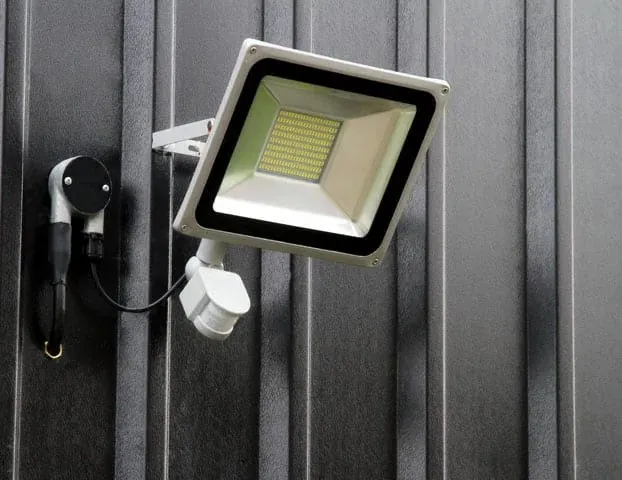
When a Wallsend sensor light won't turn off, it's usually stuck in manual override, not broken. Flicking the wall switch off and on quickly latches many units on, like an ordinary light. Each model has its own way back, and many light up briefly during a warm-up after any reset.
Kitson Electricians Newcastle repairs outdoor and security lighting across Newcastle's western suburbs. Adjusting the dials and resetting at the wall switch are your jobs, but anything touching the wiring needs a licensed electrician. This guide covers override, warm-up, the TIME, LUX and SENS dials, false triggers, placement and when to call an electrician.
Sensor Light Override Mode and How to Exit It
Is a sensor light not turning off broken, or doing what its leaflet describes? Arlec's MAL298P leaflet says switching off and back on within two seconds holds that floodlight on continuously, and each model differs:
| Model (Leaflet) | Enter Override | Back to Automatic |
| Arlec MAL344 | Off and on within one second | Off for at least 20 seconds, then on |
| Arlec MAL298P | Off and on within two seconds | Off for at least ten seconds, then on |
| Arlec MAL318RV | Off and on within 3 to 5 seconds | Off for at least ten seconds, then on |
| Clipsal 750WPR5 | Off, on, off, on within 2 seconds | Off then on within 2 seconds, or wait 8 hours |
Override is a deliberate feature, not a fault. It keeps the light on while you're working or entertaining outside, and a quick flick of the switch triggers it by accident.
Every Arlec exit here needs a long off. Arlec's MAL344 leaflet wants the switch off for at least 20 seconds, while the MAL318RV leaflet asks for ten. That MAL318RV also latches on with an off-on within 3 to 5 seconds, so even an unhurried flick triggers it.
Clipsal's override FAQ works the opposite way, cancelling the 750WPR5's override with a single off-on within 2 seconds. Its 8-hour override period is fixed and can't be made longer or shorter.
So the quick off-on that cancels a Clipsal override is the same move that starts one on an Arlec MAL298P. Find the model number on the fitting or its leaflet before you try anything at the switch.
The 30-Second Warm-Up After a Sensor Light Reset
Clipsal's Infrascan instructions give the 750WPR5 a 30-second warm-up. Arlec's MAL344 leaflet says the light stays on for 30 seconds at power-up, then goes off without movement. Three behaviours make a reset light seem stuck:
The Start-Up Light Cycle
A light that comes on straight after you restore power is often running its start-up routine, not ignoring you. Arlec's MAL318RV leaflet asks you to wait half a minute for the control circuit to stabilise. On the MAL344, Arlec only lets that first cycle end when nothing moves in the detection area, so step back and wait.
Off for More Than Three Seconds
Clipsal's 750WPR5 treats a long off differently from a quick one. Its installation instructions say switching off for more than 3 seconds sends the sensor into its warm-up routine. A single off-on within 2 seconds instead holds the light on for one timer cycle.
Momentary Power Blips
Even a brief outage can switch Clipsal's 750WPR5 on with nobody near it. Its troubleshooting table lists a momentary power failure as a cause, and the unit resets after its time-out. No action is needed, so give it the full timer period before assuming a fault.
More: Why Do Lights in the House Randomly Turn Off and On?
If the warm-up has passed and the light still won't settle, the dials are the next place to look.
Sensor Light Dial Settings for Wallsend Homes
The TIME dial is the first check when a sensor light stays on all night. Clipsal's Infrascan instructions describe three adjustments, which Arlec's MAL298P labels LUX, TIME and SENS:
- TIME sets how long it stays on: Arlec's MAL344 leaflet gives about 5 seconds to 5 minutes, turning anti-clockwise to add time, and calls roughly 2 minutes ideal. The MAL298P knob turns clockwise instead, while Clipsal's 750WPR5 runs to 20 minutes, so check the dial isn't at maximum.
- LUX decides when it works: Arlec's MAL298P leaflet says LUX sets the light level at which sensing starts at dusk. On the MAL344, sun means day and night, while moon means night only.
- SENS sets the range: Arlec's MAL298P leaflet recommends SENS at half in most situations. Clipsal adds that range varies with background temperature, walking speed and clothing.
- Cold nights change things: Passive infrared detectors are more sensitive in cold weather and at night, according to Arlec's MAL298P leaflet. Recheck SENS after dark, when the same setting reacts more readily.
- Test it in daylight: Arlec's MAL298P leaflet sets LUX to the sun and TIME and SENS to minimum, then the light goes out after about 8 seconds. Stay out of the detection field while adjusting, as Clipsal advises.
Daylight saving has brought lighter evenings since 4 October 2026, but LUX responds to light, not the clock. Your Home says built-in daylight sensors stop lights coming on in daylight.
Turning a dial costs nothing, whereas a replacement fitting needs a licensed electrician, which is also the time to price LED lighting upgrades.
False Triggers Around Wallsend Sensor Lights
A sensor light that keeps coming on at 2am with nobody outside is unsettling. Usually it has seen heat or movement you didn't, since Clipsal's instructions say its Infrascan reacts to a moving infrared source:
- Heat sources: Arlec's MAL298P leaflet lists aircon vents, heater flues, barbecues and other outside lighting as triggers. Clipsal also warns against mounting near air conditioning vents and heater flues.
- Animals: Possums and pets set sensors off too, and the MAL298P troubleshooting table names both. The same leaflet suggests angling the sensor above animal height.
- Moving plants and traffic: Clipsal's troubleshooting table names trees and bushes moving in the wind, plus cars and pedestrians at the edge of the field. Trimming foliage takes the plants out of play.
- Reflections: Arlec's MAL298P table lists reflection from a swimming pool among the causes of unexplained switching. It also warns against aiming at smooth white walls.
- Same-circuit interference: Switching fans or fluorescent lights on the same circuit can trigger the light, and the MAL298P leaflet also names a faulty switch. Note whether false triggers match someone switching a fan or light indoors.
- The globe's own heat: Heat from the globe itself can activate the sensor, according to the MAL298P troubleshooting table. Check that the sensor head isn't angled back towards its own lamp.
More: Why Does My LED Light Stay On When the Switch Is Off?
Ignore a false trigger and the light cycles all night, looking exactly like a fault.
Sensor Light Position, Height and Aim
Walking straight at a sensor substantially reduces its apparent detection range, according to Arlec's MAL298P leaflet. It responds best when you cross its field, which shapes where it should go:
Mounting Height
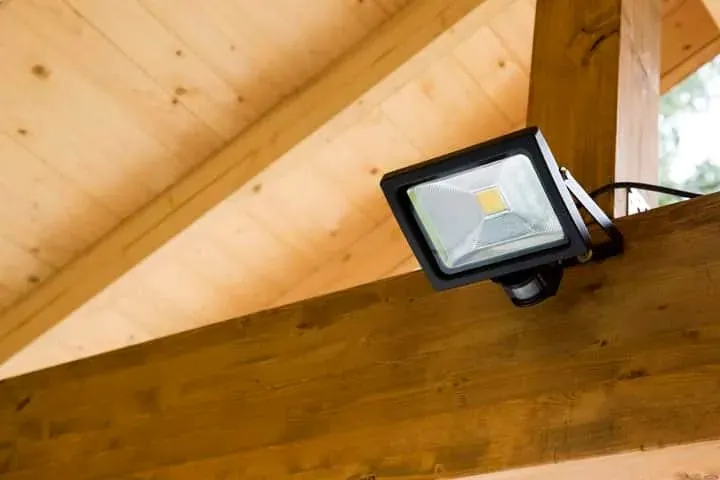
Arlec's MAL344 leaflet and Clipsal's instructions both give a mounting height of 2.4 metres. Clipsal adds that the approach path should cross the sensor face. For the MAL298P, Arlec's floodlight leaflet suggests about 2.5 metres, with 5 metres as the maximum.
Aim and Masking
Arlec's MAL298P leaflet says to tilt the sensor head below horizontal for weatherproofing. To narrow the detection zone, stick PVC electrical tape on one or both sides of the lens. A sensor facing the wrong way, or nearby lighting that's too bright, appears on Arlec's list for a sensor light not turning on.
Keeping the Lens Clean
Dust on the lens dulls the sensor over time. The MAL298P leaflet says to wipe it lightly with a damp cloth every 3 months, never with solvents or abrasive cleaners. Clipsal suggests mild soap, water and a soft cloth.
If a sensor needs moving, I handle it as security light installation work, because a hardwired fitting has to be disconnected and remounted. Adding a second light instead of shifting one falls under exterior light installation. Check height and aim before touching the dials again.
Sensor Light Faults That Need a Licensed Electrician in Wallsend
If a fix means opening the fitting or touching the wiring, it belongs to a licensed electrician. The NSW Government makes that a legal requirement for electrical installation work, and Arlec's MAL344 leaflet agrees:
- Still on after the right reset: If the light won't go off, Clipsal's 750WPR5 instructions say to call the installer. Arlec's MAL344 leaflet lists incorrect wiring as another cause.
- Sharing a switch with other lights: Arlec's MAL298P leaflet says the light must have its own switch, not one shared with other lights. Separating a shared switch is licensed wiring work.
- Wanting a separate override switch: Clipsal's 750WPR5 lists an activated manual override switch as one reason a light stays on. Fitting one is new wiring for an electrician.
- Replacing a hardwired sensor: Arlec's MAL344 and MAL318RV leaflets reserve installation and wiring for a licensed electrician. Swapping a failed hardwired unit is that work.
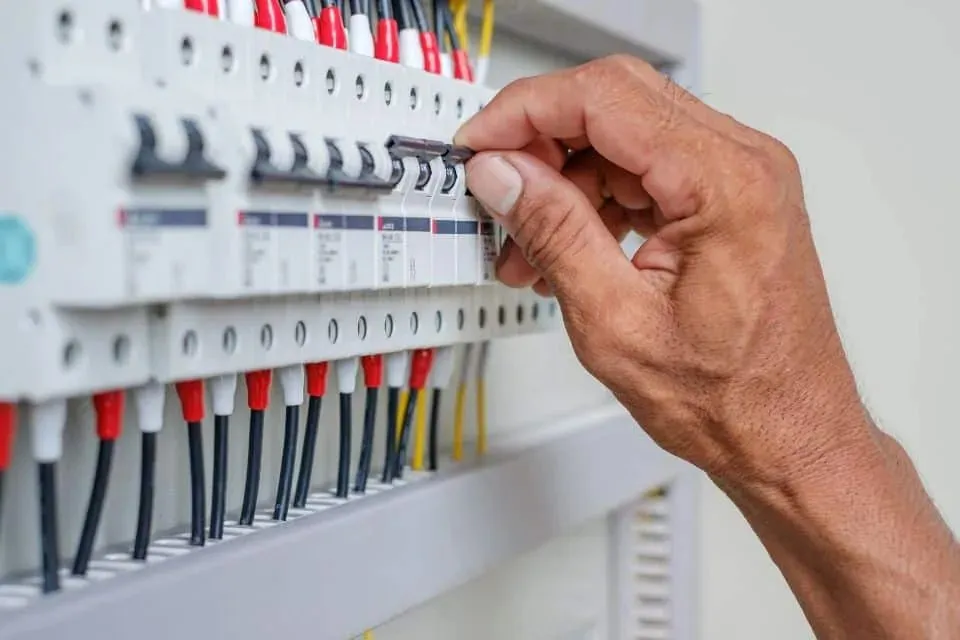
- The wall switch is not isolation: Arlec's MAL298P leaflet warns that switching off at the wall isn't enough to prevent an electric shock. That's why I isolate the circuit at the switchboard before opening any fitting.
When the cause isn't obvious, electrical fault finding traces it, and electrical repairs put it right. Resetting a sensor with a wiring fault only treats the symptom.
Fixing a Wallsend Sensor Light That Won't Turn Off
When a sensor light won't turn off, manual override is the usual culprit, and every model has its own exit. Arlec's leaflets want a long off at the wall switch, whereas Clipsal's 750WPR5 cancels with one quick off-on. Give any reset light its warm-up too: Clipsal's 750WPR5 instructions list 30 seconds, and Arlec's models run their own start-up cycle.
Turning the TIME, LUX and SENS dials and resetting at the wall switch are jobs you can handle. Rewiring, separating a shared switch or replacing a hardwired sensor needs a licensed electrician. The NSW Government also suggests testing your safety switch every three months, such as when daylight saving changes the clocks.
Areas We Service
Sensor and security light repairs cover Wallsend and the surrounding western suburbs of Newcastle. If you need a Wallsend electrician, a Shortland electrician or a Maryland electrician, the same service reaches Elermore Vale and Cameron Park. Further out, book an Edgeworth electrician, a Fletcher electrician or a Cardiff electrician for the same checks.
Book Sensor Light Repairs in Wallsend
Still stuck after the right reset and a full warm-up? Call Kitson Electricians Newcastle on 0438 262 792 to have the sensor, switch and wiring checked properly. Every job comes with upfront fixed pricing, a Lifetime Workmanship Warranty and our Clean Home Promise, from electricians who are fully licensed and insured.
Book now for $50 off your first service call, and any paid service includes a free electrical safety inspection valued at $150. You can read about Anthony Kitson before you book.
Frequently Asked Questions About Sensor Lights Not Turning Off
Quick answers on sensor lights that stay on, how to reset them and how to set the dials:
Why is my sensor light staying on all the time?
A sensor light not turning off is usually in manual override after a quick off-on at the wall switch. Setting TIME to maximum, or a nearby aircon vent, also keeps it on.
How do I reset a sensor light in Australia?
Follow the wall switch sequence for your model. An Arlec MAL298P needs at least ten seconds off, while a Clipsal 750WPR5 cancels with one quick off-on. Afterwards, allow the light its normal warm-up cycle.
How long should a sensor light stay on?
You set it on the TIME dial, within your model's range. Arlec's MAL344 runs from about 5 seconds to 5 minutes, with roughly 2 minutes suggested, and Clipsal's 750WPR5 reaches 20 minutes.
What does lux mean on a sensor light?
The LUX dial sets the light level at which the sensor starts working at dusk. On Arlec's MAL344, the sun setting works day and night, while the moon setting works only after dark.
Why does my sensor light come on during the day?
The light level dial is set too far towards daylight, which Arlec's MAL298P troubleshooting calls LUX at the sun symbol. Turn it towards the moon and test again at dusk outside your Wallsend home.
Can I replace a sensor light myself in Wallsend?
Not a hardwired one, because NSW law requires a licensed electrician for electrical installation work. Wallsend homeowners can still adjust the dials and reset the light at the wall switch.