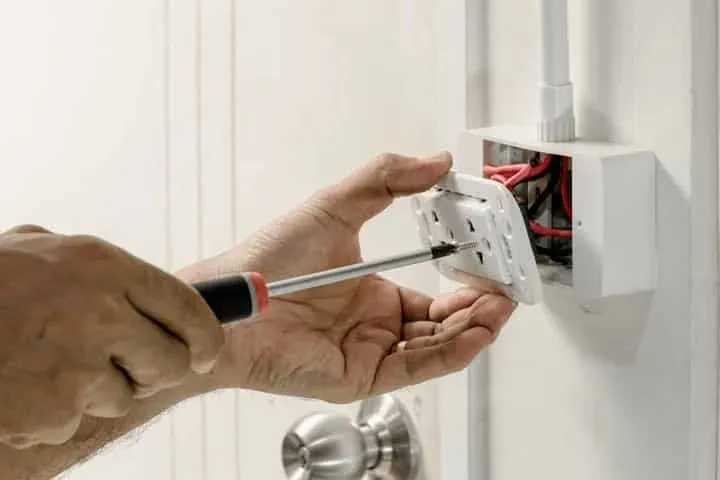

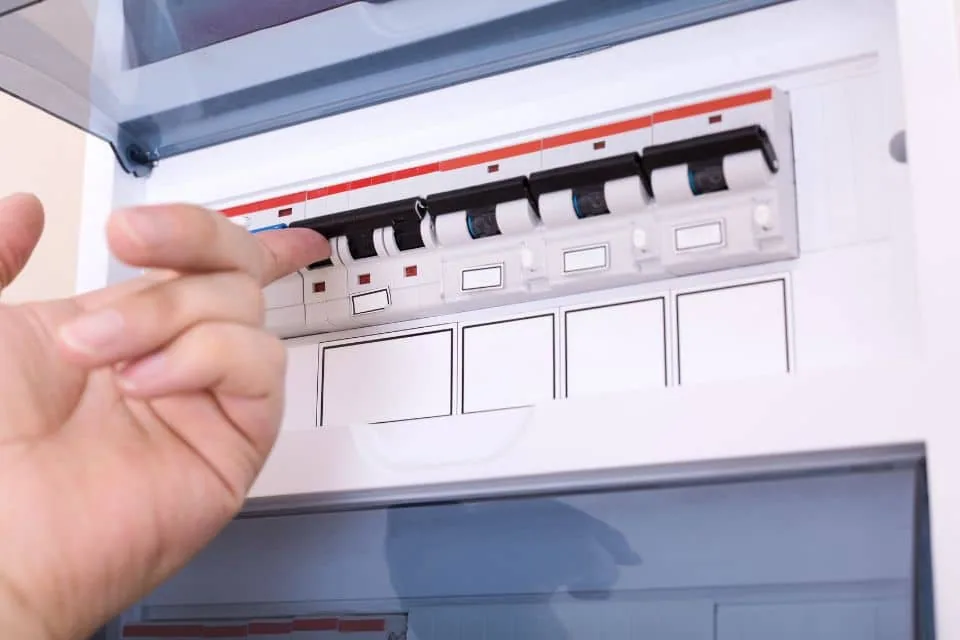
A circuit breaker that keeps tripping is responding to a fault in your home’s electrical system, typically an overloaded circuit, a short circuit, or an earth fault. Older Newcastle homes with original switchboards and undersized wiring are most commonly affected.
Repeated tripping is not a nuisance to ignore. It is your switchboard doing its job, cutting power before wiring overheats and creates a fire risk. Kitson Electricians Newcastle provides fast fault diagnosis and switchboard services across the Newcastle, Lake Macquarie, and Maitland regions. This guide explains why circuit breakers trip, how to troubleshoot safely, and when you need a licensed electrician.
What a Circuit Breaker Actually Does and Why It Trips
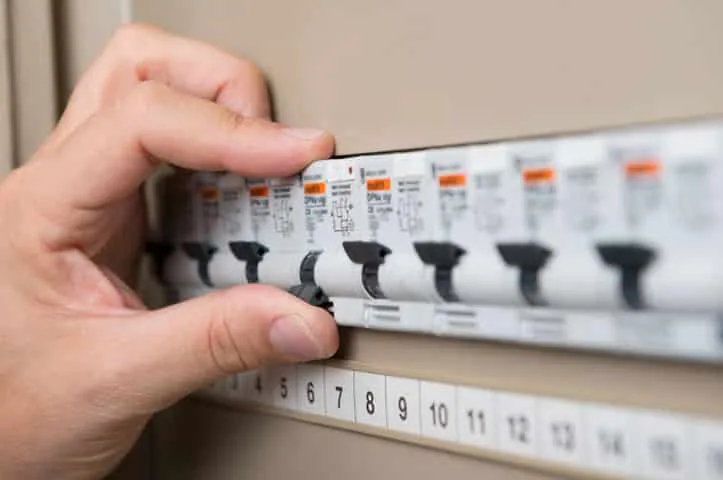
A circuit breaker is a protective device inside your switchboard that automatically cuts power when it detects a fault. It is designed to prevent wiring from overheating and starting a fire.
Each circuit breaker protects an individual circuit in your home. Your lights, power points, oven, and hot water system each run on separate circuits with their own breaker. When the current flowing through a circuit exceeds the breaker’s rated capacity, or when a fault creates an abnormal flow, the breaker trips and cuts the supply.
According to the NSW Government, about 40% of the 4,500 house fires in NSW each year are caused by electrical faults and appliances. Many of these fires could have been prevented by properly functioning circuit breakers and safety switches. That statistic alone tells you why a breaker that keeps tripping deserves immediate attention, not just a quick reset.
In my experience across Newcastle homes, most people reset the breaker and carry on without investigating. That approach works once. If it happens a second or third time, something in the circuit is actively faulty and resetting is just delaying the inevitable failure.
Circuit Breaker vs Safety Switch: Know the Difference
Before troubleshooting, you need to know which device is actually tripping. Australian homeowners commonly confuse these two, and the distinction matters because the cause and the risk are different:
| Feature | Circuit Breaker (MCB) | Safety Switch (RCD) |
| What it protects | The wiring and circuit from overload and short circuit damage | People from electric shock caused by earth leakage |
| How it detects a fault | Monitors the total current flowing through the circuit. Trips when current exceeds the rated amperage. | Monitors the balance between active and neutral current. Trips when it detects current leaking to earth (as little as 30 milliamps). |
| Typical causes when it trips | Too many appliances on one circuit, a short circuit in wiring or an appliance, or a damaged cable | A faulty appliance leaking current, moisture in an outlet, damaged cable insulation, or a person touching a live part |
| How to identify it | Usually labelled with an amp rating (10A, 16A, 20A, 32A). No test button. | Has a “T” or “Test” button on the front. Often labelled “RCD” or “Safety Switch.” |
| Legal requirement | Required on all circuits under AS/NZS 3000:2018 | Required on all power and lighting circuits in new installations. According to the NSW Government, safety switches should be installed and tested every six months. |
If your switchboard has a device with a test button that keeps tripping, that’s your safety switch (RCD), not your circuit breaker. The causes and solutions differ.
More: Why Do My Lights Flicker? Causes & How to Fix It. Flickering lights alongside tripping breakers often point to a loose connection or overloaded circuit.
Common Causes of a Circuit Breaker That Keeps Tripping
Most circuit breaker trips come down to one of five causes. Here’s what I see most often when called to Newcastle homes for repeated tripping:
Overloaded circuit
This is the most common cause. Every circuit has a rated capacity, typically 10 amps for lighting and 20 amps for power points. When you plug in too many appliances on one circuit, the combined draw exceeds that rating and the breaker trips. Winter is the worst time for this. Heaters, clothes dryers, and electric blankets running simultaneously on the same circuit will overload it fast.
Short circuit
A short circuit occurs when an active wire contacts a neutral wire or another active wire directly, bypassing the appliance or load. This creates a sudden spike in current that instantly trips the breaker. Short circuits are often caused by damaged cable insulation, loose wiring in outlets, or internal faults in appliances. You’ll sometimes hear a loud pop or see a spark when this happens.
Earth fault
An earth fault happens when current escapes the circuit and flows to earth through an unintended path, such as through damp plasterboard, a metal pipe, or a person. This is the most dangerous type of fault because it can cause lethal electric shock. RCDs are specifically designed to catch these faults, but if your home only has circuit breakers without RCDs, the breaker may still trip from the abnormal current flow.
Faulty appliance
An appliance with internal wiring damage, a cracked element, or a worn motor can draw excessive current or create a short circuit. The breaker trips whenever that appliance is plugged in and switched on. Older fridges, washing machines, air conditioning units, and electric ovens are the most common culprits. If your stove keeps tripping the circuit breaker, its internal element or connection is likely degraded.
Worn or damaged circuit breaker
Circuit breakers have a finite lifespan. After thousands of trips over decades, the internal mechanism wears and the breaker starts tripping at lower thresholds than its rating. Switchboards installed in the 1960s to 1980s across suburbs like Mayfield, Wallsend, and Hamilton often have original breakers that are well past their reliable service life.
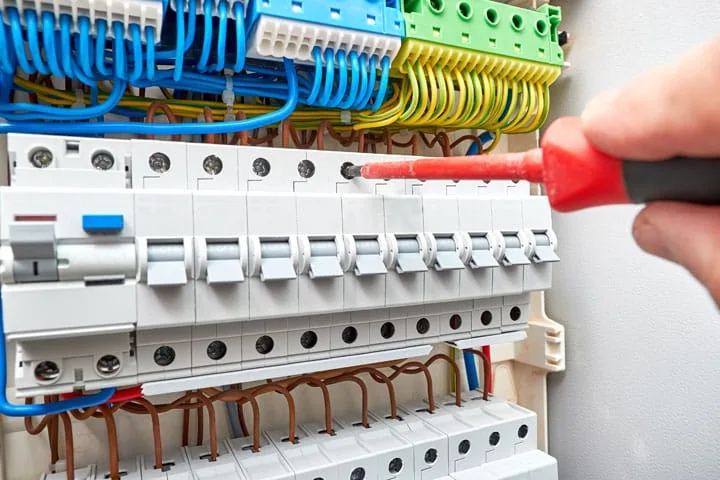
Is It Dangerous if Your Circuit Breaker Keeps Tripping?
Yes. A circuit breaker that trips repeatedly is warning you of an active fault. Ignoring it creates real danger.
The breaker’s entire purpose is to cut power before the wiring overheats. If the fault causing the trip isn’t fixed, each reset pushes current through a compromised circuit. Over time, this degrades the wiring insulation further, loosens connections, and increases the risk of arc faults inside wall cavities.
According to NSW Fair Trading, all electrical wiring work in NSW must be performed by a licensed electrician, regardless of the cost or whether the work is residential or commercial. Attempting to fix a tripping breaker yourself, beyond basic appliance unplugging, is not just risky. It is illegal in NSW.
The bigger concern is what happens if you simply keep resetting without investigating. The breaker will eventually fail to trip when it should. A breaker that has been forced to trip hundreds of times loses its reliability. At that point, there is nothing between the fault and a house fire.
In older Newcastle homes, particularly in suburbs like Adamstown, New Lambton, and Merewether, I’ve found switchboards where breakers haven’t been replaced since the house was built. These breakers still “look” fine, but their internal trip mechanisms are worn beyond safe tolerance. A switchboard inspection is the only way to confirm they’re still functioning correctly.
How to Troubleshoot a Tripping Circuit Breaker Safely
You can narrow down the cause before calling an electrician. Follow these steps in order:
Identify Which Breaker Has Tripped
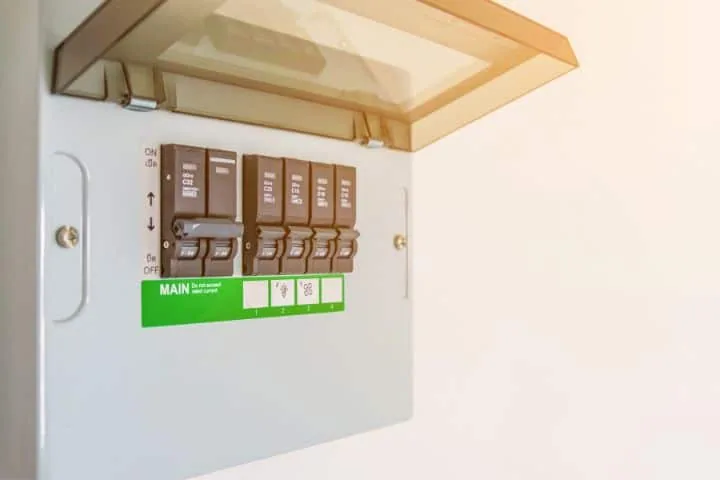
Open your switchboard and look for the breaker that has flipped to the off position or is sitting in the middle. Modern switchboards label each breaker by area or circuit. Note which one has tripped, as this tells you which part of your home is affected.
Turn Off and Unplug Everything on That Circuit
Switch off every appliance and light connected to the tripped circuit. Unplug appliances physically from the wall. Simply switching them off at the power point is not enough, as some faults draw current even in the off position.
Reset the Breaker
Push the breaker firmly to the off position first, then flip it back to on. If it holds, the fault is likely in one of the appliances or devices you just unplugged.
Reconnect Appliances One at a Time
Plug each appliance back in and switch it on individually. Wait 30 seconds between each one. The appliance that causes the breaker to trip immediately is your culprit. Stop using it and have it inspected or replaced.
If the Breaker Trips with Everything Unplugged
This indicates a fault in the wiring itself, not an appliance. The problem could be a damaged cable inside a wall, a loose connection at an outlet, or moisture ingress affecting the circuit. Stop resetting and call a licensed electrician for fault finding. Under NSW electrical compliance requirements, your electrician must provide a Certificate of Compliance for any wiring work carried out.
Why Newcastle Homes Are Particularly Prone to Tripping Breakers
Newcastle’s housing stock and coastal environment create specific conditions that make circuit breaker tripping more common than in many other regions:
- Post-war homes with undersized wiring: The most significant residential development in Newcastle occurred during the 1940s, 1950s, and 1960s. Homes built in Mayfield, Hamilton, Lambton, and Wallsend during this period were wired for much lighter electrical loads than modern households demand. Running a reverse-cycle air conditioner, dishwasher, and clothes dryer on circuits designed for a few lights and a radio creates chronic overloading.
- Salt air corrosion on coastal properties: Homes in Merewether, Stockton, and Bar Beach experience accelerated corrosion on switchboard terminals and cable connections. Corroded contacts increase resistance, generate heat, and can cause erratic breaker behaviour. Coastal properties within a few kilometres of the shoreline need regular electrical maintenance to keep connections clean and tight.
- Ceramic fuse switchboards still in service: Older suburbs like Adamstown, Waratah, and Elermore Vale still have homes running on original ceramic fuse switchboards with no RCD protection. These systems lack the sensitivity of modern circuit breakers and can mask faults that would trip a newer switchboard. Upgrading to a modern switchboard with RCDs and miniature circuit breakers is the single most effective improvement you can make. According to the NSW Government, homeowners are reminded to contact a licensed electrician if they suspect any electrical problem.
- Renovation load increases without wiring upgrades: Many Newcastle properties have been renovated to include air conditioning, home offices, and modern kitchens, but the wiring behind the walls hasn’t been upgraded to match. The 2021 Census recorded 168,873 residents living in 74,579 dwellings across the City of Newcastle, with a significant portion of that housing stock predating current wiring standards.
- Possum and rodent damage in roof cavities: Suburbs with dense tree canopy like Fletcher, Charlestown, and Maryland, see frequent rodent and possum activity in ceiling spaces. Animals chew through cable insulation, creating short circuits and earth faults that cause intermittent tripping. These concealed faults are particularly difficult to find without professional fault detection equipment.
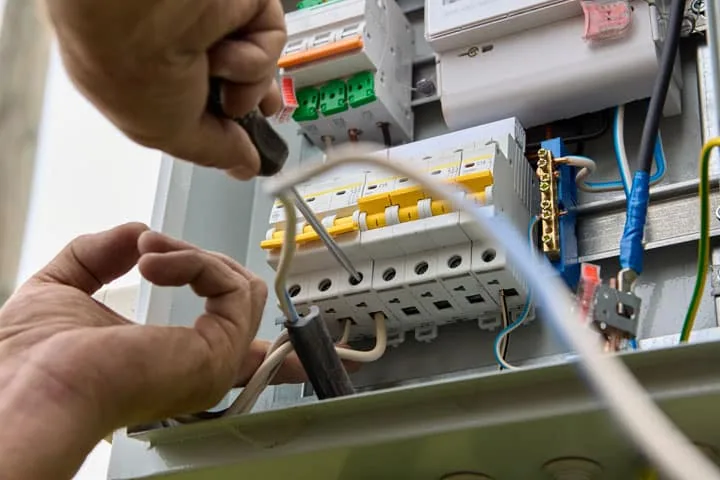
How a Licensed Electrician Diagnoses Repeated Tripping
When basic troubleshooting doesn’t resolve the issue, a qualified electrical professional uses specialist equipment to find the fault:
Circuit-by-Circuit Isolation Testing
I isolate each circuit at the switchboard and test it independently under load. This narrows the fault to a specific circuit, whether it’s the kitchen power, bedroom lighting, or hot water system. It’s the fastest way to move from “something keeps tripping” to “this specific circuit has the fault.”
Insulation Resistance Testing
Using a megohmmeter, I test the resistance of cable insulation on the affected circuit. Low readings confirm that the cable sheathing has broken down, which allows current to leak and trip the breaker. This test identifies whether the wiring needs repair at a specific point or whether the entire circuit needs rewiring.
Thermal Imaging
For intermittent faults that only trip under heavy load, I use a thermal imaging camera to scan the switchboard and outlet points while the circuit is energised. Loose connections and overheating components show up as hot spots. This is especially useful in older Newcastle switchboards where multiple connections may be deteriorating simultaneously.
Switchboard Assessment
If the circuit breaker itself is the problem, I assess the entire switchboard for age, condition, and compliance. As a licensed Newcastle electrician, I check every breaker, RCD, bus bar, and connection point. Switchboards over 25 years old frequently need a full upgrade to meet current standards under AS/NZS 3000:2018 and handle modern household loads safely.
After a recent job diagnosing repeated tripping at a Newcastle property, Kitson Electricians received this feedback:
“Great service from the team at Kitson. They are my preferred electrician. Prompt and professional service from the office and the guys in the field. If I have an issue, the team are there to sort it out. If I doubt, give them a call.” — Nick Papadopoulos
Getting tripping issues diagnosed the first time properly saves you from repeated callouts and escalating damage.
How to Prevent Your Circuit Breaker from Tripping
Most repeated tripping is preventable with a few practical changes. Here’s what I recommend to every homeowner I visit:
- Spread high-draw appliances across different circuits: Don’t run your heater, clothes dryer, and kettle on the same circuit simultaneously. Redistribute heavy appliances so no single circuit is pushed beyond its rated capacity. According to NSW Energy, spacing out appliance use is also a good practice to avoid overloading circuits.
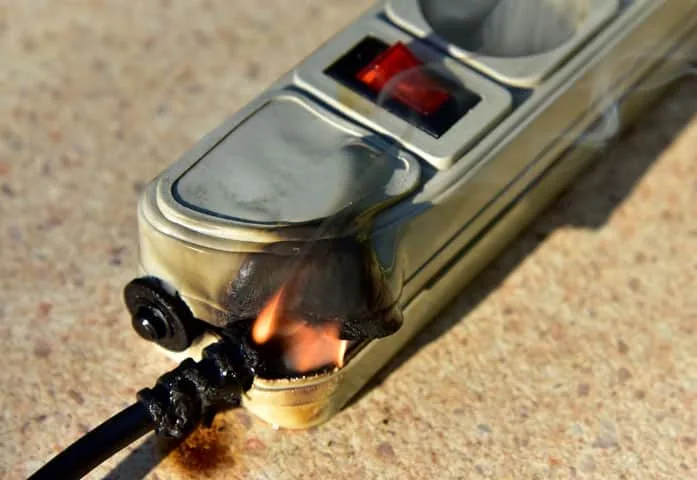
- Avoid daisy-chaining power boards: Plugging one power board into another is one of the fastest ways to overload a circuit. Use a quality power board with a built-in overload switch per outlet. If you need more outlets, have an electrician install additional power points.
- Replace ageing appliances with worn cords or plugs: A frayed cord, a cracked plug, or an appliance that sparks when you plug it in is a short circuit waiting to happen. Replace the appliance or have the cord professionally repaired before it trips your breaker or causes something worse.
- Test your safety switches every six months: Press the test button on your RCDs twice a year. If they don’t trip instantly when tested, they need replacing. A safety switch that fails to respond is providing zero protection.
- Schedule a switchboard inspection: If your home is over 25 years old and you haven’t had the switchboard assessed, book one. It’s the single best investment in preventing repeated tripping, electrical faults, and fire risk.
Areas We Service
Kitson Electricians Newcastle provides emergency and scheduled electrical services across the entire Newcastle and Hunter region. We service Adamstown, Charlestown, Edgeworth, Elermore Vale, Fletcher, Hamilton, Lambton, Lake Macquarie, Maitland, Maryland, Mayfield, Merewether, New Lambton, Stockton, Wallsend, Waratah, and all surrounding suburbs.
Get Your Tripping Circuit Breaker Diagnosed Today
If your circuit breaker keeps tripping and basic troubleshooting hasn’t resolved it, call Kitson Electricians Newcastle on 0438 262 792. Licensed electricians, same-day service, upfront fixed pricing, and a lifetime labour warranty on all work. $50 off your first service and a free safety inspection valued at $150.
Frequently Asked Questions
Is it dangerous if my circuit breaker keeps tripping?
Yes. Repeated tripping signals an active electrical fault, typically an overloaded circuit, short circuit, or earth fault. Each reset without fixing the underlying cause pushes current through compromised wiring and increases the risk of an electrical fire.
What is the difference between a circuit breaker and a safety switch?
A circuit breaker protects wiring from overload and short circuit damage. A safety switch (RCD) protects people from electric shock by detecting current leaking to earth. Both are found in your switchboard, but the safety switch has a test button marked “T.”
Why does my breaker trip when I turn on a specific appliance?
The appliance likely has an internal fault, such as a damaged element, worn motor, or cracked insulation. Unplug it immediately and do not use it until a technician has inspected it. Common culprits in Newcastle homes include older air conditioners, ovens, and washing machines.
Can I fix a tripping circuit breaker myself?
You can unplug appliances and reset the breaker. But any work on the switchboard or wiring in NSW must be carried out by a licensed electrician. It is illegal to perform electrical wiring work without a licence, and doing so puts you and your household at serious risk.
Can old wiring cause a circuit breaker to keep tripping?
Yes. Homes built before the 1980s across Newcastle often have degraded cable insulation that allows current to leak, creating earth faults and short circuits. Suburbs like Mayfield, Hamilton, and Wallsend are particularly affected due to the age of their housing stock.
How often should I get my switchboard inspected?
I recommend an inspection every five years for homes over 25 years old, and every three years for homes over 40 years old. Coastal Newcastle properties should be inspected more frequently due to salt air corrosion on switchboard connections and terminals.
If the board is old or short on space, a switchboard upgrade usually solves repeated tripping for good.
See our electrical glossary for any of the terms used in this guide.