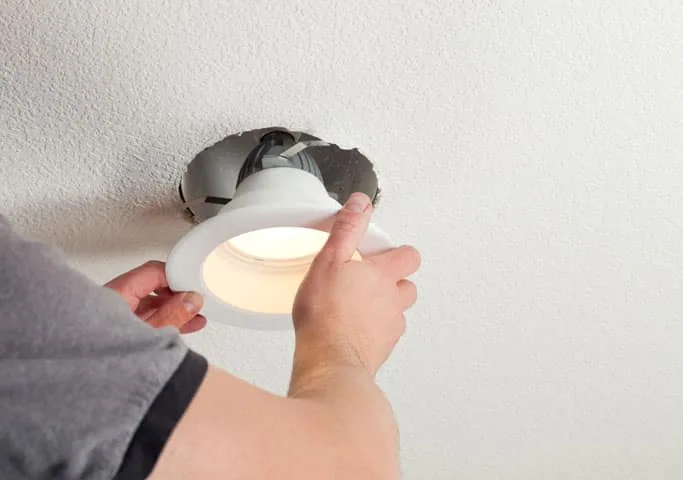


An LED light that stays on when the switch is off is usually caused by a small leakage current flowing through an incompatible dimmer, an illuminated switch, or capacitive coupling in the wiring. LEDs are so efficient that even tiny amounts of residual current make them glow visibly.
This is one of the most common issues homeowners notice after upgrading from halogen or incandescent to LED lighting. The old globes never showed this because they needed far more current to produce light. Kitson Electricians Newcastle diagnoses and fixes LED ghosting across Newcastle, Lake Macquarie, and the Hunter region. This guide covers what causes it, whether it’s dangerous, and how to fix it.
What LED Ghosting Actually Is
LED ghosting is the faint glow an LED produces when its switch is turned off. It can range from a barely visible shimmer in a dark room to a noticeable dim light that stays on all night. The technical cause is residual current reaching the LED driver after the switch has been opened.
Incandescent and halogen globes need 40 to 60 watts to produce visible light. A tiny leakage current of a few milliamps was never enough to make them glow. LEDs produce light from as little as 2 to 5 watts. That same leakage current, which was invisible with old globes, is now enough to make the LED glow faintly. This is why the problem only appears after a lighting upgrade.
The key question is whether the glow is harmless residual energy or a sign of a wiring fault. This table helps you determine which:
| What You See | Most Likely Cause | Is It a Problem? |
| Faint glow that fades within a few seconds of switching off | The capacitor in the LED driver is discharging stored energy | No. This is normal LED behaviour. |
| Faint, dim glow that stays on all night | Leakage current from an incompatible dimmer or illuminated switch | Low risk, but should be fixed. The LED is being powered continuously. |
| Noticeable dim light, not just a shimmer | Higher leakage current from a wiring fault, switched neutral, or faulty switch | Yes. Have it inspected by a licensed electrician. |
| Glow plus flickering, buzzing, or warm switch plate | Active wiring fault with arcing or loose connection | Yes. Turn off the circuit and call an electrician immediately. |
If your LED glow fades within seconds and only shows in a dark room, it’s harmless. If it stays on all night or is accompanied by other symptoms, it needs attention.

Common Causes of LED Lights Staying On When the Switch Is Off
Here is what I see most often when called to Newcastle homes reporting this issue:
Incompatible Dimmer Switch
This is the most common cause. Older dimmers designed for halogen or incandescent loads use a leading-edge mechanism that leaks a small current even in the off position. Halogen globes absorbed this without any visible effect. LEDs pick it up and glow. Replacing the dimmer with a trailing-edge, LED-compatible dimmer stops the ghosting completely.
Illuminated or Neon Indicator Switch
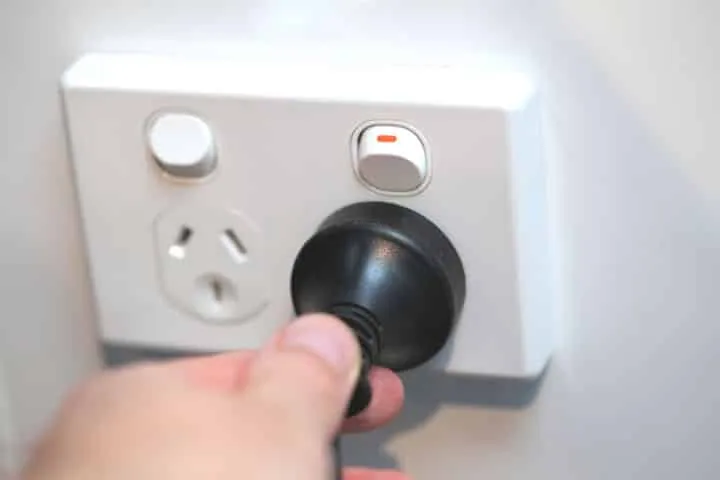
Many light switches have a small neon indicator that glows when the switch is off, showing you where the switch is in the dark. That indicator completes a circuit through the light fitting to work. With incandescent globes, the current was too small to matter.
With LEDs, it’s enough to cause a faint glow. Replacing the switch with a non-illuminated type or an LED-compatible indicator switch resolves it.
Smart Switch Without a Neutral Wire
Some smart switches need a trickle of current to power their internal electronics (Wi-Fi module, timer, display). If the switch doesn’t have a dedicated neutral wire connection, it draws that standby current through the light fitting.
LEDs glow from this trickle. Installing a neutral-required smart switch or adding a bypass capacitor fixes it. If you’re installing smart home automation, make sure the switch has a neutral connection.
Capacitive Coupling in Parallel Cable Runs
In older homes where lighting cables run alongside power cables inside the same conduit or wall cavity over long distances, the live cable can induce a small voltage onto the switched lighting cable.
This electromagnetic coupling provides enough energy to make an LED glow faintly. It’s more common in homes with original wiring installed before cable separation became standard practice.
Capacitor Discharge in the LED Driver
Every LED fitting has a driver containing capacitors that store energy. After the switch is turned off, the capacitors discharge slowly, powering the LED faintly for a few seconds.
This is normal. It’s not a fault. It fades and stops on its own. Higher quality LED drivers discharge faster and produce less visible afterglow.
Switched Neutral Wiring Error
In a correctly wired circuit, the switch interrupts the active (live) conductor. If the switch was wired to the neutral conductor instead, the active wire remains permanently connected to the fitting even when the switch is off.
Current leaks through the fitting to earth, making the LED glow. This is a genuine wiring fault and a safety issue that requires a licensed electrician to correct.
More: Why Do My Lights Flicker? Causes & How to Fix It.
Is an LED Light That Stays On When Off Dangerous?
In most cases, a faint LED glow when the switch is off is not dangerous. But it depends on the cause.
A glow from capacitor discharge or a minor dimmer leakage is cosmetically annoying but not a safety risk. The current involved is tiny, typically less than 1 milliamp. It won’t cause overheating, fire, or significant energy waste.
A glow caused by a switched neutral, faulty wiring, or a defective switch is a different matter. These faults mean the active conductor is still energised at the fitting even when you think the power is off.
Anyone changing the globe or working on the fitting could receive a shock. According to SafeWork NSW, contact with exposed live parts causing electric shock and burns is one of the main hazards associated with electrical risks. A switched neutral also means the fitting is not protected by the switch, which defeats the purpose of the switch as a safety device.
If your LED glow is accompanied by a warm switch plate, buzzing, flickering, or if it appeared suddenly after electrical work, treat it as a fault and have it inspected.
Why This Issue Is Common in Newcastle Homes
Newcastle’s housing and renovation history creates specific conditions that make LED ghosting more frequent:
- 2000s-era renovations with halogen-to-LED upgrades: Suburbs like Charlestown, Fletcher, and New Lambton saw significant renovation activity when halogen downlights were standard. Many homeowners have since replaced halogen globes with LED but kept the original leading-edge dimmer. The dimmer worked perfectly with halogens. With LEDs, it causes ghosting. A downlight upgrade isn’t complete without a compatible dimmer.
- Older homes with parallel cable runs: Properties in Mayfield, Hamilton, and Wallsend built during the 1940s to 1960s have original wiring that wasn’t designed with cable separation in mind. Lighting and power cables running together in wall cavities create capacitive coupling that causes LED ghosting on those circuits.
- Illuminated switches still in use: Many Newcastle homes have illuminated switches installed during the 1990s and 2000s. These worked fine with incandescent globes, but caused ghosting with every LED on the circuit. The switch needs replacing, not the LED.
- Smart home upgrades without neutral wiring: Homeowners across Newcastle are adding smart switches to older homes, often finding that the existing switch box has no neutral wire. Without it, the smart switch draws standby power through the LED fitting, causing a persistent glow.
More: Why Is My Downlight Not Working? Causes and Fixes.

How to Fix LED Ghosting
The right fix depends on the cause. Here is a practical approach:
Replace the Dimmer With an LED-Compatible Model
If you have an old leading-edge dimmer, replace it with a trailing-edge dimmer rated for LED loads. This is the single most common fix and resolves the majority of LED ghosting cases. A licensed electrician can match the dimmer to your specific LED wattage and fitting type.
Replace the Illuminated Switch
Swap the illuminated switch for a standard non-illuminated model or an LED-compatible indicator switch that doesn’t leak current through the fitting. This is a quick fix that resolves ghosting on that circuit immediately.
Install a Bypass Capacitor
A bypass capacitor is a small component wired across the LED light fitting that absorbs the leakage current before it reaches the LED. It’s the standard fix when the dimmer or switch can’t be replaced easily, or when capacitive coupling is the cause. A licensed electrician installs this in the ceiling space.
Correct a Switched Neutral
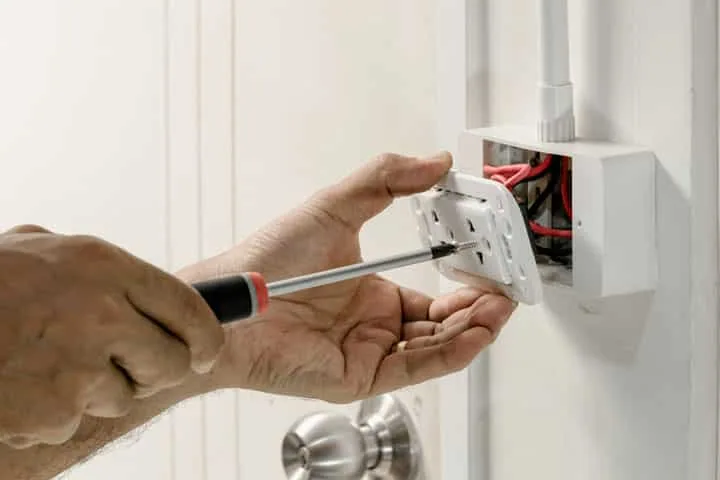
If the switch is interrupting the neutral instead of the active, the wiring needs correcting. This is not a DIY fix. It requires rewiring at the switch and potentially at the fitting to ensure the active conductor is the switched line. Under NSW law, all electrical wiring work must be carried out by a licensed electrician.
Upgrade to a Higher Quality LED
Cheap LED globes with low-quality drivers are more susceptible to ghosting because they respond to smaller currents. Upgrading to a reputable brand with a well-designed driver can reduce or eliminate minor ghosting without any wiring changes.

What You Can Check Before Calling an Electrician
A few safe checks can help narrow down the cause:
- Note how long the glow lasts: If it fades within seconds, it’s a capacitor discharge. Normal. If it stays on all night, it’s leakage current from the switch, dimmer, or wiring.
- Check if the switch has a neon indicator: Look at your switch in the dark. If the switch itself glows with a small orange or green light when off, it’s an illuminated switch causing the ghosting.
- Try a different LED globe: Replace the LED with a different brand or model. If the ghosting stops, the original LED had a driver that was more sensitive to leakage. If it persists, the cause is in the switch or wiring.
- Check if a dimmer is involved: If the light is on a dimmer circuit, the dimmer is the most likely cause. Note the dimmer brand and type for your electrician.
- Check if it started after a change: If the ghosting appeared after installing a new LED, a new dimmer, or a smart switch, the new component is almost certainly the trigger.
After a recent LED lighting upgrade at a Newcastle home, Kitson Electricians received this feedback:
“Excellent job done by Anthony and team. I had smart lights, Ring camera and automated lights installed in the house. The team not only did the entire task effortlessly but also tidied up before leaving. Great team and amazing work. Impressed!” — Fatema Kapadia
Getting LED installations done properly from the start, with compatible dimmers and correct wiring, prevents ghosting issues from ever appearing.
Areas We Service
Kitson Electricians Newcastle provides residential LED lighting services, including dimmer upgrades and ghosting fixes across the entire Newcastle and Hunter region. We service Adamstown, Charlestown, Elermore Vale, Fletcher, Hamilton, Lambton, Lake Macquarie, Mayfield, Merewether, New Lambton, Stockton, Wallsend, and all surrounding suburbs.
Fix Your LED Ghosting Today
If your LED light stays on when the switch is off, and basic troubleshooting hasn’t resolved it, call Kitson Electricians Newcastle on 0438 262 792. Licensed electricians, same-day service, upfront fixed pricing, and a lifetime labour warranty on all work. $50 off your first service and a free safety inspection valued at $150.
Frequently Asked Questions About LED Lights Staying On
Is it normal for LED lights to glow when switched off?
A faint glow that fades within a few seconds is normal. It’s the LED driver’s capacitor discharging stored energy. A persistent glow that stays on all night indicates leakage current from the dimmer, switch, or wiring and should be investigated.
Can a dimmer switch cause LED lights to stay on?
Yes. Older, leading-edge dimmers designed for halogen or incandescent globes leak a small current in the off position. LEDs are sensitive enough to pick up this current and glow faintly. Replacing the dimmer with a trailing-edge LED-compatible model resolves it.
Is an LED light that stays on when off dangerous?
A faint glow from dimmer leakage or capacitor discharge is not dangerous. But if the cause is a switched neutral or faulty wiring, the fitting remains energised when you think the power is off. That’s a shock risk and needs professional repair.
How do I stop my LED light from glowing when off?
The fix depends on the cause. Replace an incompatible dimmer with an LED-compatible model. Swap an illuminated switch for a standard one. Install a bypass capacitor for capacitive coupling. Correct a switched neutral through a licensed electrician.
What is LED ghosting?
LED ghosting is the faint glow an LED produces when its switch is off. It’s caused by small amounts of residual current reaching the LED through the dimmer, switch, or wiring. The term covers any unwanted dim light from an LED that should be fully off.
Do I need an electrician if my LED stays on when the switch is off?
If the glow is faint and only appears with a specific dimmer, you may resolve it by upgrading the dimmer yourself (for plug-in lamps) or by booking a licensed electrician for hardwired fittings. If the glow is bright, persistent, or accompanied by buzzing or warmth, call an electrician.