
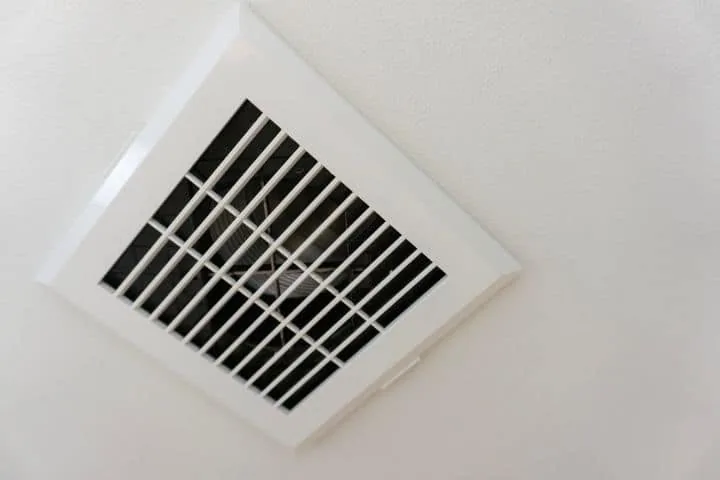
A Merewether bathroom that stays damp after showering usually has a failed, undersized, or incorrectly ducted exhaust fan. Without effective ventilation, moist air from hot showers has nowhere to escape, settling on tiles, in grout, on ceilings, and in wall cavities, where it can cause mould, paint failure, and structural damage over time.
Merewether’s coastal position makes this worse than most. Salt-laden sea air raises ambient humidity, and older homes throughout the suburb, from Californian bungalows near the beach to post-war fibro cottages further inland, were built long before mechanical ventilation was standard. Kitson Electricians Newcastle installs, replaces, and upgrades exhaust fans across Merewether and the wider Newcastle region. This guide covers why bathrooms stay damp, how to identify the cause, and what a proper fix involves.
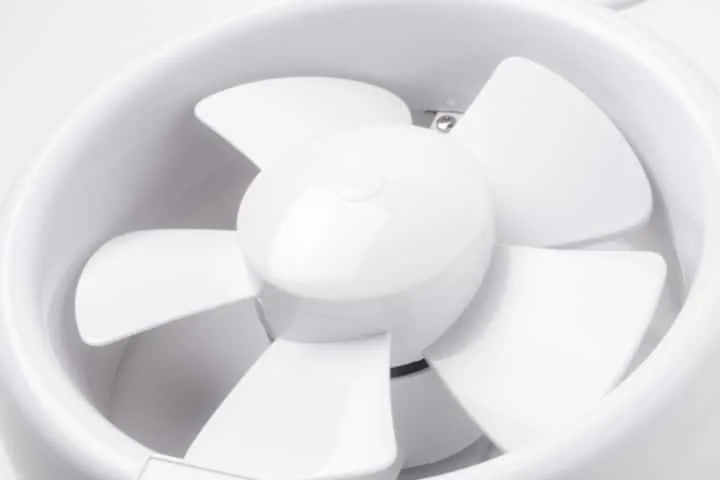
Why Bathroom Dampness Is a Bigger Problem in Merewether
Merewether sits directly on the coast, which means humidity levels are consistently higher than inland Newcastle suburbs. That baseline moisture load makes any ventilation shortfall more noticeable and more damaging.
According to NSW Health, prolonged exposure to mould in enclosed spaces is linked to respiratory irritation, allergic reactions, and worsening asthma symptoms. The risk is greatest in bathrooms where moisture is generated daily, and ventilation is inadequate.
In Merewether, where the coastal climate keeps humidity elevated year-round, an underperforming exhaust fan does not just cause cosmetic damage. It creates genuine health risks for the household.
Why Your Exhaust Fan May Not Be Doing Its Job
Exhaust fans fail in several ways. The fan may appear to work but move very little air. Here is what I find most often in Merewether homes.
- The fan is venting into the roof cavity instead of outside. This is the single most damaging installation error. The fan pulls moist air from the bathroom and releases it into the roof space, where it condenses on timber framing and insulation. Under the National Construction Code, exhaust air from bathrooms must discharge directly to the outside, not into a roof or wall cavity.
- The fan is too small for the room. Fan capacity is measured in litres per second. A fan sized for a small ensuite cannot clear the moisture load of a large family bathroom. Many Merewether homes had small, budget fans installed during renovations without matching the fan capacity to the room volume. The fan runs but cannot keep up, and moisture lingers long after the shower ends
- The fan is more than 10 years old. Most exhaust fans have a serviceable life of 10 to 15 years. An ageing motor loses efficiency quietly. The fan still turns on and makes noise, but airflow has dropped well below the original rating. Homeowners assume it is working because they can hear it running.
- The ducting is crushed, kinked, or blocked. Flexible duct in roof cavities can be pinched by insulation batts, compressed at a bend, or partially blocked by debris. Even a partially obstructed duct reduces airflow significantly. The fan motor spins but the air has nowhere to move freely.
- There is no fan at all. Many pre-1980 Merewether homes relied on a window for bathroom ventilation. Original windows may now be painted shut, frosted over, or replaced with fixed panes. Without an operable window or a mechanical exhaust fan, there is no route for moist air to leave the room.
- The fan runs but stops too soon. A shower produces significant moisture that continues to evaporate from wet surfaces for 15 to 20 minutes after the water stops. A fan switched off immediately after showering leaves the residual moisture to settle into the room. Without a run-on timer, most of the ventilation benefit is lost.
More: Why Does My Smoke Alarm Keep Beeping?
Why Merewether Homes Specifically Struggle With Bathroom Dampness
Here is what I commonly find by property type and era when assessing Merewether bathrooms.
- Californian bungalows built in the 1930s to 1950s near Merewether Beach. These properties have character features worth preserving, but their bathrooms were designed with no mechanical ventilation. A single small window, often frosted or fixed shut, was considered adequate. Salt air and coastal proximity mean ambient humidity in these homes is higher than average, and any moisture that cannot escape quickly settles and causes damage.
- Post-war fibro and brick homes in Merewether Heights and Adamstown. Homes built in the 1950s and 1960s were among the first to have exhaust fans, but many of the originals have been in place for 40 to 60 years. They are well past their serviceable life and typically vent into the roof cavity rather than outside.
- Renovated properties in Cooks Hill and The Junction area. Bathroom renovations in these suburbs frequently update tiles, fixtures, and cabinetry but retain the original exhaust fan. A new-looking bathroom can still have a 20-year-old fan venting moisture into the ceiling cavity. The cosmetic upgrade masks the ventilation problem.
- Apartment buildings and units near Charlestown and New Lambton. Internal bathrooms without windows are common in multi-storey developments. Under the National Construction Code, these must be equipped with mechanical ventilation. Where the building’s original fans have degraded, residents experience persistent dampness with no natural ventilation backup.
- Investment properties in Wallsend and Hamilton are maintained to the minimum standard. Rental properties in these suburbs sometimes have exhaust fans that predate current requirements. Tenants report damp bathrooms, but landlords delay replacement. NSW landlord obligations require properties to be maintained in a safe and habitable condition, which includes functional ventilation.
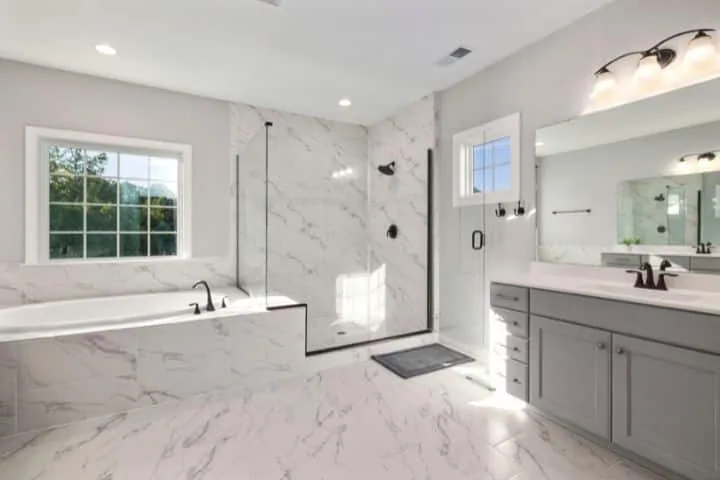
What a Correct Exhaust Fan Installation Actually Involves
Getting a bathroom exhaust fan right involves more than just fitting a fan to the ceiling. Here is what the process looks like on a properly executed job in a Merewether home.
Sizing the Fan to the Room
A compliant exhaust fan must move a minimum of 25 litres per second for a bathroom, as required under AS 1668.2. For a larger or taller bathroom, the required capacity is higher. I calculate the room volume and select a fan rated for that specific space. An undersized fan is the most common reason a bathroom stays damp after installation.
Ducting to the Outside
The duct must run from the fan through the roof cavity and discharge outside through a weatherproof roof cowl or eave vent. In Merewether homes, this often means routing through terracotta or slate roof cavities with limited clearance.
I confirm that the discharge point is correctly sealed against rain entry and that the duct has no sharp bends that restrict airflow. Every exhaust fan installation we complete is ducted to outside as standard.
Run-On Timer
The National Construction Code requires that bathrooms without a window have mechanical ventilation that either runs continuously or includes a run-on timer operating for at least 10 minutes after the occupant leaves.
I install a timer switch as standard on all bathroom fan jobs. This ensures the fan continues to clear residual moisture after the shower ends, when most settling damage occurs.
Wiring and Compliance
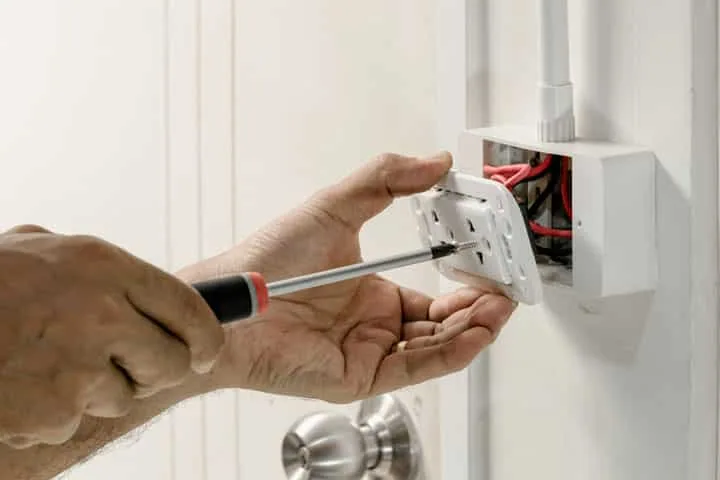
Exhaust fans in bathrooms are installed in a wet area zone, meaning all wiring must comply with the wet-area provisions of the AS/NZS 3000:2018 Wiring Rules. The circuit must be RCD protected.
Under NSW Fair Trading requirements, all electrical work must be carried out by a licensed electrician. A Certificate of Compliance for Electrical Work is issued on completion.
How Much Does Exhaust Fan Installation Cost in Newcastle?
Newcastle exhaust fan installation typically runs 10 to 15 per cent below Sydney pricing. These are current indicative ranges for Merewether and surrounding suburbs:
| Job Type | Typical Cost | Notes |
| Like-for-like fan replacement | $180 – $300 | Existing duct and wiring reused |
| New standard ceiling fan with ducting | $250 – $450 | Includes duct run to outside |
| 3-in-1 unit (heat, light, fan) | $350 – $600 | Popular in Merewether bathrooms |
| Inline fan (quieter, more powerful) | $500 – $800 | Suited to larger or internal bathrooms |
| New installation, no prior fan | $450 – $750 | New circuit, ceiling penetration, full ducting |
If the existing duct is found to be discharging into the roof cavity rather than outside, correcting it adds time and cost but is not optional. The damage caused by years of moisture in a roof cavity far exceeds the cost of correctly fixing the duct run.
Maintaining Your Bathroom Ventilation After Installation
Once a new exhaust fan is in place, a few simple habits keep the system working effectively. Here is what I recommend to every Merewether homeowner after a fan installation or upgrade.
Run the Fan for at Least 15 Minutes After Showering
Steam clears in roughly 10 to 15 minutes with a correctly sized fan running. Switching the fan off immediately after showering leaves residual moisture on every surface. A run-on timer handles this automatically. Without one, leave the fan running while you get ready and for a few minutes after leaving.
Clean the Fan Grille Every Six Months
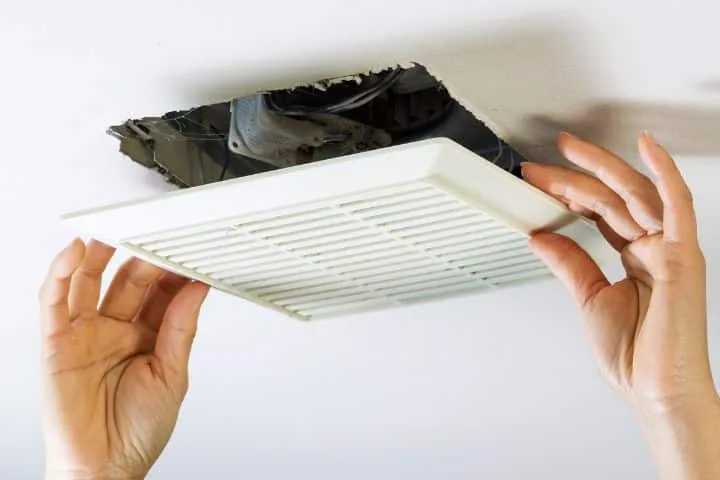
Dust and lint accumulate on the fan grille, reducing airflow over time. A blocked grille can cut effective airflow by 20 to 30 per cent. Remove the grille, wash it in warm soapy water, and allow it to dry before refitting. This takes five minutes and significantly extends the fan’s effective life.
Book an Inspection If the Mirror Still Fogs After 15 Minutes
A properly sized and correctly ducted fan should clear visible steam within 10 to 15 minutes. If the mirror is still fogged after that time, the fan is undersized, has a duct restriction, or is not venting outside. Kitson Electricians Newcastle can assess the system and confirm whether replacement or duct correction is needed.
After completing a recent exhaust fan installation at a Newcastle property, Kitson Electricians received this review:
“Excellent service from Kitson Electric. The electrician arrived on time, communicated clearly throughout the process, and delivered top-quality work. Everything was completed safely and efficiently, and the pricing was honest and transparent. It’s not easy to find tradespeople this reliable these days — highly recommended!” — Tang Tom
That kind of clear communication and transparent pricing is exactly what a bathroom ventilation job should deliver.
More: Why Do My Lights Flicker? Causes & How to Fix It
Areas We Service
Kitson Electricians Newcastle installs and upgrades exhaust fans across Merewether and the wider Newcastle region. We service Adamstown, Charlestown, Elermore Vale, Fletcher, Hamilton, Lambton, Mayfield, Merewether, New Lambton, Shortland, Wallsend, Waratah, and all surrounding suburbs. Whether your Merewether bungalow has no fan at all or your Charlestown unit has a 20-year-old fan venting into the ceiling, our licensed electricians will identify the problem and install a compliant solution.
Fix Your Merewether Bathroom Dampness Today
Still dealing with a foggy mirror and damp walls long after every shower? Call Kitson Electricians Newcastle on 0438 262 792 or book online.
- Same-day and next-day bookings available across Merewether and Newcastle
- Fixed upfront pricing. No surprises once the job starts
- Lifetime Labour Warranty on all exhaust fan installations
- Fully licensed and insured to NSW standards (AS/NZS 3000:2018)
- $50 off your first service and a free safety inspection valued at $150
- Clean Home Promise. Boot covers, drop sheets, full tidy-up on every job
A damp bathroom does not fix itself. The longer moisture settles into walls and ceilings, the more expensive the repair becomes.
Frequently Asked Questions Abou Bathroom Dampness in Merewether
Why does my bathroom stay damp even with the exhaust fan running?
The most common causes are a fan venting into the roof cavity instead of outside, a fan too small for the room, a duct that is blocked or kinked, or a fan motor that has lost efficiency with age. If the mirror remains fogged 15 minutes after the fan starts, the system needs inspection and likely replacement.
Is it illegal for an exhaust fan to vent into the roof cavity?
Under the National Construction Code, exhaust air from bathrooms and sanitary compartments must discharge directly to the outside. Venting into the roof cavity is non-compliant and causes moisture damage to insulation, timber framing, and roof structure over time.
Do I need a licensed electrician to replace a bathroom exhaust fan?
Yes. Exhaust fans are hardwired in a wet area zone, which requires a licensed electrician under NSW law. All bathroom fan installations must also be RCD-protected and issued with a Certificate of Compliance for Electrical Work upon completion.
How long should a bathroom exhaust fan run after a shower?
A correctly sized fan should run for at least 10 to 15 minutes after showering to clear residual moisture from surfaces. The National Construction Code requires internal bathrooms without a window to have fans with a run-on timer of at least 10 minutes. Installing a timer switch during replacement is the simplest way to ensure this happens automatically.
How do I know if my exhaust fan is venting outside or into the roof?
A licensed electrician can confirm this during an inspection by tracing the duct run in the roof cavity. You can do a basic check yourself by holding a tissue near the fan grille while it runs. Strong suction means airflow is moving. Weak suction with the fan running suggests a blockage or a duct disconnected from the external vent.
How much does it cost to replace an exhaust fan in a Merewether home?
A like-for-like replacement in an existing location with existing ducting typically costs $180 to $300. A new installation requiring ceiling penetration and a new duct run ranges from $450 to $750. If ducting needs to be rerouted from a ceiling cavity discharge to an external vent, allow additional cost depending on roof access and duct run length.
If the fan is old or the wiring looks tired, book an electrical safety inspection before the summer humidity sets in.