
A Valentine pool light usually fails for one of three reasons. The globe has burnt out, the transformer has died, or water has entered the fitting. Corroded terminals and tripped safety switches also feature. Only a licensed electrician should open the housing.
Valentine sits on the eastern shore of Lake Macquarie. Backyard pools are common here, and so is salt-laden air. Kitson Electricians Newcastle handles pool lighting across the lake suburbs. This guide covers the causes, the diagnosis, your replacement options and prevention.
Pool Lighting in a Lakeside Suburb Like Valentine
Pool season around Lake Macquarie effectively runs from September through to April. That means most pool lights sit unused for four or five months, then get switched on again in spring. Faults that developed quietly over winter show up in that first week.
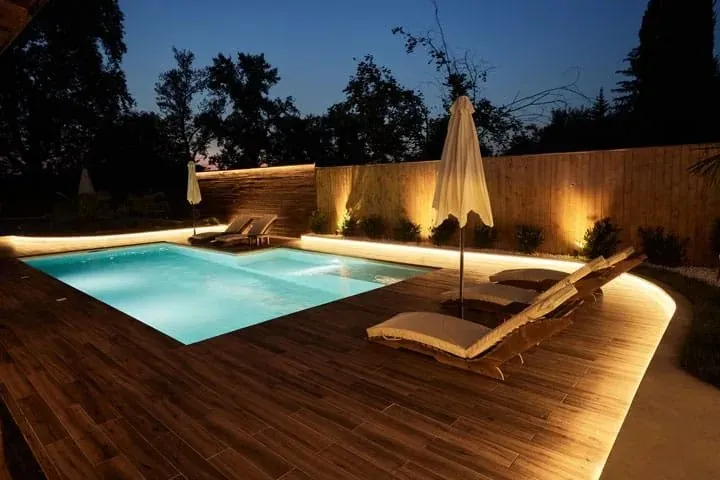
Pool lighting is not ordinary lighting. Under AS/NZS 3000, the Australian and New Zealand Wiring Rules, the space around a pool is divided into zones that restrict what electrical equipment can be installed and where. Most residential pool lights therefore run at extra-low voltage, usually 12 volts, fed through an isolating transformer mounted well clear of the water.
In six years of servicing pools between Valentine and Warners Bay, the pattern I see is consistent. The light itself is rarely the whole story. Salt air, chlorine and years of thermal cycling work on the seals, the cable and the transformer at the same time.
What Actually Makes a Pool Light Fail?
Six faults account for almost every dead pool light I attend:
- The globe or LED module has failed. This is the most common and the least serious. Halogen pool globes have a short service life compared with LED units, and a globe that has been run hard over several summers will simply reach the end of it. Replacement is straightforward once the fitting is opened safely.
- The isolating transformer has died. The transformer steps mains voltage down to the 12 volts the light runs on. When it fails, the light goes dead while everything else around the pool keeps working. Transformers mounted in damp or poorly ventilated spots fail years earlier than they should.
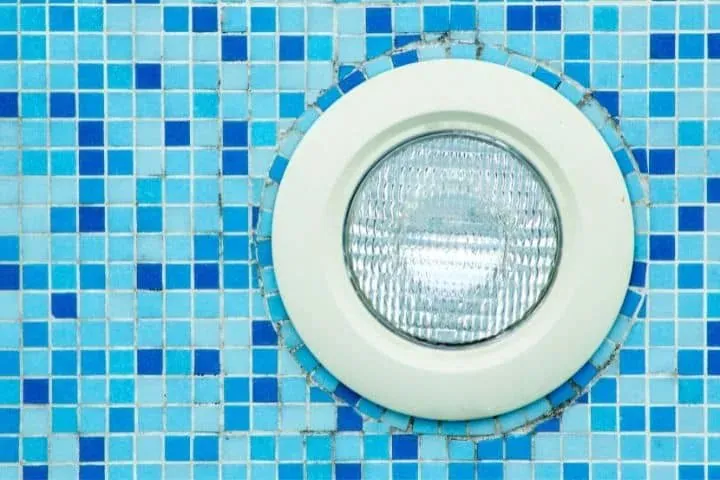
- Water has entered the fitting. Pool light housings rely on a rubber seal that hardens and shrinks with age. Once water gets past it, the globe blows, the terminals corrode and the safety switch usually starts tripping. A fitting that has flooded needs replacing rather than resealing.
- The terminals and cable have corroded. Chlorinated water and coastal air are hard on copper. Green residue at the terminals or a stiff, discoloured cable tail tells you the fault is in the wiring, not the globe. Cutting back to sound cable is part of a proper repair.
- The safety switch or circuit breaker is tripping. A pool light drawing current to earth will trip the safety switch protecting that circuit. Resetting it repeatedly does not fix anything and puts the fault back into service each time.
- The switch, timer or controller has failed. Where the pool light shares a controller with the pump or garden lighting, the failure sits in the controller rather than the light. Isolating each circuit separately confirms which one it is.
More: What To Do If My Safety Switch Won't Turn Back On?
Work Through This Before You Call Anyone
A short check narrows the problem and saves time on site. Run through this list before booking:
- Check whether the pool pump and any garden lighting on the same circuit still work.
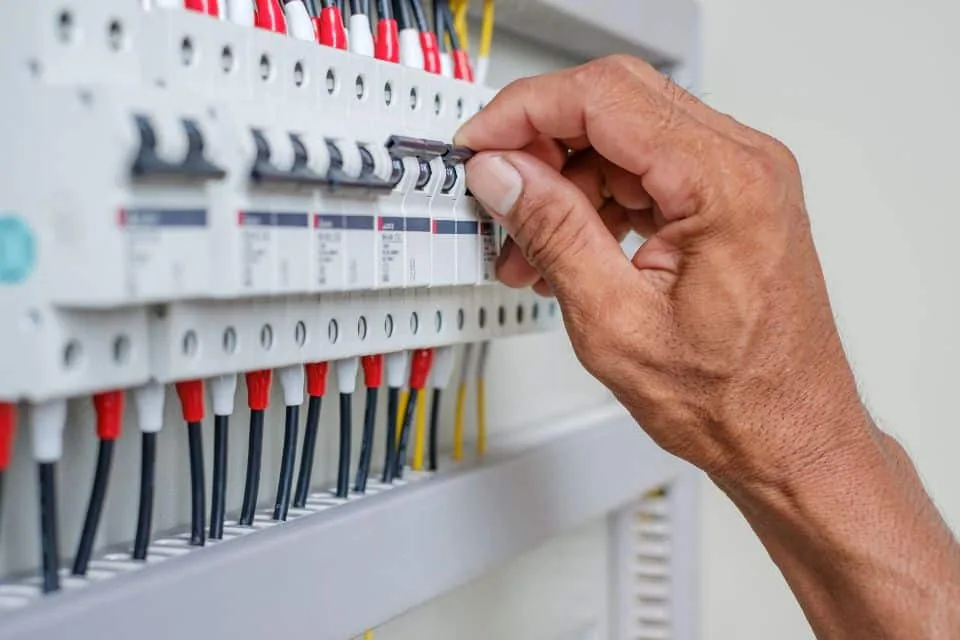
- Look at the switchboard and note whether a safety switch or breaker has tripped.
- Look through the water at the lens and note any water, fogging or debris inside the fitting.
- Note whether the light failed suddenly or dimmed and flickered over several weeks.
- Note whether the light works briefly and then cuts out, which points at the transformer.
- Leave the circuit switched off if anything looks or smells wrong, and stop resetting it.
Write down what you find. It tells your electrician where to start, and it often shortens the visit.
Why Pool Light Work Is Not a DIY Job
Pool lighting is one of the few jobs where the legal position and the safety position point the same way:
Water and Electricity Zones
The zones set out in AS/NZS 3000 exist because water removes the margin for error. Equipment that is perfectly safe in a garage is not safe within reach of a pool. Those rules govern fitting types, cable routes and where a transformer can sit.
Licensing Requirements in NSW
Electrical work in New South Wales must be carried out by a licensed electrician. Pool lighting is not an exemption. SafeWork NSW sets the workplace safety framework that licensed contractors work under, and a licence can be checked on the public register before anyone starts.
Warranty and Insurance Risk
Manufacturers void pool light warranties where the unit has been installed or opened by an unlicensed person. Home insurance can respond the same way after an incident. A compliant installation protects both.
Getting the Seal Right
Reassembly matters as much as the replacement itself. A seal that is twisted, dirty or reused when it should have been renewed will let water back in within a season. That is why a flooded fitting gets replaced rather than patched.
Why Valentine Pools See More Light Failures
Valentine's setting explains a lot of what I find in its pool switchboards:
- Salt air off Lake Macquarie. Homes close to the water at Valentine and Croudace Bay sit in salt-laden air year round. Salt accelerates corrosion at every terminal, join and screw thread around the pool area. Fittings here age faster than the same unit installed inland at Cardiff or Edgeworth.
- Original 1970s and 1980s pool wiring. A large share of Valentine's housing stock dates from that building period, and plenty of pools still run on their first-generation wiring. Cable insulation from that era becomes brittle, and the transformers are long past their design life.
- Wet-niche fittings in older concrete pools. Older concrete pools often use a wet-niche housing set into the pool wall. These are more exposed to water pressure and harder to service than newer designs, and their seals are the first thing to go.
- Garden beds and root movement over cable runs. Established gardens are part of the appeal in Valentine and Eleebana. They also mean decades of root growth and repeated digging across the buried cable between the transformer and the pool.
- Pools shut down over winter, then powered up in spring. Equipment that sits idle from May to August does not fail politely. Moisture gets in, contacts oxidise, and the fault announces itself the first warm weekend in September.
What Pool Light Replacement Involves
A proper replacement is a sequence, not a swap. Here is how the job runs:
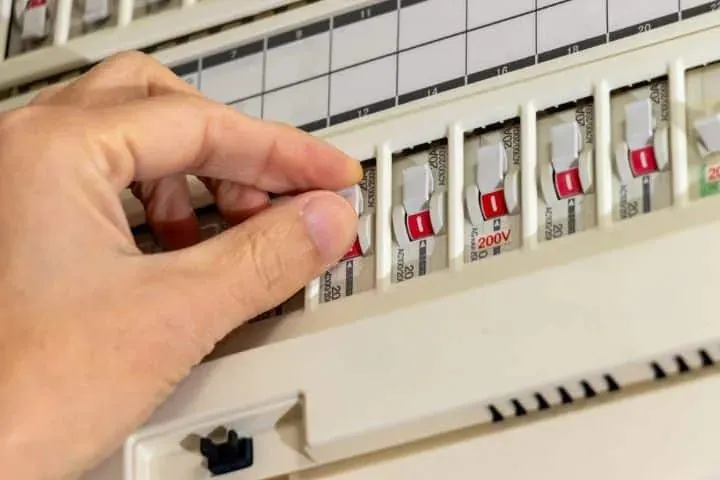
Isolation and Testing
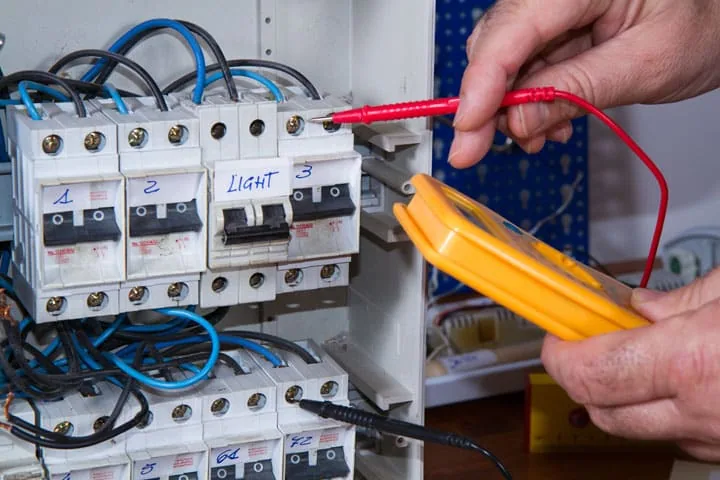
The circuit comes off at the switchboard first, and stays off. I then test the cable, the transformer output and the earth path to establish where the fault actually sits. That test result decides whether you need a globe, a fitting or cable work.
Removing the Old Fitting
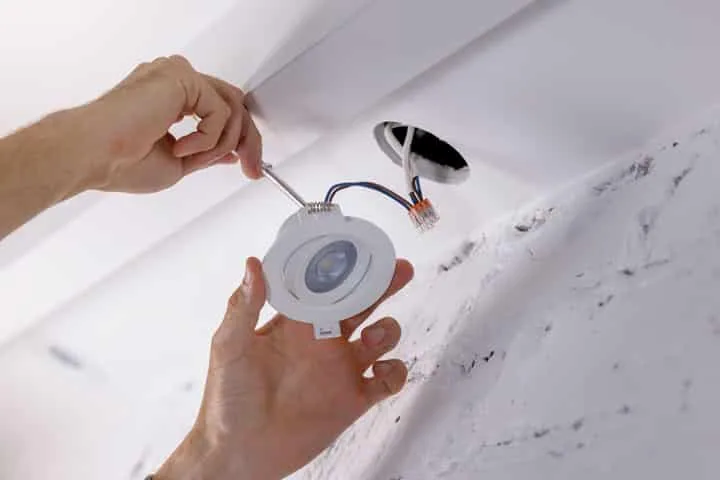
The housing is withdrawn on its cable so it can be worked on clear of the water. Corroded terminals are cut back to sound copper. Where the cable has degraded along its length, a new run is the only durable answer.
Fitting a Sealed LED Unit
Most replacements now go in as sealed LED units. They draw a fraction of the power of a halogen globe and last far longer, which matters when the light runs most evenings through summer. Colour and beam options are worth choosing deliberately rather than by default.
Testing and Certification
Once the unit is in, the circuit is tested under load, the safety switch is proved, and insulation resistance is measured. You receive a Certificate of Compliance for Electrical Work. Every pool light installation we complete includes that paperwork as standard.
More: Why Does My Circuit Breaker Keep Tripping and What To Do?
How to Get More Years From a New Pool Light
Pool lights are consumable, but they last far longer with a little attention:
- Keep the water chemistry balanced. Aggressive water attacks seals, stainless trim and the fitting body. Balanced water is the cheapest maintenance available to a pool light. Chlorinated splash is just as hard on nearby outdoor power points.
- Test the safety switch every month. Press the test button on the safety switch covering the pool circuit and confirm it trips and resets. A safety switch that does not trip is not protecting anyone.
- Never run the light with the pool low or empty. Pool lights rely on surrounding water to carry heat away. Running one dry cooks the globe and the seal in minutes.
- Have the transformer and circuit checked annually. A yearly look at the transformer, the terminals and the switchboard catches corrosion before it becomes a dead light in December.
- Act on the first flicker. Dimming and flickering are early warnings, not cosmetic quirks. Booking electrical fault finding at that point is cheaper than replacing a flooded fitting later.
Running costs are worth a thought too. Practical advice on household energy use is published by NSW Climate and Energy Action, and swapping halogen pool lighting for LED lighting is one of the easier wins around a pool.
Areas We Service
Pool lighting work runs right across the lake and the coast, from Valentine and Croudace Bay through Eleebana, Belmont, Warners Bay, Toronto, Swansea and Morisset, plus the Newcastle suburbs north of Lake Macquarie. Emergency call-outs are available when a fault cannot wait.
Get Your Pool Light Sorted Before the Season Starts
Pool season is nearly here, and a dead light is far easier to sort now than in December. Call Kitson Electricians Newcastle on 0438 262 792 for a fixed-price quote within 24 hours. Every job is backed by our Lifetime Workmanship Warranty and completed by fully licensed and insured electricians. You also get $50 off your first service call, plus a free $150 electrical safety inspection with any paid work. Read more about Anthony Kitson and the team before you book.
Frequently Asked Questions
How much does pool light replacement cost in Valentine?
Cost depends on the fitting, the cable condition and whether the transformer needs replacing. You get a fixed price before any work starts, so there are no surprises later.
Can I replace a pool light globe myself?
No. Pool lighting sits inside a wet zone, so NSW law restricts the work to licensed electricians. Opening a submerged fitting yourself risks electric shock and voids most warranties.
Do I need to drain the pool to replace the light?
Usually not. Most modern fittings are designed so the globe and housing can be withdrawn on their cable and serviced above the waterline. Older fittings sometimes need the water lowered.
How long does a pool light replacement take?
Most straightforward swaps take under two hours. If the cable has corroded or the transformer has failed, allow longer, since both need testing before the light goes back on.
Why does my safety switch trip when I switch the pool light on?
That usually points to water inside the fitting or a damaged cable leaking current to earth. Stop using the light and book testing, because the fault will not clear itself.
Are LED pool lights worth the upgrade?
Yes. LEDs draw far less power than halogen units and last considerably longer, which matters for Lake Macquarie pools that run lights most evenings through summer.