
Older homes in Newcastle typically need more power points. Most pre-1990 properties were wired with one or two outlets per room, designed for a fraction of the devices a modern household runs daily. That shortfall creates real safety risks when residents rely on powerboards and double adaptors to fill the gap.
Kitson Electricians Newcastle installs and upgrades power points across Newcastle and the Hunter region. This guide covers how many outlets each room needs, why older homes fall short, the risks of overloading circuits, and what a power point upgrade involves.
How Many Power Points Does a Modern Newcastle Home Actually Need?
Older homes were designed for far fewer devices than today’s households use. A modern three-bedroom home in Newcastle typically needs 40 to 50 double power points across all rooms, yet many pre-1990 properties have fewer than 20 single outlets in total.
According to the NSW Government’s electrical safety guidelines, overloaded circuits and over-reliance on powerboards are among the most common causes of residential electrical fires. Properties built before 2000 are strongly recommended to have their electrical systems assessed by a licensed electrician.
In older Newcastle homes, that assessment frequently reveals circuits that were never designed to carry modern loads.
Room-by-Room: How Many Outlets Your Newcastle Home Needs
Every room has different demands. Here is what I recommend based on current usage patterns in Newcastle homes, in accordance with the AS/NZS 3000:2018 Wiring Rules.
Living Room
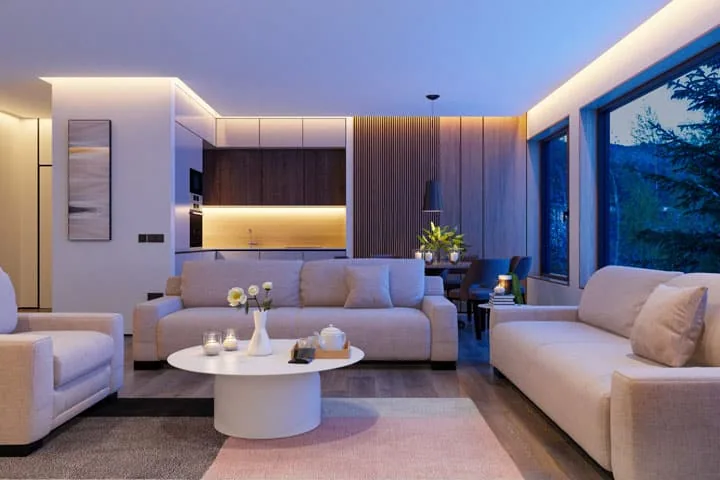
A living room needs at least six to eight double power points. The typical Newcastle living room now runs a wall-mounted TV, soundbar, streaming device, gaming console, and multiple phone chargers simultaneously. Distribute points across at least two walls to suit furniture arrangements and avoid trailing leads.
Kitchen
The kitchen needs six to eight points on the benchtop, plus dedicated circuits for fixed appliances. Fridges, dishwashers, microwaves, and ovens each draw significant load and should never share a circuit with smaller appliances.
Benchtop points should be spaced so a toaster, kettle, and air fryer can run without relying on the same outlet.
Bedrooms
Each bedroom needs four to six double power points. Points on both sides of the bed are essential for lamps and phone charging. A home office setup in a bedroom adds additional demand, particularly when a desktop, monitor, and router all require permanent power.
Home Office
A dedicated home office needs at least six double power points and, in most cases, a separate circuit. Desktop computers, monitors, printers, and routers run continuously and maintain a consistent load throughout working hours. Circuit overload in a home office affects equipment performance and increases the risk of fire.
Bathroom and Laundry
Bathrooms need two to four power points, all installed to the splash-proof rating required under AS/NZS 3000. Shaver points, hair dryers, and heated towel rails all require power.
Laundries need dedicated outlets for washing machines and dryers, ideally on separate circuits to avoid tripping when both run at once.
More: Power Points Not Working? Common Causes and Fixes
Why Older Newcastle Homes Fall Short
Here is what I commonly find when assessing power point layouts across Newcastle’s older housing stock:
- Pre-1970s homes in Mayfield and Hamilton with one outlet per room. These properties were wired for one or two single power points per room at most. The original circuits were rated for the appliance loads of the 1950s and 1960s, a standard well below what a modern household requires. Adding extra outlets to these homes often requires a circuit assessment and, in some cases, a switchboard upgrade before additional points can be safely installed.
- Post-war fibro and brick homes in Wallsend and Lambton without kitchen bench circuits. Homes built in the late 1940s through 1960s often have a single circuit serving the entire kitchen. That circuit was designed for a kettle and a toaster. Running a microwave, fridge, dishwasher, and air fryer from the same circuit trips the breaker regularly and risks sustained overloading.
- 1970s to 1980s brick veneer homes in Adamstown and New Lambton with single-outlet bedrooms. This era added slightly more outlets than earlier builds, but still wired bedrooms with one or two single points per wall. The rise of the home office and the permanent bedroom TV setup means these rooms now routinely run four to six devices from two outlets via a power board.
- Partially renovated properties in Merewether and Charlestown. Kitchen and bathroom renovations often include updated power points in those rooms, but the rest of the property remains on original wiring. This creates an uneven system in which the kitchen meets modern standards, while the living room and bedrooms remain undersupplied.
- Rental properties in Elermore Vale and Waratah are maintained only to minimum standards. Older investment properties frequently have the minimum number of outlets required at the time of construction. Landlords are responsible under NSW law for maintaining safe electrical systems. Tenants using powerboards to extend undersupplied circuits create a hazard because the property’s wiring was not rated for it.
Why Powerboards Are Not a Safe Long-Term Solution
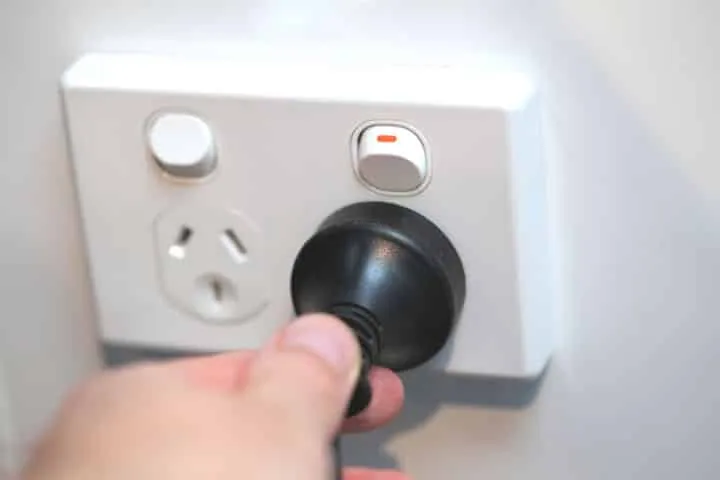
Powerboards feel like a convenient fix, but they do not solve the problem of an undersupplied circuit. They redistribute access to the same limited load capacity. According to SafeWork NSW, overloaded circuits from improper use of powerboards and extension leads are a leading cause of electrical fires and incidents in residential properties.
Under NSW Fair Trading’s electrical licensing requirements, all fixed electrical work, including new power point installation, must be carried out by a licensed electrician. A powerboard does not change the circuit’s capacity. Only correctly rated circuits installed by a licensed electrician do.
Signs that powerboards are masking an undersupplied circuit include circuit breakers tripping regularly, outlets that feel warm after moderate use, flickering lights when appliances start, and a growing cluster of powerboards in the same room.
More: Why Does My Circuit Breaker Keep Tripping and What To Do?
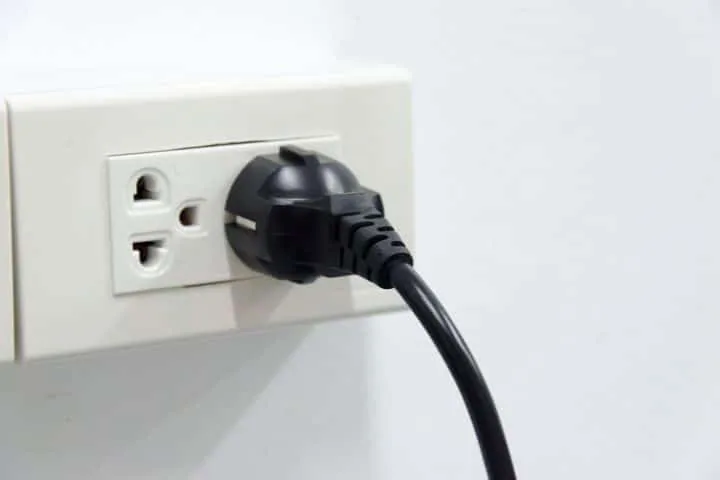
What Types of Power Points Are Available?
Not all power points serve the same purpose. Here is what I install most often in Newcastle homes, depending on the room and the homeowner’s setup.
Standard Double Power Points
A double GPO (general power outlet) provides two 10-amp sockets on one plate. It is the default choice for living rooms, bedrooms, and hallways. Installing doubles rather than singles is always the better investment, as the additional cost per point is minimal.
USB Power Points
USB power points integrate USB-A or USB-C charging ports directly into the wall plate, eliminating bulky adaptor blocks. They suit bedrooms, living rooms, and home offices where phone and tablet charging is constant. The USB ports do not draw from the 10-amp outlet capacity.
Weatherproof Outdoor Power Points
Outdoor power points must be rated to IP54 or higher in accordance with AS/NZS 3000 and be installed with RCD protection on the circuit. Older Newcastle homes typically have no outdoor outlets at all, which means extension leads are run through windows or doors, a significant trip and fire hazard. Outdoor points are suitable for alfresco areas, gardens, garages, and carports.
15-Amp Power Points
High-draw appliances such as air conditioners, EV chargers, pool pumps, and workshop equipment require a 15-amp dedicated circuit and outlet. A standard 10-amp point cannot safely carry these loads. Installing a 15-amp point always requires a new dedicated circuit from the switchboard and an assessment of available capacity.
What Does Power Point Installation Actually Involve?
Most Newcastle homeowners are surprised at how straightforward a power point upgrade is when the property’s wiring and switchboard are in reasonable condition.
Assessment and Quote
I assess the existing circuit layout and check the switchboard capacity before any quote is issued. If the board is at capacity or lacks RCD protection, I explain the options first. You receive a fixed-price quote covering all labour and materials before any work starts.
Installation
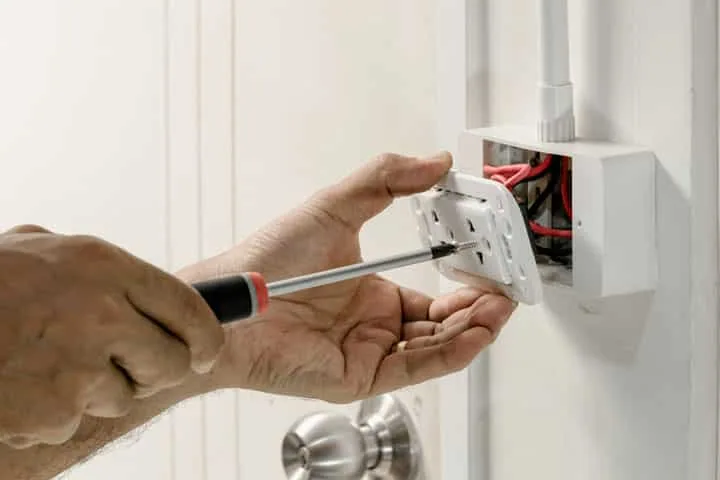
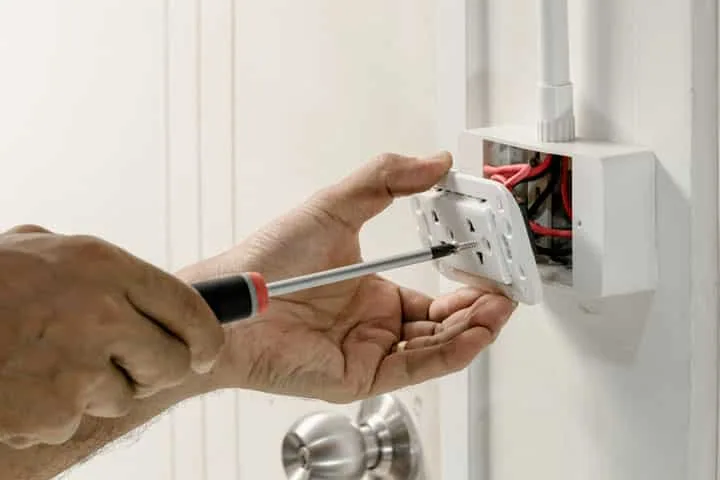
For most timber-framed homes, new points are run from an existing circuit through the roof or wall cavity with minimal surface disruption. Brick or masonry walls take longer and may require surface conduit.
Each new point is wired back to the switchboard, tested under load, and confirmed compliant before I leave.
Certification
Every power point installation in NSW requires a Certificate of Compliance for Electrical Work (CCEW) to be lodged with Building Commission NSW. This confirms that the installation was tested and meets the requirements of the AS/NZS 3000:2018 Wiring Rules. You receive a copy as your legal record of the work.
How Much Does Power Point Installation Cost in Newcastle?
Cost depends on the type of outlet, the wall material, how far the cable needs to run, and whether the existing circuit has capacity. These are indicative ranges for Newcastle homes:
| Power Point Type | Typical Cost Per Point | Notes |
| Standard double GPO | $150 – $300 | Higher end for brick walls or long cable runs |
| USB power point | $180 – $350 | USB ports included, no adaptor block needed |
| Weatherproof outdoor GPO | $220 – $400 | RCD protection required, IP54 or higher |
| 15-amp dedicated outlet | $400 – $900 | New circuit required, switchboard assessment |
| Quad power point | $180 – $320 | Four sockets on one plate, ideal for media areas |
Installing multiple points in a single visit significantly reduces the per-point cost. If several rooms need upgrading, booking the full job at once is more cost-effective than individual callouts.
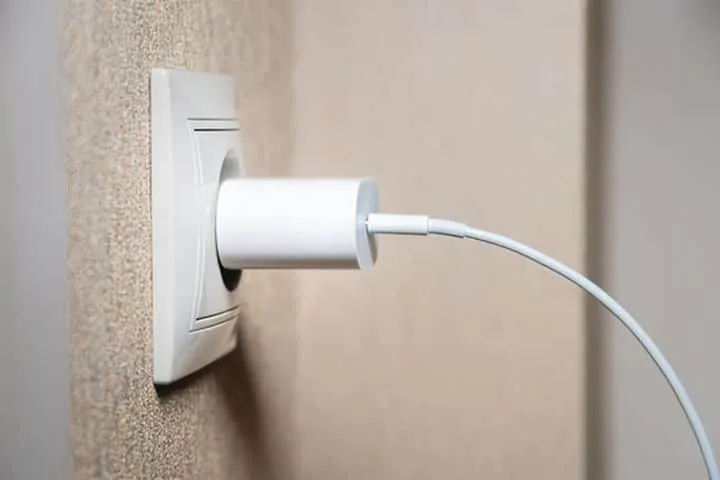
Maintaining Safe Power Point Use After Upgrade
Once additional power points are installed, a few habits protect the investment and keep the system safe. Here is what I advise every Newcastle homeowner after a power point upgrade.
Test RCD Safety Switches Every Six Months
Every circuit serving power points should have RCD protection. Press the test button on each safety switch twice a year. If it fails to trip or will not reset, call a licensed electrician. The NSW Government recommends six-monthly RCD testing as the minimum standard for residential properties.
Replace Powerboards With Permanent Points
Once additional outlets are installed, remove the powerboards from rooms where fixed points now cover the load. Powerboards left in place after an upgrade are often used to extend capacity beyond what the new circuit was designed for, defeating the purpose of the upgrade.
Book an Electrical Safety Inspection After Renovation
If new power points were installed as part of a kitchen or bathroom renovation, Kitson Electricians Newcastle recommends a full electrical safety inspection of the remaining rooms within 12 months. Renovation activity often reveals adjacent circuits that are undersupplied or deteriorating. Catching these early prevents larger problems later.
After a recent job at a Newcastle property, Kitson Electricians received this review:
“Quick response to my request. Anthony and Sienna turned up on time and assessed my requirements quickly. Job was completed of high quality. Anthony and Sienna were professional and easy to talk to. Any questions were answered clearly. Pricing was fair. I recommend Kitson Electricians and will contact them for any future electrical work.” — Michael House
That kind of fast, thorough service is exactly what a power point upgrade should look like.
More: Why Is My Electricity Bill So High? Hidden Causes
Areas We Service
Kitson Electricians Newcastle installs and upgrades power points across the entire Newcastle and Hunter region. We service Adamstown, Charlestown, Elermore Vale, Fletcher, Hamilton, Lambton, Mayfield, Merewether, New Lambton, Shortland, Wallsend, Waratah, and all surrounding suburbs. Whether your home has one outlet per room in Mayfield or a partially upgraded kitchen in Charlestown, our licensed electricians will assess the full layout and install only what your circuits can safely support.
Get More Power Points Installed in Your Newcastle Home
Running out of outlets? Relying on powerboards to get through the day? Call Kitson Electricians Newcastle on 0438 262 792 or book online.
- Same-day and next-day bookings available for straightforward installations across Newcastle
- Fixed upfront pricing. No surprises once the job starts
- Lifetime Labour Warranty on all power point installations
- Fully licensed and insured to NSW standards (AS/NZS 3000:2018)
- $50 off your first service and a free safety inspection valued at $150
- Clean Home Promise. Boot covers, drop sheets, full tidy-up on every job
Don’t wait for a tripped circuit or a damaged device to tell you what your wiring already knows.
Frequently Asked Questions About Power Points in Newcastle
How many power points does an older Newcastle home typically have?
Most homes built before 1980 in Newcastle have between 10 and 20 single power points across the entire property. Modern three-bedroom homes typically need 40 to 50 double outlets. This gap is one of the most common electrical issues I see across Mayfield, Hamilton, and Wallsend.
Can I add more power points without upgrading my switchboard?
In many cases, yes. If existing circuits have spare capacity and RCD protection is in place, additional points can be added without switchboard work. If the board is at capacity, lacks safety switches, or uses ceramic fuses, an upgrade is required first. A site assessment confirms which applies.
Is it safe to use powerboards in an older Newcastle home?
Powerboards are safe for low-draw devices when used correctly and not daisy-chained. They are not a substitute for fixed outlets in kitchens, home offices, or living rooms where high-draw appliances run simultaneously. Relying on powerboards to compensate for undersupplied circuits is one of the leading causes of tripped breakers in older Newcastle homes.
How long does power point installation take?
A straightforward installation of two to four double points in a timber-framed home typically takes two to four hours. Brick or masonry walls take longer because of the drilling and conduit requirements. Larger jobs across multiple rooms in a single visit are usually completed within a day.
What is the difference between a 10-amp and 15-amp power point?
A standard 10-amp GPO suits most household appliances and devices. A 15-amp outlet is required for high-draw equipment such as air conditioners, EV chargers, and workshop tools. It has a different socket shape and always requires a dedicated circuit and load assessment before installation.
Do I need a certificate after power point installation in NSW?
Yes. All prescribed electrical work in NSW requires a Certificate of Compliance for Electrical Work (CCEW). Your electrician lodges this with Building Commission NSW and provides you with a copy confirming the work was tested and complies with AS/NZS 3000 Wiring Rules.